
US-Iran Tensions Raise CFO Concerns on Price Volatility
Wall Street's Volatility Index – which measures the expected volatility of the US stock market over 30 days – has hit a new peak in 2026 following the outbreak of the conflict between the US and Iran in which Iranian Supreme Leader Ayatollah Ali Khamenei was killed.
The escalation presents immediate challenges for financial leaders navigating energy cost fluctuations and cyber threat preparedness.
Research from Deloitte finds that CFOs cite geopolitics as the number one external threat for businesses, with 95% believing geopolitical risk will either increase or stay the same for the next three years.
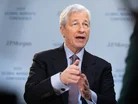
Jamie Dimon, CEO of JPMorgan Chase, says on the conflict in an interview with CNBC: "There's some risk there's more inflation than people think, and that could be like a skunk at a party if that ever happens."
Jamie says the inflationary risks present if the conflict goes on longer than anticipated, and the need for businesses to increase investments in their cybersecurity measures.

Energy price volatility impacts margins
The escalation of the US-Iran conflict has led to a significant surge in energy prices – with Brent crude rising 10% at the beginning of March 2026 to approximately US$80 a barrel.
This has been exacerbated by the closure of the Strait of Hormuz, which carries 20% of the oil consumed globally.
Around 150 ships have reportedly been stranded around the strait.
Increases in energy prices may lead to higher supply costs for businesses and could impact earning expectations for those in industries such as aviation or hospitality.
Finance leaders in energy-intensive sectors may need to evaluate hedging strategies and supply chain contingencies.
Speaking with CNBC, Jamie says: "This right now will increase gas prices a little bit. If it's not prolonged, it's not going to be a major inflationary hit. If it went on for a long time, that would be different."
In the short term, these price increases may not be felt by the local market.
Cybersecurity investment becomes priority
Businesses may also want to increase their investments in cybersecurity, says Jamie.
"The most important thing is that we keep the Western world free and safe for democracy," he says. "But as a corollary to that, you've got to expect there'll be cyberattacks or terrorist attacks, either here or around the world. Banks may be targets."
JPMorgan Chase itself has built a cyber reliance strategy that is designed to make sure the bank can anticipate, withstand and adapt to cyber attacks.
In 2025, the bank launched a US$1.5tn Security and Resiliency Initiative (SRI) for the next decade, which includes investments in AI, quantum computing and cybersecurity to enhance detection and protection capabilities.
It also spends more than US$600m per year on cybersecurity, and has made a US$10bn investment in direct investments in critical industries in order to strengthen economic security.
Jamie says: "We always try to be prepared for that. We never try to predict when, why or where."
Conflict duration uncertainty
Initial predictions place the conflict at lasting approximately five weeks.
Jenny Johnson, CEO of Franklin Templeton, speaking at the Australian Financial Review Business Summit in Sydney says that, while there are "a lot of moving parts", she believes this is "actually a shorter-term" event.
She notes: "As long as the rest of the Middle East doesn't retaliate, this is probably a four to five week event."
US President Donald Trump has sent mixed signals on the duration of the conflict, however.
Speaking to the press, he shares that the government was "already substantially ahead" of its projections, but the conflict may go on longer than initially anticipated.
He comments: "Whatever the time is, it's OK, whatever it takes, we will always and we have from right from the beginning. We projected four to five weeks but we have capability to go far longer than that."
Company portals


Executives
Jamie Dimon
Chairman of the Board

Jenny Johnson
President and CEO