

Why 63% of High-ROI Firms Make AI a Core Board Priority
As AI shifts from a speculative line item to a core driver of enterprise value, a bottleneck has emerged at the top.
New data from the 2026 Global Board Governance Survey by Protiviti and BoardProspects reveals that just 26% of directors discuss AI at every meeting.
For any finance leader, this isn't just a communication issue but a systemic breakdown in the oversight needed to protect and scale massive capital investments.
The survey of 772 board members and C-suite leaders globally confirms that AI success is a top-down issue.
While the broader market is fixated on the potential of the tech, the data suggests that 74% of boards still treat AI as a periodic technical update rather than a foundational strategic pillar.
In a fiscal climate where AI is expected to defend margins and drive competitive growth, this passive approach is rapidly becoming a boardroom liability.
Who is Nissan's New Chief Financial Officer?
Nissan has announced that Jérémie Papin is stepping down from his position as Chief Financial Officer for personal reasons after just over a year in the role.
George Leondis, who has worked at the company for more than two decades, will succeed him in the role effective as of April 1.
According to Nissan, George has been actively involved in the company’s financial recovery plan and has a global perspective of the company from experience in its key markets.
Jérémie will remain with Nissan until mid May to lead the closing of its fiscal year 2025 and ensure a smooth transition between the two CFOs.
How are CFOs navigating AI investment priorities?
The banking sector stands at an important inflection point as leaders navigate competing pressures around technology investment, regulatory burden and strategic growth, according to KPMG's 2025 CEO Outlook on Banking and Capital Markets.
For finance chiefs, the challenge centres on balancing capital allocation between transformation initiatives and defensive positioning amid economic headwinds including tariffs, inflation and liquidity concerns.
KPMG’s research indicates that banking leaders are maintaining investment momentum despite market uncertainty, with spending decisions increasingly directed towards technology infrastructure rather than traditional expansion models.
Mastercard Launches Virtual CFO for Small Businesses
Mastercard is extending its reach into artificial intelligence with the launch of a Virtual C-Suite designed to provide small and medium enterprises with executive-level financial guidance traditionally available only to large corporations.
The Virtual C-Suite represents an expansion of Mastercard's Agentic Suite, drawing on the company's experience in payments, data security and leadership. The initiative signals the payments giant's ambition to establish itself as a leader in AI-driven financial services, following recent moves including a partnership with Santander to facilitate agentic payments.
The suite is designed to cover what Mastercard describes as the "full commerce lifecycle", from understanding how money moves through businesses to predicting risk and recommending appropriate actions. Each AI agent within the Virtual C-Suite is intended to support SMEs across areas including finance, security and marketing, providing business owners with operational insights to help grow and protect their operations.
Financial institutions and technology partners will integrate the Virtual C-Suite into their existing platforms, enabling seamless access for business owners. The modular approach allows organisations to deploy specific executive functions based on their clients' needs and operational priorities.
Honda Forecasts Loss While Keeping Dividend Stable
Honda Motor Co., Ltd. has revised its consolidated financial results for the fiscal year ending March 2026, anticipating significant losses due to a reassessment of its electrification strategy. The company expects a maximum total amount of losses to reach 2.5 trillion yen.
Toshihiro Mibe, Honda CEO, detailed the financial impact: "The maximum total amount of losses estimated as of today is 2.5 trillion yen, of which approximately 1.3 trillion yen will be recorded as an addition to the fiscal year forecasts announced on February 10, 2026."
Despite these non-recurring losses, Honda intends to maintain its shareholder redistribution policy. The company has adopted DOE (dividend on equity ratio) as its indicator to achieve more stable dividends, ensuring no revision to the forecast for the current fiscal year.
Company portals





Executives
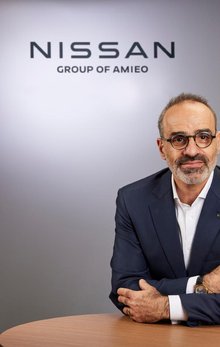
George Leondis
Chief Financial Officer
Joseph Tarantino
Member Board of Trustees

Toshihiro Mibe
CEO