How Did Walmart Become The First Trillion-Dollar Retailer?

Walmart has achieved a significant financial milestone, becoming the first traditional retailer to reach a US$1tn valuation on 3 February.
The company's share price rose 3% on that day, marking the culmination of months of sustained growth that has seen the retail giant join an exclusive group previously dominated by technology firms such as NVIDIA, Microsoft and Alphabet.
The trillion-dollar valuation represents a notable shift in market dynamics, demonstrating that traditional retail businesses can achieve the same scale of investor confidence typically reserved for tech companies.
Walmart's financial performance has been underpinned by strong operational metrics, with the retailer reporting US$179.50bn in Q3 fiscal 2026 revenue, representing growth of over 6% compared to the previous year.

Robust quarterly performance drives valuation
The company's Q3 results, announced on 3 February, exceeded market expectations and prompted management to raise full-year guidance.
According to Walmart, the improved outlook was driven by increased market share, robust e-commerce performance and successful acquisition of higher-income customers - a demographic shift that has broadened the retailer's revenue base beyond its traditional budget-conscious shopper profile.
The financial metrics indicate that Walmart's investments in digital infrastructure and omnichannel capabilities are yielding measurable returns. E-commerce sales have recorded significant increases, with services like curbside pickup and fast home delivery contributing to this growth.
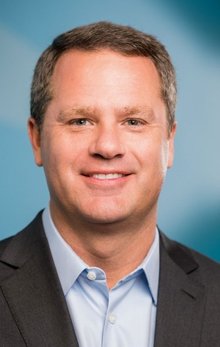
Under the leadership of then-CEO Doug McMillon, the company allocated substantial capital towards technology infrastructure, focusing on AI-powered supply chain automation, inventory forecasting and enhanced search functionality.
Technology investments support operational efficiency
Walmart's partnership with OpenAI, announced in October 2024, represents a strategic investment in AI-driven customer service tools.
The collaboration integrated shipping tools into AI-powered chatbots, with Walmart stating in a press release at the time: "The future of retail isn't about replacing human connection with machines, it's about using AI to remove friction and make everyday moments easier, smarter and more delightful."
OpenAI CEO Sam Altman says in the same announcement: "We're excited to partner with Walmart to make everyday purchases a little simpler. It's just one way AI will help people every day under our work together."
These technology investments are positioned to drive further operational efficiencies, potentially improving profit margins whilst maintaining the competitive pricing strategy that has historically defined Walmart's market position.
The company's ability to balance technological modernisation with cost management has contributed to its financial outperformance.
Leadership transition amid strong performance
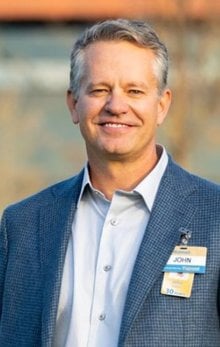
John Furner, Walmart's new CEO, officially assumed the role on 1 February, taking over from Doug at a time of strong financial momentum. In his first days leading the company, Furner visited stores in Mexico and Canada, posting on LinkedIn: "It was great to be back in Monterrey, Mexico, for the first time since I interned there in 1994."
John added: "A lot has changed since then, but the energy, pride and passion our associates bring to their work is stronger than ever. While there, I had the chance to meet Carlos, the store manager, along with his dad, who worked in that same store when I was an intern.
"It was a full circle moment and a powerful reminder of the opportunities we create and the culture we've built at Walmart."

The company's focus on workforce retention has financial implications, with lower turnover rates typically associated with reduced recruitment and training costs.
Walmart's website highlights its 'Everyday Legends' initiative, with a 3 February post celebrating Oscar Romero, who began working at the Calexico, California store at age 18.
According to the post, nearly 200 associates have remained at the Calexico store for over 20 years under Oscar's leadership as store manager.
Walmart wrote in the post: "Loyalty thrives where people come first." The company promotes "fairness and the same treatment for all associates", an approach that could contribute to operational stability and consistent customer service delivery across its extensive store network.





Executives
Doug McMillon
President & CEO
John Furner
President and Chief Executive Officer, Walmart U.S.
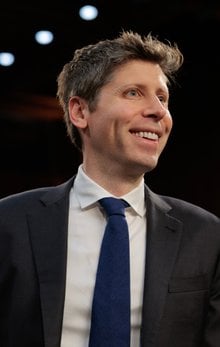
Sam Altman