Nestlé 2025 Results: Cash Flow Rises as Profit Declines

The Swiss foodmaker reported a net profit of CHF 9.0bn (US$11.6bn) for 2025, a decrease of 17% compared to the previous year. Basic earnings per share stood at CHF 3.51 (US$4.54), while underlying earnings per share were CHF 4.42 (US$5.71).
Despite the decline in net profit, the company proposed an increased dividend of CHF 3.10 (US$4.01) per share. Net debt to adjusted EBITDA was 2.85 times at the end of the year.
Nestlé expects free cash flow to be above CHF 9bn (US$11.63bn) in 2026, driven by enhanced governance, accountability and a continued focus on reducing working capital and optimising capital expenditure.
Cost savings programme exceeds initial goals
Efficiency initiatives significantly contributed to the company's financial results in 2025. The "Fuel for Growth" programme achieved savings of CHF 1.1bn (US$1.42bn), which was more than CHF 350m (US$452m) ahead of the initial target.
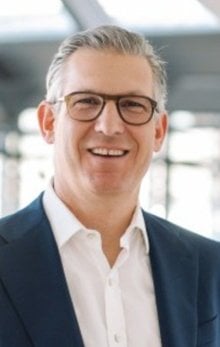
“I am encouraged by our performance during 2025, which reflects the targeted actions we have taken in a difficult external environment,” said Philipp Navratil, Nestlé CEO.
Philipp noted that the company generated CHF 9.2bn (US$11.8bn) in free cash flow while delivering an underlying trading operating profit margin of 16.1%. A step-up in efficiencies and a simplified organisational structure are intended to further strengthen the company's financial position.
World leader in diversified food processing
Nestlé is a Swiss multinational food and drink processing conglomerate headquartered in Vevey, Vaud, Switzerland.
It is the largest food company in the world, measured by revenue and other metrics. The firm produces a vast range of products, including baby food, medical food, bottled water, breakfast cereals, coffee and tea, confectionery, dairy products, ice cream, frozen food, pet foods and snacks.
Known for global powerhouse brands such as Nescafé, Nespresso and Purina, the company has operated for over 150 years, maintaining market-leading positions in several global categories while employing a simplified organisational structure.
Extraordinary distributions and asset reviews
The company's financial leverage was reduced during 2025 through an extraordinary distribution from the Froneri joint venture and the sale of a minority stake in Herta.
Nestlé is also in advanced negotiations to sell its remaining ice cream businesses to Froneri. “We are focusing our portfolio on four businesses, led by our strongest brands, with prioritised resources and a simplified organisation,” said Philipp.
He explained that the company would continuously review smaller non-core assets to simplify the portfolio and unlock value. These capital allocation principles prioritises organic growth investment, shareholder returns through dividends, and the reduction of net debt.

Accelerating use of shared services
To improve financial agility, Nestlé is accelerating its use of shared services to standardise and automate nine end-to-end business processes. This includes the simplification of the "procure-to-pay" cycle.
“We are stepping up our efficiencies and strengthening our financial position,” said Philipp. He believes that faster execution of this focused strategy will deliver sustained improvement.
The transition to a more agile operating model is supported by consistent IT infrastructure across the group. This transformation is intended to deliver annual operational efficiency savings of CHF 1.0bn (US$1.29bn) by the end of 2027, with 20% of white-collar savings already achieved.
Performance culture and bonus incentives
Nestlé is fostering a performance culture that rewards results and excellence through evolved metrics for the annual bonus. Organic growth now includes a real internal growth (RIG) "gatekeeper," and incentives are adjusted to reward the execution of strategic priorities.
“This is underpinned by a performance culture that rewards excellence and results,” said Philipp. He indicated that functional leaders are now aligned behind group performance, and a new framework increases transparency.
Teams are encouraged to act as business owners, with a strengthened focus on sustainable performance across the organisation's simplified divisions.
Organic growth reached 3.5% in 2025, with pricing contributing 2.8% to address input cost inflation in categories like coffee and cocoa. RIG was 0.8% for the year, showing strong acceleration to 1.4% in the second half.
“While there is more to be done, we are confident that our faster execution of a more focused strategy will deliver sustained improvement through 2026 and beyond,” said Philipp.
He noted that billionaire brands share growth is turning positive, representing the best performance in over a decade. Underlying trading operating profit was CHF 14.4bn (US$18.6bn), a decrease of 8.4% on a reported basis.
Company portals

Executives
Philipp Navratil
Chief Executive Officer