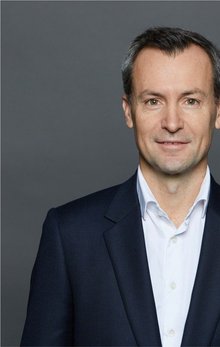
HSBC CIO Stuart Riley's Finance-First Digital Leadership

Stuart Riley joined HSBC as Group Chief Information Officer in February 2024 after 14 years at Citigroup, where he rose to Co-CIO and oversaw technology and operations for more than 50,000 staff across 100 countries, according to Citigroup.
Eight months into his tenure, HSBC expanded his remit to include Data and Innovation and appointed him to the Group Executive Committee, reflecting progress on digitisation and operational resilience, according to HSBC.
For finance leaders, Stuart’s trajectory stands out: he has repeatedly delivered scaled technology change with a balance of cost discipline, risk control and commercial impact.
At Citi he managed an annual operating budget exceeding US$4bn, and laid early groundwork for AI by prioritising data quality and private cloud.
At HSBC he is charged with simplifying a complex core, executing the bank’s Digitise strategy, and translating AI into measurable customer, control and P&L outcomes.
Discussing his stance on AI, he said: “Whilst some overestimate AI's short-term impact, I believe many significantly underestimate its long-term potential”.
“Whilst some overestimate AI's short-term impact, I believe many significantly underestimate its long-term potential”
From entrepreneurial grit to investment-bank scale
Stuart’s career foundation was entrepreneurial. He founded TAG Consulting in 1996 and spent five years as partner and development manager, experience that gave him a hands-on appreciation of cost, delivery and client outcomes - principles he later scaled in global banks.
He entered investment banking technology at RBS in 2002 as Technology Manager for FX eCommerce, according to RBS, before a pivotal six-year run at Deutsche Bank from 2003 to 2010.
At Deutsche Bank, he progressed from Head of Rates eCommerce to Global Head of Sales Technology and ultimately Global Head of Global Finance & Foreign Exchange Technology.
These roles forged his execution model: digitise front-to-back workflows, connect pricing and risk engines to clients at speed, and hardwire controls into revenue platforms.
For finance chiefs, that pattern - commercial enablement with embedded control - signals a leader who can align technology spend to tangible growth while strengthening first- and second-line defences.
Laying AI foundations at Citi
Stuart joined Citigroup in 2010 to run eCommerce in Sales & Trading, where he helped develop Citi Velocity, an industry-leading suite of digital products widely adopted across the market.
His responsibilities expanded across Capital Markets, Securities Services, Investment Banking, Trade and Treasury, and Private Banking, culminating in his appointment as Global Head of Institutional Client Group Technology.

In that role he led more than 50,000 technologists and operations personnel in 100 countries and managed an annual operating budget above US$4bn, Citigroup says.
Promoted to Co-Chief Information Officer in September 2023, he oversaw global technology and infrastructure and spearheaded AI initiatives.
Crucially, he recognised early that AI’s value depends on trusted data and compliant, scalable infrastructure, driving significant investment in private cloud and data platforms.
Leading HSBC's digital future
HSBC appointed Stuart Group CIO in February 2024 to lead technology strategy and delivery of an efficient, resilient, innovative digital bank, and subsequently broadened his remit to include Data and Innovation and Group Executive Committee membership, according to HSBC.
He is executing the bank’s Digitise strategy while untangling a historically complex IT estate to reduce run costs, improve time-to-market and strengthen operational resilience.
HSBC says it now uses AI in more than 600 applications - from fraud detection to customer service - an at-scale testbed to turn model outputs into financial value and risk reduction.
Beyond the core, Stuart serves as Executive Sponsor for Strive UK at HSBC, supporting colleagues from different economic backgrounds, and as an expert member of Teach First’s Technology Committee, helping drive technology transformation to address educational disadvantage, according to the organisations.
His influence extends outside HSBC: Quantexa announced his appointment to its board in February 2025; he advises HiveNet on environmentally sustainable cloud computing; and he sits on BP’s Digital Advisory Council as the company advances its net-zero transition.
For a leader who began as a software engineer, Stuart remains unusually close to the technical coalface - while bringing the financial discipline, governance and people leadership expected at the top of a global bank.
Company portals

Executives
Stuart Riley
Group CIO of HSBC