OpenAI Hires Slack CEO to Scale Enterprise Adoption Growth

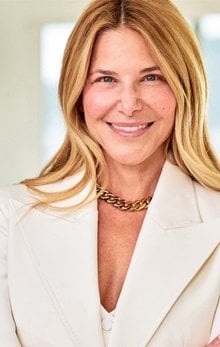
OpenAI has appointed Denise Holland Dresser, the former CEO of AI work management company Slack, as its new Chief Revenue Officer. In her new role, she is responsible for guiding OpenAI’s global revenue strategy, covering enterprise and customer success functions.
The appointment comes as OpenAI aims to further monetise its technology and expand its footprint within the corporate sector. According to a press release from the company, Denise will help more businesses integrate AI into their daily operations.
Denise previously became CEO of Slack in 2023, having spent over a decade at Salesforce which acquired the work management firm for more than US$27bn in 2020.
In a statement on her appointment, Denise explained: “I’ve spent my career helping scale category-defining platforms, and I’m looking forward to bringing that experience to OpenAI as it enters its next phase of enterprise transformation.”
Steering enterprise revenue and transformation
OpenAI highlights Denise's background in leading large businesses and her understanding of scaled products as key reasons for her appointment.
During her tenure as CEO of Slack, she guided Slack through its integration with Salesforce and played a part in redefining how AI is used to improve workplace efficiency and connectivity. This experience is directly applicable to OpenAI's objectives.
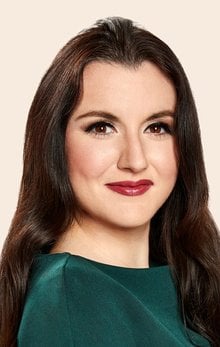
Fidji Simo, CEO of Applications at OpenAI, commented on the strategic importance of the hire, saying: “We’re on a path to put AI tools into the hands of millions of workers, across every industry. Denise has led that kind of transformation before, and her experience will help us make AI useful, reliable and accessible for businesses everywhere.”
The business case for AI integration
The timing of Denise’s arrival coincides with a period of widespread AI adoption across industries. Companies are increasingly integrating AI software to enhance productivity and streamline operations.
According to OpenAI, 75% of workers report that AI has improved the speed or quality of their work. OpenAI's data suggests many users save between 40 and 60 minutes per day, with heavy users saving over 10 hours weekly.
This potential for efficiency gains has attracted a substantial enterprise client base. Over one million business customers, including major corporations like Walmart, Morgan Stanley, Intuit, Databricks and Target, currently use OpenAI for their internal operations.
The presence of firms like Morgan Stanley could indicate a growing acceptance and application of AI within the financial sector itself.

A restructured C-suite for strategic growth
Denise’s appointment is part of a wider series of leadership changes at OpenAI designed to support its rapid growth. In Spring 2025, the company introduced the new role of CEO of Applications, filled by Fidji, to oversee business operations and applications.
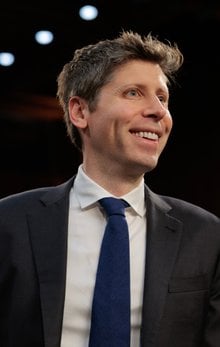
This change allows Sam Altman to remain as the overall CEO while concentrating more on research, compute and safety.
In a note to employees at the time, Sam shared: “Applications brings together a group of existing business and operational teams responsible for how our research reaches and benefits the world, and Fidji is uniquely qualified to lead this group.”
A few months prior, Mark Chen was appointed to an expanded role as Chief Research Officer to advance scientific progress in AI capability and safety.
Concurrently, Chief Operating Officer Brad Lightcap’s role was broadened to include oversight of OpenAI's day-to-day operations, global deployment and business strategy.
These executive adjustments appear to be part of a coordinated effort to strengthen OpenAI’s market position against competitors such as Google, Nvidia, Meta and Anthropic.








Executives
Brad Lightcap
COO
Denise Holland Dresser
Chief Executive Officer
Fidji Simo
CEO, Applications at OpenAI
Mark Chen
Chief Research Officer
Sam Altman