
Finance Chief Podcast: Jody Bhagat on Bank Modernisation
Related Podcasts
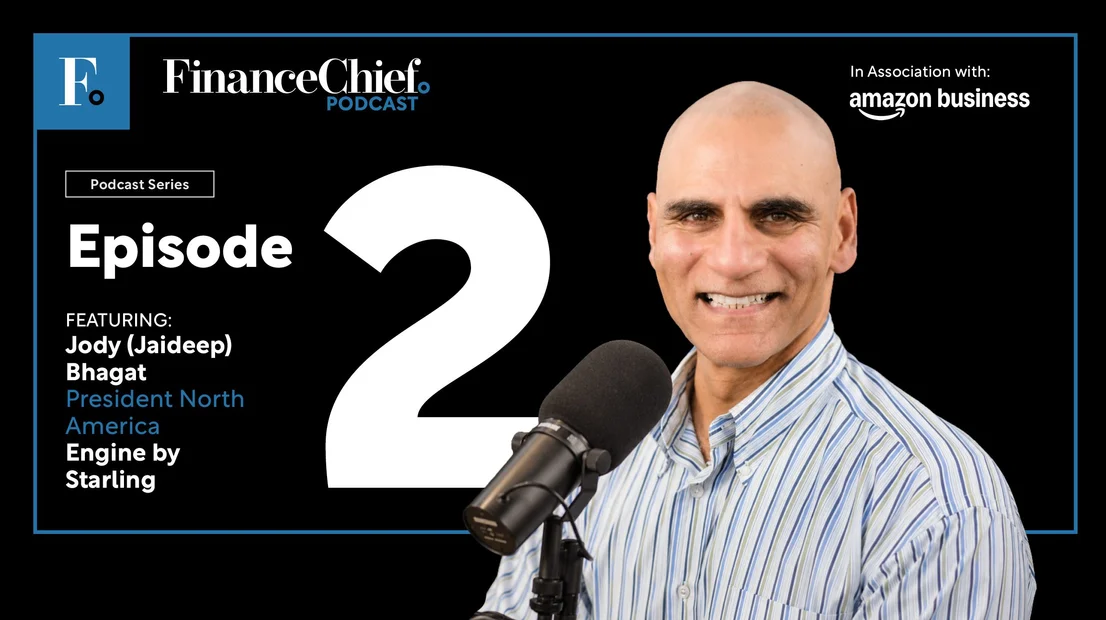
Banking is entering one of the most significant periods of transformation in its history, and the latest episode of the Finance Podcast explores exactly why. In Episode 2, titled “Why Banks Must Modernise to Compete in the Future,” host Matt Hind speaks with Jody Bhagat, President of North America at Engine by Starling, about the pressures reshaping financial institutions and the technology driving the next generation of banking innovation.
With more than 25 years of experience spanning banking, consulting and fintech, Bhagat brings a unique perspective on how banks can modernise their operations, improve customer experience and unlock faster innovation. Throughout the episode, he explains why banking institutions can no longer rely on legacy technology, incremental upgrades or outdated operating models if they want to remain competitive.
Why Banking Modernisation Has Become Essential
A central theme throughout the conversation is the growing urgency for banks and credit unions to modernise. Bhagat explains how many institutions remain constrained by decades-old technology stacks that limit innovation, slow operational efficiency and make it difficult to meet rising customer expectations.
As digital-first challengers continue to reshape the market, traditional banks are facing increasing pressure to modernise their core systems, improve agility and deliver better experiences. According to Bhagat, the challenge is no longer simply about upgrading infrastructure — it is about enabling institutions to move faster, innovate continuously and respond to change in real time.
The episode explores how legacy systems can create operational risk, restrict scalability and place a growing burden on leadership teams trying to balance growth with resilience.
The Difference Between Upgrading and Modernising
Bhagat also highlights an important distinction between technology upgrades and true business modernisation. While many banks focus on replacing ageing core systems, he argues that meaningful transformation requires a broader leadership-led strategy involving the entire organisation.
Modernisation, he explains, is not simply an IT exercise. It is a business-wide initiative focused on improving efficiency, accelerating growth, enhancing customer experience and creating a platform for long-term innovation.
This requires leadership teams to rethink how finance, technology, operations and customer experience work together. Rather than viewing technology as a back-office function, banks must treat it as a strategic driver of competitive advantage.
AI, Data and the Future of Banking
Artificial intelligence is another major focus of the discussion. Bhagat explains how AI is rapidly reshaping banking operations, customer engagement and decision-making across the industry.
From fraud prevention and operational efficiency to personalised customer experiences, AI is creating opportunities for banks to become more proactive, adaptive and responsive. However, Bhagat stresses that successful AI adoption requires more than experimentation. Financial institutions need scalable platforms, strong governance and modern infrastructure capable of supporting AI securely and effectively.
The conversation also explores how AI-powered banking agents could fundamentally change customer behaviour, financial management and the economics of banking itself in the years ahead.
Customer Experience as a Competitive Differentiator
Another key takeaway from the episode is the growing importance of customer experience in modern banking. Bhagat argues that banks must move beyond generic digital services and instead create distinctive experiences tailored to specific customer needs.
Whether supporting small businesses, improving cash flow management or delivering smarter financial tools, banks that understand their customers more deeply will be better positioned to build loyalty and long-term growth.
The episode highlights how modern technology platforms enable banks to deliver new customer-facing solutions far more quickly, allowing organisations to innovate continuously rather than relying on long development cycles.
Leadership, Culture and Transformation
Beyond technology, the discussion also examines the cultural and leadership challenges involved in large-scale transformation. Bhagat explains that successful modernisation programmes require curiosity, adaptability and a willingness to embrace change across every level of the organisation.
For leadership teams, modernisation represents both a challenge and an opportunity — not only to improve business performance, but also to develop talent, encourage innovation and create more agile organisations.
The episode positions transformation as a defining leadership challenge for today’s banking executives, particularly as the pace of technological change continues to accelerate.
The Future of Banking Innovation
As the conversation concludes, Bhagat outlines his vision for the future of banking and Engine by Starling’s role in helping financial institutions modernise successfully.
With increasing competition from digital challengers, rising customer expectations and the growing influence of AI, the pressure on banks to evolve will only intensify. According to Bhagat, the institutions that succeed will be those capable of combining modern technology, strategic leadership and continuous innovation to deliver better outcomes for customers.
Overall, Episode 2 provides an insightful look at how banking is being reshaped through modernisation, AI and digital transformation. Through Bhagat’s perspective, the Finance Podcast continues its exploration of the leaders, technologies and strategies defining the future of finance.
Subscribe and Listen
Episode 2 is brought to you by Amazon Business, the one-stop destination for everything your organisation needs.
Subscribe to hear weekly conversations with global finance leaders exploring leadership, transformation, AI, innovation and the future of financial services.