
What Tools Are Used for Risk Assessment in Finance?

Chief finance officers (CFOs) are increasingly focused on robust risk assessment strategies to safeguard their organisations' financial health. A wide array of sophisticated tools and techniques are now available to help finance leaders identify, quantify, and mitigate potential risks.
This article explores some of the most effective and widely-used risk assessment tools used.
Probability and impact matrices provide visual risk prioritisation
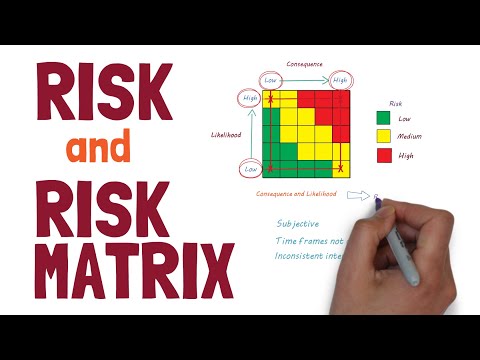
One of the foundational tools in financial risk management is the probability and impact matrix. This visual aid allows CFOs to evaluate and prioritise risks based on their likelihood of occurrence and potential impact on business objectives.
By categorising risks into a grid, finance teams can quickly identify which threats require immediate attention and which can be monitored less closely.
The matrix typically uses colour coding to represent risk severity, with red indicating high-priority risks and green representing lower-priority concerns. This simplification of complex risk data enhances decision-making and facilitates clear communication among stakeholders.
However, it's important to note that the tool relies on subjective judgments and may oversimplify nuanced risks.
Value-at-risk analysis quantifies potential losses
Value-at-Risk (VaR) is a statistical technique widely used in the financial sector to measure and quantify the level of financial risk within a firm or investment portfolio over a specific time frame. This tool helps businesses define the maximum loss they might face at a given point in time, typically with a specific confidence level.
For example, a CFO might use VaR to determine that there is a 95% chance that a portfolio will not lose more than US$1m in the next month. This information is crucial for setting risk tolerance levels and making informed decisions about capital allocation.
Machine learning-powered forecasts enhance accuracy
Traditional risk assessment models are being augmented by machine learning-powered forecasts.
These advanced tools analyse historical data and use heuristic models to generate accurate projections.
For instance, HighRadius, a provider of AI-driven solutions for CFOs, offers a system that leverages past transaction data and selects the best-fit model from hundreds of permutations to provide highly accurate forecasts.
By combining standard models with customised forecasting approaches, CFOs can identify optimal strategies and refine their overall risk management framework. This blend of traditional and cutting-edge techniques allows for more nuanced and precise risk assessments.