HCLTech EVP on Moving AI From Pilot to Enterprise Value Now

Finance leaders are under pressure to turn AI from isolated proofs of concept into measurable value. Apoorv Iyer, Executive Vice President and Global Head of Gen AI at HCLTech, says the conversation with chief financial officers has moved decisively from exploration to execution.
Iyer argues that capital should prioritise use cases with near-term payback, clear risk controls and the ability to scale across functions. He has seen the fastest traction in sectors such as manufacturing and healthcare, where automation, forecasting and decision support can be rolled out rapidly and tracked against hard metrics.
The message to CFOs is direct: perfect plans are slower than disciplined sprints. Establish guardrails, pick repeatable patterns, prove ROI in weeks, then scale. That is how pilots become enterprise impact.
In your own words, what is HCLTech and how does it contribute to the tech and AI spaces?
HCLTech is now in its 49th year of existence and we’ll celebrate our 50-year anniversary next year.
We are one of the leading tech services and software product companies, with roughly US$15bn in revenues and a market cap of over US$50bn.
Our genesis was that we started as an engineering and product company in the late 1970s, 1980s and 1990s and then pivoted to services.
We’ve gone through multiple technology transformations across these years, but one of the things that has differentiated HCLTech quite significantly is that we are very entrepreneurial in nature.
A lot of our businesses have been incubated within the company. For example, the HCL Software business, which is a pure software products business that started in 2016, has now grown to almost 15% of our revenues.
Similarly, the AI and Gen AI journey that we have started over the last few years has gained significant traction.

What are the main challenges CTOs face when trying to convince CFOs about the long-term strategic value of AI investments?
We naturally do large-scale, enterprise-wide transformations for our customers and we’ve also implemented AI and Gen AI at scale within HCLTech internally.
There are three different areas where conversations happen with business leaders and finance leaders in our customers.
The first area, which is generally raised as an objection, is “I don't have appreciation of the technology. I'm a business person. How do I understand it better so that I can make the right decisions?” Knowledge sharing and education of people on what AI is, what it can do, what the impacts are and what the right use cases are becomes very relevant.
The second question that is asked is around how technology is changing very fast. Where should I invest? How do I ensure the ROI happens and companies can scale the impact? That also becomes a very important discussion point, particularly with CFOs.
The last and probably most important aspect is around risk. CFOs are very risk-averse in general, so they want to ensure that whatever they’re putting in the technology architecture for their enterprise does not create risk for the business.
HCLTech has been working very closely with business teams from our customer base, and even with CFOs, in educating them on AI and Gen AI, particularly for their respective industries. A manufacturing CFO, for example, will ask very different questions than a retail or healthcare CFO.
Similarly, we work with them on use case definition and prioritisation from a framework standpoint before finally giving them a very good view on how to de-risk AI implementation with the right responsible AI frameworks, guardrails and technology adoption within their enterprise.
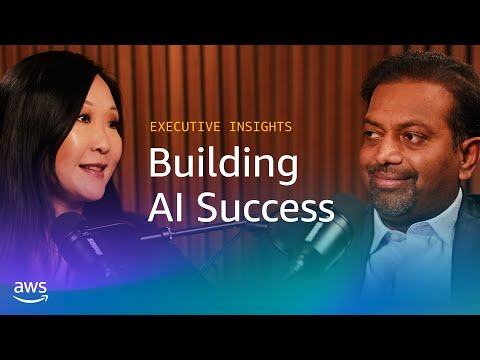
In your experience, what are the most common objections or concerns raised by CFOs regarding significant AI investments? How can these be effectively addressed?
There are two additional areas where customers are typically asking for clarity when implementing AI and Gen AI capability at scale.
Number one, the rate of change in AI technology is very high. How do I bet on the right technology architecture and how do I make sure that it creates the relevant impact?
The second aspect is that all technology implementations can create value only when they have the context of the customer – which means it cannot be a generic implementation.
It has to understand the data, the quality of data, the lineage of data within the enterprise, governance structures, current tech debt in the company and then how you change that to make sure they can leverage AI better.
To the first point, it’s a very interesting problem statement. I don’t think anybody has solved this yet – the rate of change is so high, we don’t know what’s coming up in AI and it is very important that we accelerate fast instead of waiting.
That’s why we tell our customers that you need to get in and get your feet wet instead of just waiting and hoping for a near-perfect state where one day AI will solve everything.
We focus on speed of execution and encourage our customers to dive into the speed aspect of AI adoption.
On the second point – which is important from an adoption and scaling standpoint – we look at it from an end-user perspective in an enterprise and see how end users can adopt AI better and faster.
Here, training, change management and incentive creation within the enterprise become very important.

Are you seeing a shift in attitudes among CFOs towards AI adoption? What factors are driving this change?
Yes, absolutely.
We are seeing very strong adoption and significantly large business cases being developed for AI adoption.
If you think about it, 2022 was the year of pilots or POCs, 2023 was the year of small implementations, 2024 was the year of mid-scaling, but 2025 is the real time where we are seeing large-scale enterprise transformations.
There’s been that journey over the last few years in terms of adoption of AI.
In every conversation, the question gets asked: “What can I do at scale with AI?”
That’s a very important element and that has changed across the C-suite, whether it’s CFO, CMO, Chief Sales Officer or CRO. There’s wider adoption and discussion around creating enterprise transformation use cases for AI.
Across HCLTech’s global client base, what are the most exciting and promising AI applications currently being deployed? Where are you seeing the fastest adoption?
There are multiple areas, but there are two that really stand out.
One is that we are seeing significant adoption of AI in technology and software engineering. That’s creating acceleration of product development activities and faster time to market.
The second significant area for AI adoption is actually customer service. When I say customer service, it’s not only about contact centres – it’s also about e-commerce and omnichannel.
There’s a lot of AI adoption happening from an end consumer and customer standpoint as well.

How does HCLTech help its clients manage the practical and ethical considerations of AI deployment, especially in industries where data sensitivity and regulatory compliance are critical?
From an HCLTech standpoint, we have been working in the AI space for the last more than 15 years.
Initially, we were one of the few service providers who started an AI research organisation around 2015 or 2016 and we invested significant focus on driving AI-led products and services within the enterprise over the last eight to ten years.
Once Gen AI picked up speed between 2022 and 2023, we formulated four AI offerings for our customers.
The first is what we call service transformation – how we deliver our own services for better productivity and faster time to market.
We have an offering called AI Force, which is a unique platform and product from HCLTech for driving productivity improvement in our services business.
The second area of focus is AI engineering. We are a full-stack provider of AI technology and we do significant work on hardware, semiconductors and storage engineering for some of the largest hyperscalers and chip vendors in the space.
As part of that, we are also extremely differentiated in the physical AI space.
The third is around business AI and scaling of enterprise AI. You need to have the right data and data quality and modernised data. For that, we have an offering called AI Foundry that drives data modernisation and scaling of AI in the enterprise.
Finally, we have AI Labs that drives engagement and faster MVP development for our customers with the right use case prioritisation.
From an HCLTech standpoint, the ethical and safe use of AI is embedded across all these four offerings.
We have a responsible AI office and AI governance office with subject matter experts and technical experts who drive strong capability around responsible AI.
We also have our own technology stack and IP on responsible AI that we offer to our customers, which ensures safety of AI, AI governance, bias reduction and fairness of AI implementations across all our offerings for our customers.