


The Finance Chief Interview: Rohit Anand
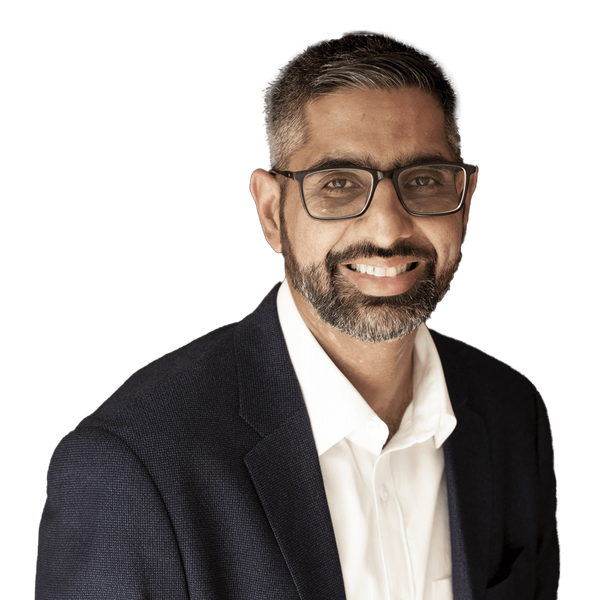
The Finance Chief Interview: Rohit Anand
Like all good mornings, a successful working day starts with a good coffee. For me and Rohit Anand, it’s a light roast – a perfect and wholly underrated method of roast.
To get the right shade, roasters must listen out for the first single crack of a coffee bean during the process. It takes patience, care and attention. Wait too long and you risk the beans roasting too much – resulting in a medium shade or even a dark roast.
There’s a lesson to be learned about craft and patience there that Rohit seems to have nailed.
A distinguished 24-year career stemming from a masters in Economics that lead into becoming the CFO of a company estimated to be worth around US$18bn* (according to Companies Market Cap), Rohit Anand does not see himself as a ‘finance guy’.
A majority of Rohit’s experience stems from his time at General Electric (GE). The US multinational conglomerate houses multiple sectors including financial services.
Rohit started here, before moving over to an internal leadership programme.
Within this role, he rotated between six different departments over two years. It was a “very hard grind role”, he recalls, working through weekends and some days that lasted over 18 hours.
Rohit is reminded of his days “living out of a suitcase” while working with other global leaders, CFOs and industry professionals.
“It was quite intense, but it gave a perfect development path for the future early in the career,” he says.
As a leader, I feel you’re as good as your team
His next journey saw him match that intense start, as he embraced living in China for three years.
Interacting with the culture meant sometimes he faced language barriers – in India, business is conducted primarily in English.
In China, the dominant language is Mandarin Chinese. Another massive cultural difference, he recounts, was the level of scale.
“I think everything in China was much more scalable and big compared to other parts of the world,” he says.
“The massive scale, the way China has planned, the way they can drive that decision-making; it’s enormous. I think it’s something to learn as India, or even other countries and organisations plan. ‘How do you plan for scale’? I think that’s something I find really intriguing.”
The perfect blend
Rohit has been at Tech Mahindra for six years, leading the finance department for around four and a half years. An important figure, as his tenure rests comfortably in the businesses three-to-five year contract cycle.
Rohit notes that it feels like a “long business cycle, because you sign contracts for three to five years with firms.
“Whatever you decide today becomes your future for the next three to five years. You’ve got to be very, very careful on assumptions you make on transactions and deals.”
Unless you understand operations, you can never be a good finance person
While there is a focus on the long-term, short-term strategy still rules the everyday business roost.
“Think about any quarter – we drive quarterly results. Even when the rigour is not maintained or you don’t have the focus on the quarter on what the numbers are going to be, you do see short-term results meander a little bit.” Rohit explains.
Much like a light roast, Rohit declares this weighing of long-term strategy and short-term rigour is “a perfect blend.”
- 1996 - when Nanhi Kahli was founded
- 3 years - how long Rohit spent in Shanghai
- 150,000 people are employed at Tech Mahindra
- 24 years - Rohit’s career length
- 40 years - how old Tech Mahindra is
- 18 hours - how long a day could be during an internal leadership programme with GE
- 18 years - how long Rohit spent with GE
The morning paper
As a successful company with thousands of employees, Rohit reveals that Tech Mahindra’s advertising actually began not with talking about the products, but with the culture and the people.
This went on to heavily influence how the organisations stand today. Tech Mahindra’s RISE philosophy is its self-proclaimed “north star”.
The pivotal philosophy ensures that the culture is built around professionalism, dignity, ethics, corporate citizenship and a customer-first mentality.
Anand Mahindra, Chair of Mahindra Group, drives the strategy on, says Rohit. “RISE stands for an equal world for everybody where we hold higher standards and integrity and drive excellence.”
People and culture, he says, are very important in the industry.
“I think the way the organisation was built, IT or a technical services domain is such that having the right domain and experience is very, very important.”
The values carried through these experts are not only embedded inside the culture, but through Tech Mahindra’s external investment choices as well.
Project Nanhi Kali, which translates to ‘little bud’, was founded by Anand at the K.C. Mahindra Education Trust in 1996 to empower young women in education from underprivileged backgrounds across India.
It is positioned as a tool to help overcome structural barriers faced by women, such as patriarchy and societal bias.
The project aims to cultivate leadership, teamwork and fitness, offering a range of skills including digital and financial literacy, and Rohit describes it as a “big priority” at Tech Mahindra.
The ethics and integrity behind the giant are clear to see; and it attracts high-level talent such as current CFO Rohit.
“One of the reasons I looked at joining Mahindra as a group from General Electric was something where values are respected” he notes.
“Somewhere you don’t have to compromise on your personal integrity and signing books as a financial steward. It’s very important that you’re signing the right set of results and there’s no compromise there. And I think that’s one thing that I really evaluated before coming in. I was very, very pleasantly surprised that a high level of ethics and standards of governance were very good in the firm.”

AI blackbelts
AI is the “mainstay” for Tech Mahindra at the moment, serving as another staple of interest for the company.
After the innovations seen in the tech industry over the last two decades, from dot-com to automation, Rohit recounts that technology interventions have served changing trends and focuses.
“The industry has seen a lot of technology dimensions, which has always pushed the penetration of technology higher into the way the work is being done. This meant that more and more firms or enterprises globally benefited from deploying more IT services, outsourcing opportunity because technology could help be more productive than individual firms can drive themselves.”
AI is a similar technology dimension, one that narrows in on reducing three months of work to sometimes half that time, Rohit goes on to say.
It also raises the question of whether the technology is “cannibalising” IT service firms and their billable hours.
As AI digs deeper into transformation strategies, Rohit reveals Tech Mahindra is investing in the upskilling of 150,000 people across the organisation.
He says: “They have to be AI trained and at different levels of skilling. Think about it as black belts, who are super experts on AI, who understand the enterprise architecture and how a firm’s IT works and how AI penetrates it. They’re super experts.
“Then you get somebody who’s a brown belt who is good at implementation of AI projects and then you get lower down. So then that organisation pyramid will change to AI skilling in everything that they do.”
Whatever you decide today becomes your future for the next three to five years
The second prong to Rohit’s investment strategy is the language models that can be deployed in various service lines. Depending on the business model, the type of AI used can vary wildly.
“If it’s data analytics, if it’s SAP, Oracle, wherever you participate in, you’ll have to develop AI modules for that and IP around it.” Rohit explains.
“Similarly for verticals, if you’re working on a BFSI business or if you’re working for a manufacturing chain, how do you develop various process IPs around AI and the core process so that you’re able to make it more efficient?”
The investments must be shaped around these questions as Rohit looks beyond a five year cycle and out at the future.
The advice cycle and the CFO role
After deciding where AI value is best placed and where to invest, at what point does the CFO become the Chief AI Officer? The CFO role has perhaps always been one that has borrowed a little from others.
While at GE, Rohit says the CFO role naturally encompassed the Chief Operating Officer role.
“Unless you understand operations, you can never be a good finance person,” he says. “You don’t know what’s happening on the shop floor”.
Primarily, the operations are the same. The bigger picture involves seeing the moving parts from all departments.
“Say you’re a manufacturing CFO, if you don’t understand the shop floor, if you don’t understand how the products are made, if you don’t understand how the products are sold in the market, if you don’t understand how the customers use your product and the services around it: you can’t be a good CFO. Same way with a technology firm” Rohit explains.
AI involvement is another moving part that CFOs are working into the rhythm. The inclusion of the technology is a responsibility that should rest on all C-suite staff, not just the CFOs.
“I think every CFO, not just for me, but in every industry, beyond operations has to upgrade themselves on technology and AI to be a better decision maker, an investor investing in that area, otherwise it’s always going to be a laggard in your industry performance” he says.
In a technology business, an understanding of the cycle is vital; from understanding projects end-to-end to seeing the impact on the customer and the ROI.
Rohit notes that it’s the best way to ensure a win-win for both the customer and the business.
Making the journey to be able to establish that win-win position wasn’t easy.
It’s very important that you’re signing the right set of results and there’s no compromise there
For Rohit, a pivotal lesson learned early in his career was that the long-term is always the goal: and often the best way to get there isn’t necessarily the easiest. His days in Shanghai are the best example of this.
“Always take the challenging assignments. When I completed the global programme, there was an easy option to take a second role in the US or Europe or even Singapore. I wanted to be closer to home, so Singapore is probably a viable option, or Dubai. But those were set roles, defined roles. China was a little bit of an unknown” he says.
It's advice that he has followed throughout a successful career. Mirroring the generous mentors who he once shadowed, Rohit’s own advice follows a similar vein.
“As a leader, I feel you’re as good as your team. If you’re able to hire the best talent, if you’re able to nurture the talent, if you’re able to give the opportunities to the talent to grow in their roles, to give them rotational jobs”.
He rotates his own team to be able to experience a different role every few years, broadening horizons.
“If you keep on getting your talent into better experiences, promote them, grow them and get the best people. I think you’re as good as your team and ultimately that’s how each CFO or finance leader should pick, to get the best people and work around the best team” he concludes.
Did you know?
Company portals

Executives
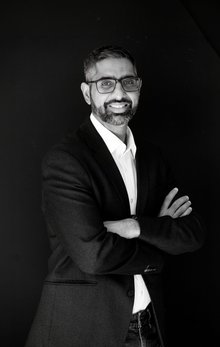
Rohit Anand
Chief Financial Officer