
The energy transition is often framed as a climate story, but for finance leaders it is just as much a question of capital, risk and returns.
ReNew has built its rise on turning renewable power into an investable business at scale, making it one of India’s most closely watched renewable energy companies.
Although the rise of ReNew may look like a clean energy tale at a first glance, finance has played a major role in its success story.
India’s second largest renewable energy company has grown by turning renewable power into something investors, lenders and partners alike are backing at scale – which has helped make it one of India’s most closely watched and competitive renewable energy companies.
The rise of ReNew
Founded in 2011 by Vaishali Nigam Sinha and Sumant Sinha, ReNew came about at a time when renewable energy in India was still being treated by many as a policy ideal rather than a financeable asset class.
In the years since, its growth has tracked a wider shift in Indian infrastructure finance, as solar, wind and storage became increasingly bankable and institutional capital followed.
“People in government or in business thought it was a ‘nice to do’. But nobody thought you could actually make money from a sustainability-related business,” she says.
That scepticism was central to ReNew’s early challenge. It had to prove that renewable energy could deliver returns, not just good intentions.
“If you’re very comfortable with something, the opportunity to create value isn’t as great,” she adds.
“And if something isn’t really understood by the ecosystem, but you have the conviction, then perhaps you must go for it.”
- 2011: ReNew is founded by Vaishali Nigam Sinha and Sumant Sinha
- July 2025: ReNew’s market cap reaches US$22.2bn
- FY2026: ReNew commissions ~2.4GW of renewable capacity, bringing its total operating capacity to approximately 12.6GW
- March 2026: A LeapFrog-led consortium invests US$95m into ReNew’s commercial and industrial platform
- FY2026: ReNew receives an A rating in the CDP Climate Change assessment, placing it in the global leadership band
- 2040: ReNew aims to reach its net zero target, which is validated by the SBTi
ReNew now has around 14GW of installed capacity and a pipeline of more than 20GW.
In April of this year, the company said it had commissioned about 2.4GW of renewable capacity in FY2026, taking total operating capacity to about 12.6GW – scale that underpins just how renewable energy is a business built on long-term capital, execution and confidence in future cash flows.
Before working in energy, Vaishali worked in finance in New York and London after completing a master’s degree at Columbia University – experience that gave her a close view of how capital is allocated, what investors look for and how difficult it can be to turn an emerging idea into something financeable.
Securing capital structure and scale
ReNew’s growth has been tied to the way it built itself as an investable platform.
Rather than remaining a narrow project developer, it expanded into a broader clean-energy business that could support multiple revenue streams and attract larger pools of capital – enabling it to move from solely wind into solar, storage, green hydrogen and manufacturing.
Vaishali describes that shift as moving “from electrons to molecules as well”.
She says: “It was really about decarbonisation. We felt that moving from being an IPP to being a decarbonisation partner to various stakeholders was the opportunity.”
Earlier this year, a LeapFrog-led consortium had invested US$95m into ReNew’s commercial and industrial platform, showcasing just how much investor appetite still exists for renewable power businesses with enterprise exposure.
ReNew also received an A rating in the CDP Climate Change assessment, placing it in the global leadership band.
Sumant said at the time: “The Commercial and Industrial (C&I) industry will be central to India’s decarbonisation journey and with investors like LeapFrog, we can deepen our ability to provide reliable, cost‑competitive renewable power to leading businesses across sectors. This partnership helps us scale solutions that reduce emissions, strengthen energy security and support India’s industrial growth in a way that is both sustainable and inclusive.”
What’s special about ReNew’s model?
ReNew’s net zero target – which it aims to reach by 2040 and is validated by the Science Based Targets initiative – is another layer of the company’s financing story.
It gives investors a clearer sense of how the business is positioning itself over the long term.
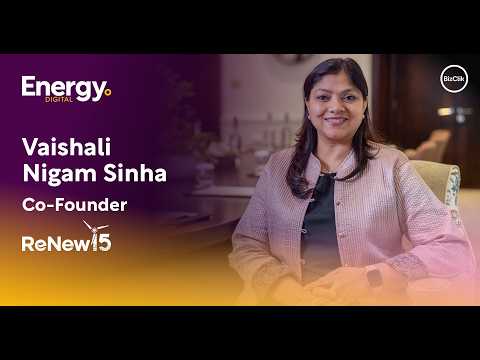
On top of her role as Co-Founder, Vaishali also chairs ReNew’s sustainability function and its charitable foundation alongside serving as President of the UN Global Compact Network India.
As well as underpinning the goals and values of ReNew, this approach reinforces the company’s governance-led identity, which matters in a sector where capital providers want both growth and credibility.
- More than 4,600 people work for ReNew
- In July 2025, ReNew’s market cap reached US$22.2bn
- ReNew has more than 150 utility-scale projects operating across nine states in India
- ReNew was founded by Vaishali Nigam Sinha and Sumant Sinha in 2011
- RenNew has ~14GW in installed capacity
- More than 20GW of capacity is in ReNew’s project pipeline
- A LeapFrog-led consortium has invested US$95m into ReNew's commercial & industrial platform
ReNew is a shining example of how renewable energy becomes financeable when it is treated as an infrastructure business with scale, governance and a clear capital model, rather than a nice to have.
“We were very clear that we wanted to do good business, but also in a good way, a clean energy business done in a clean way, with good governance, good community engagement and community values,” Vaishali says.
With all this considered and after setting up programmes to help bring more skilled workers – namely women – into the industry, Vaishali feels as though ReNew and the climate movement will be in safe hands for years to come.
“When you hire young people from top institutions in India, it’s really not only about money and wanting to be in the largest hedge fund,” she concludes. “People genuinely care about companies doing good business. That’s the good news.”
Did you know?
Company portals

Executives
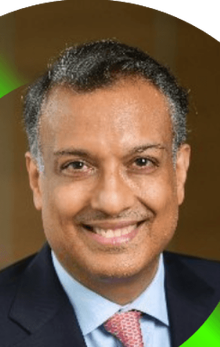
Sumant Sinha
Founder, Chairman and CEO
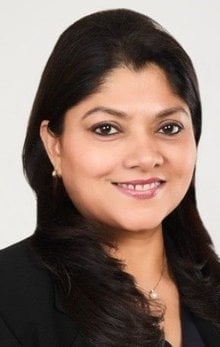
Vaishali Nigam Sinha
Co Founder and Chairperson Sustainability