AI Debt Hits US$3tn, Lender Bubble Concerns Grow

Is the AI explosion drifting into bubble territory? That question is growing louder among lenders after companies in the sector raised nearly US$850bn this year – a fourfold increase compared to their debt generation in 2023.
Risk indicators are flashing across the sector. Neocloud provider CoreWeave, which rents data-centre infrastructure to AI firms, now sees its bonds yielding 15%, with credit default insurance implying a 60% probability of default over five years. Such pricing underscores rising anxiety among high-yield investors.
Yet those developing the technology see an entirely different landscape.
“It’s the best moment in the history to build things, AI and everything related, because the technologies these days give all of us an amazing power,” Dan Balaceanu, Co-founder and Chief Product Officer of DRUID AI, says.
Reconciling the trader's scepticism with the builder's momentum has become the single most vital commercial dilemma of 2026.
- AI sector companies raised nearly US$850bn this year, a fourfold increase compared to their debt generation in 2023
- CoreWeave's bonds are yielding 15%, with credit default insurance implying a 60% probability of default over five years
- Anthropic pledged 5% of its equity to a new Public Benefit Fund, designed to scale up by an additional 2% for every 50% appreciation in firm value
- Anthropic previously earmarked US$200m to research AI's effects on workforce displacement, ahead of an IPO analysts estimate could surpass a US$2tn valuation
- DRUID observed an 11-fold increase in user interaction when transitioning conversational agents from text interfaces to voice, and is now pursuing a fivefold expansion over two years

The Argument for Long-Term Value
Despite structural stress, market bulls maintain a robust defence. NVIDIA's fortress balance sheet underpins significant portions of high-risk industry debt.
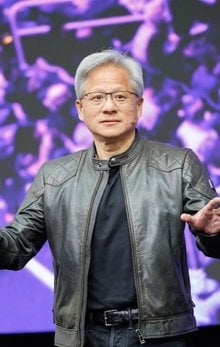
On 15 October, Chief Executive Jensen Huang publicly backed CoreWeave, insisting its cost of capital is "actually decreasing” as operations mature.
Similarly, Anthropic’s corporate actions signal long-term permanence rather than short-term panic. On Sunday, the developer pledged 5% of its equity to a fresh Public Benefit Fund, designed to scale up by an additional 2% for every 50% appreciation in firm value.
This follows US$200m previously earmarked to research AI's effects on workforce displacement, even as the firm prepares for an initial public offering that analysts estimate could surpass a US$2tn valuation.
Organisations rarely surrender expanding portions of their equity if they anticipate a collapse in asset values.
It’s the best moment in the history to build things, AI and everything related."
A Practical View from the Front Lines
Dan’s perspective stems from real-world execution rather than market speculation.
DRUID, the enterprise platform built in Romania that he co-founded, is pursuing a five-fold expansion over two years after observing an 11-fold increase in user interaction when transitioning conversational agents from text interfaces to voice.
His guidance for founders taking advantage of the current environment centres on capitalising on this heightened productivity.
In the pre-AI era, launching a concept required coordinating multiple software stacks and domain specialists; today, an individual founder can validate a prototype independently before bringing on engineering teams to harden and scale the infrastructure.
Will the AI market collapse? The reality is that two distinct asset classes are being evaluated simultaneously.
The surrounding debt framework may experience instability – and individual default risks remain high – yet the core technical capability remains intact.
Consequently, institutional lenders proceed with extreme caution, while technology founders continue to build without pause.
The AI industry's biggest players
NVIDIA: Dominates AI hardware manufacturing, producing specialised graphics processing units that power data centres training advanced large language models globally.
CEO: Jensen Huang | Headquarters: Santa Clara, California, US
OpenAI: Pioneers generative artificial intelligence, building industry-leading frontier models, natural language processing tools, and consumer applications like ChatGPT worldwide.
CEO: Sam Altman | Headquarters: San Francisco, California, US
Microsoft: Integrates cutting-edge artificial intelligence across cloud infrastructure, developer platforms, and enterprise productivity software through extensive platform investments.
CEO: Satya Nadella | Headquarters: Redmond, Washington, US






Executives

Dan Balaceanu
CPO
Jensen Huang
Founder and CEO