
BNY Takes Fund Records Onchain to Modernise Markets

BNY is taking a major step in applying blockchain to core market operations by shifting its transfer agency activities onchain.
Although blockchain has been around for more than 15 years, few large traditional institutions have applied it at the heart of their infrastructure.
BNY, the world’s largest asset safeguarding bank, is seeking to change that by building an onchain model for fund records.
The more-than-200-year-old financial institution plans to use blockchain technology to upgrade a fundamental part of its record-keeping framework.

According to reporting by the Financial Times, BNY is developing a digital version of its transfer agency business to process trades and maintain ownership records.
In this design, fund shares are converted into digital tokens that sit on a shared network, so ownership can be tracked and transferred instantly rather than via legacy databases.
While the existing physical transfer agent remains in place, creating a digital arm shows how markets are steadily moving towards issuing tokens on a blockchain.
Moving records to blockchain
BNY currently provides transfer agency services for US$8.6tn in assets across 7.6 million accounts. Migrating these functions to a blockchain creates a single, universal record of share ownership and reduces the need for multiple intermediaries.
Carolyn Weinberg, Chief Product and Innovation Officer at BNY, told the Financial Times: “We think of BNY as modernising a function that sits behind every single fund transaction by bringing the books and records on-chain.”
She emphasises that the initiative “has the potential to transform the processing and the infrastructure of how financial markets work”.
Earlier this year, BNY also executed a US Treasury trade outside regular settlement windows to show how activity could continue beyond standard cut-off times.
Carolyn says: “As client needs evolve and markets become more global, we’re advancing 24/7 UST settlement and financing while laying the groundwork for tokenised Treasuries and blockchain-based settlement.”
Asset managers see blockchain infrastructure as a way to shorten settlement cycles and enable systems to operate around the clock.
BNY’s scale across the asset lifecycle – issuance, settlement, trust services, financing, custody and clearing – gives us a unique opportunity to connect flows and data in ways that make markets more efficient and accessible for clients globally.
Major institutions such as BlackRock and Franklin Templeton have already launched digital money market funds, which hold cash and short-term debt but represent investor positions as digital tokens.
Clearer signals from US regulators have also made it simpler for firms to experiment with these digital asset structures.
Jenny Johnson, CEO at Franklin Templeton, told the Financial Times: “The challenge that most financial services firms face is we all spend a tonne of money reconciling data between systems and then we have to go reconcile with our counterparty.”
Co-existing with traditional rails
Even as onchain systems expand, industry leaders expect traditional physical infrastructure to persist alongside new digital rails for a long time.
Moving critical functions to blockchain introduces its own cybersecurity concerns, including vulnerabilities in smart contracts and cross-chain bridges.
Emily Portney, Global Head of Asset Servicing at BNY, says: “We fully recognise you have got trillions and trillions of dollars’ worth of funds that will continue to exist on traditional rails.”
Other major banks including Bank of America, Citi and JPMorgan Chase are working on a shared tokenised deposit network, targeted for the first half of 2027, designed to help protect deposits from stablecoins.
While legacy architectures will remain entrenched for years, BNY is positioning itself at the forefront of the gradual transition to a fully digital market environment. As Emily adds: “We want to build and help write the script and be the rails of the future.”






Executives
Carolyn Weinberg
Chief Product and Innovation Officer
Emily Portney
Global Head of Asset Servicing
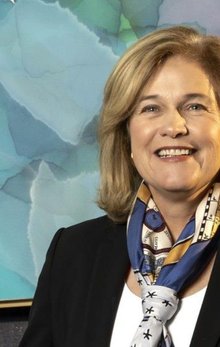
Jenny Johnson
President and CEO