C-Suite Executives Gather for BizClik’s Inaugural CXO Summit
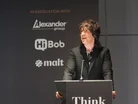
BizClik’s inaugural CXO Summit made its debut at Convene 155 Bishopsgate in London, bringing together over 500 elite executives across four dedicated zones for CEOs, CFOs, CHROs and CMOs.
Sponsored by Alexander Group, HiBob and Malt, the event featured 14 keynotes, 9 panel discussions and insights from global leaders at McDonald's, Wise, Fresha, NHS England, and many, many more.
Stacy Green, Chief People and Sustainability Officer at BizClik, opened the summit by addressing the human side of technological disruption – focusing on managing AI anxiety, streamlining operational friction and redefining the evolving CHRO role to drive enterprise strategy.
If you weren’t able to attend, here’s what you missed out on.
- 500+ in-person attendees & global executives from 42 companies
- 9 panels
- 14 keynote presentations
- 2 workshops
- 2 innovation sessions
Blowing Things Up in the Name of Physics
Written By: Isaiah McCall
The inaugural CXO Summit filled 155 Bishopsgate for two days in October with more than 500 senior leaders, and my favourite hour, bias admitted, was the CEO Summit.
I expected the usual panel, the kind where the wisdom is real but the room checks its email anyway. Instead, nobody touched a phone for an hour.
The CEO Summit panel was:
- Oluwole Fagbohun, Founder and CEO of Plotweaver;
- Livia Bernardini, Founder and CEO of The Intuitive Advantage;
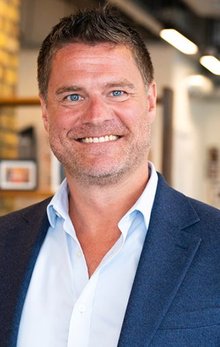
- Andy Haley, CEO of Sullivan & Stanley.
- Katya Polishchuk of Nissan Motor was a snapshot interview over coffee, not a panellist.

Oluwole Fagbohun, Founder and CEO of Plotweaver, warned against building a company where nobody thinks because AI does it for them.
Livia Bernardini, Founder and CEO of The Intuitive Advantage, argued that a leader without a truthful story loses everyone, because the rest “starts sounding like machine-generated, and nobody connects with it”.
Andy Haley, CEO of Sullivan & Stanley, noted that nobody knows their overhead anymore, only that they need more tokens.
Making the cost of a token variable, which basically means you have no idea what the run rate of the business is
When the floor opened for questions, someone asked what each panellist missed from childhood. Livia said journaling and expressing herself emotionally. Oluwole said blowing things up at home in the name of physics, his father mildly annoyed, and the room lit up.
The stage had competition, though, and most of it was over coffee for our snapshot interviews.
Katya Polishchuk, Global Product Manager at Nissan Motor, gave me a take on self-driving so sharp it went straight off the record, saved for a future issue of Business Chief.
Then we spent ten minutes on the Backrooms and the Russian writers she grew up with. Liminal horror, Dostoevsky, driverless cars. I still quote the many insights from the CXO Summit weekly.
Financing a Sustainable Future
Written By: Natalia Elliot
An exciting collaboration of enthusiastic sustainability leaders resulted in some expert insights at the Sustainable Finance Panel.
Panellists:
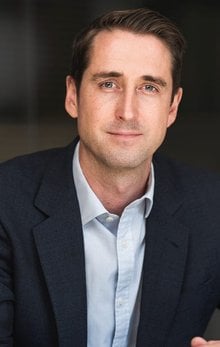
- James Murniek, CFO of Siemens UK&I
- Nicky O’Malley, UK CEO of 30x30
- Enrique Patrickson, CFO of Hexagon
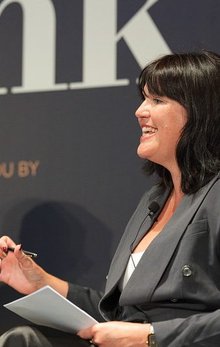
A highlight was a quote from Nicky O’Malley, UK CEO of 30x30, who perfectly captured how businesses view sustainability.
“A tree is worth more after it has been cut down,” she says.
“Nature loss is a business-critical issue.”
This was echoed by panellists James Murnieks and Enrique Patrickson, both CFOs, who centre on the importance of data supporting long-term ESG goals.
Enrique raises important questions: “Do you have a page or whole section that talks about what opex and capex are going into sustainability initiatives? Do you have a proper debate about which ones to fund?”
Investing in the planet should be seen as a long-term investment for every business.
Sustainable finance, like compliance, is more than just a tick-box exercise.
“It’s a business topic,” says James. I couldn’t agree more.
The CMO Summit
Written By: Georgia Greetham
Panellists:
- Adam Boita, CMO of Ecologi
- Bridget Kendrick, CMO and Global Head of Marketing at CRU Group
Adam Boita, CMO of Ecologi and Bridget Kendrick, CMO of CRU Group, sat down to discuss the way marketing leadership is changing at the CMO Summit panel.
According to the panellists, many marketing leaders are now focusing more on demonstrating the economic benefits of marketing in order to improve collaboration with other members of the C-Suite.
Collaboration between us and the Chief Financial Officers and Chief Product Officers can help give a better understanding of what marketing can bring to the table
Collaboration was a strong theme of the panel, with Adam sharing that a CMO is uniquely positioned to “join the dots” across a company – helping sales and product teams work together as one and ensuring marketing has a seat at the table.
What really makes a happy workplace?
Written By: Lucy Buchholz
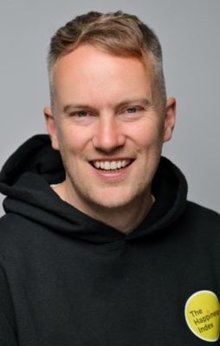
Taking centre stage at the CXO Summit, Matt Phelan, Co-Founder and Co-CEO of The Happiness Index, shared key data from the UK Workplace Happiness Report 2026.
Serving as a deeper follow-up to The Global Workplace Happiness Report released earlier in the year, the national report highlighted that happy employees don’t necessarily correlate with employee loyalty.
UK-based employees were found to be happier than many of their global peers; however, they’re also more likely to be a major flight risk, as only 62% intend to stay in their roles over the next 12 months, versus 72% internationally.
“The real basics are that happy employees are more creative, they're more productive, and their companies outperform their peers,” Matt said while on stage.
The key takeaway is that employers see work as a transaction and employees see it as a relationship. If the two don't come closer together, that's a problem
Rather than feeling connected to their company, employees use strong peer relationships as a “cultural shield” against friction, yet a sense of team camaraderie cannot replace a missing sense of belonging – the single strongest statistical driver of retention.
Matt highlighted how this disconnect runs through the entire hierarchy, with executives enjoying high clarity and autonomy, while entry-level staff struggle with poor feedback.
To protect the bottom line, leaders must look beyond surface perks and tackle core operational fixes: rebuilding feedback loops, breaking down departmental silos and aligning boardroom promises with daily realities.
- The Retention Paradox: UK employees report higher day-to-day happiness than global benchmarks; however, only 62% wanted to stay at the current company for the next 12 months.
- The Belonging Deficit: Belonging was named as the single strongest statistical driver of retention, but many UK workplaces trail significantly behind global standards.
- The Seniority Gap: Executive leaders score their workplace experience at a thriving high, while entry-level staff sit near the bottom due to poor feedback and collaboration barriers
McDonald's CPO Alex Snelling Explores Human-Centred AI Systems
Written By: Olivia Hartland-Robbins
Alex Snelling, CPO at McDonald's IOM Business Unit, explains how HR leaders must guide the practical integration of AI.
Addressing executives, Alex warns that overly restrictive corporate regulation of digital tools fails because employees naturally seek efficient solutions.
Rather than policing technology usage or tracking narrow speed metrics, organisations must build digital literacy.
Don't fall for the trap where the HR profession thinks it is useless because we are not complete AI experts
He cautions that pushing solely for higher output often generates low-quality work.
Reflecting on the digital journey at McDonald's, Alex highlights how new intelligent platforms automate friction-heavy administrative tasks like inventory forecasting.
This critical shift frees restaurant managers to concentrate on human coaching and relationship building, proving that empathy and connection remain the primary competitive differentiators in business today.
Accenture Edge CMO Ashley Gatehouse Explores Scope of CMO Role
Written By: Georgia Greetham
Research shows that 60% of business leaders currently view marketing merely as a cost centre.
Consequently, fewer than a third of marketing professionals feel they hold genuine influence across the wider business.
Addressing this strategic disconnect, Ashley Gatehouse, CMO at Accenture Edge, challenges executives to reclaim their scope by building a robust growth engine.
Marketing is much more than enterprise communications. Marketing is where we go to get things created. It’s where we get our brochures done
To combat corporate misconceptions, Ashley outlines a commercial framework requiring an accurate data foundation, a precise orchestration layer and authentic AI to multiply results.
He also stresses that modern marketing leaders must maintain tight alignment with both the Chief Executive and the finance department.
Securing these crucial boardroom relationships ultimately drives sustainable enterprise growth and elevates overall marketing influence.
Did you know?
Company portals



















Executives
Adam Boita
Chief Marketing Officer

Alex Snelling
Chief People Officer
Andy Haley
CEO
Ashley Gatehouse
CMO for Avanade and Global Mid-Market Marketing & Communications Lead at Accenture
Bridget Kendrick
Chief Marketing Officer and Global Head of Marketing
Ekaterina Polishchuk
Global Product Manager
Enrique Patrickson
Group CFO
James Murnieks
CFO of Great Britain and Ireland
Livia Bernardini
CEO and Global MD
Matt Phelan
Co-Founder
Nicky O'Malley
CEO UK

Oluwole Fagbohun
CEO and Founder
Stacy Green
Chief People & Sustainability Officer