Will Elon Musk Finally Take SpaceX Public after 24 Years?
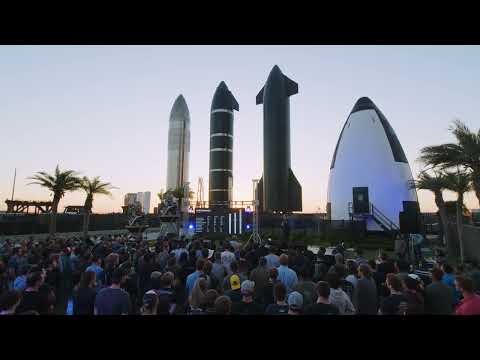
For 24 years, Elon Musk has maintained a consistent position on SpaceX's public market status: "I'm hesitant to take SpaceX public until we're on the way to Mars, or at least that Mars is certain."
It’s an approach that might be shifting.
A report in The Information in March 2025 suggested that SpaceX could file its Initial Public Offering (IPO) prospectus with US regulators within weeks, citing a person with direct knowledge of the plans.
The development marks a potential inflection point for private capital markets and the aerospace sector.
Capital requirements drive timeline shift
Since SpaceX's creation in 2002, Musk has described a public listing as a "disaster" for the company's long-term mission, arguing that quarterly earnings pressure would conflict with multi-decade ambitions to establish human presence on Mars.
The reversal could reflect changing capital requirements and market conditions.
The news circulated widely through Reuters and The Economic Times, with SpaceX's reported valuation of around US$1.75tn triggering a sizable market response.
Shares in publicly traded space companies rose in US trade following the announcement, with some firms seeing increases of as much as 10%.
Morgan Stanley, Goldman Sachs, JPMorgan Chase and Bank of America have been positioned as potential underwriters in the IPO process.
The path to this potential public offering began modestly. Musk founded SpaceX in March 2002 with US$100m of his own capital, more than half his payout from being ousted as CEO of PayPal in 2000.
He said at the time: "The goal is to revolutionise space technology, with the ultimate goal of enabling people to live on other planets."
The initial concept centred on the Mars Oasis project, a plan to send a robotic greenhouse to Mars to grow plants in dehydrated nutrient gel.
The company has since secured billions of dollars in government contracts and private space projects, establishing itself as a leader in the aerospace sector. It also owns xAI, which operates social media platform X and AI chatbot Grok.
Musk held the line against public markets for years. In a leaked 2018 memo to employees, he described the "short-term thinking" of the stock market as "counter-productive" to the mission of making life multiplanetary.
He abandoned this stance in 2024. When space journalist Eric Berger published an analysis on Ars Technica outlining the massive capital requirements for the company's mission and suggesting an IPO could be inevitable, Musk replied directly on X: "As usual, Eric is accurate".
Market response and manufacturing growth
Following The Information's disclosure, mid-cap space stocks surged as investors sought exposure to the sector. Rocket Lab climbed 11.4%, while Intuitive Machines and Sidus Space saw intraday jumps of 19.7% and 24.9%, respectively.
The rally could reflect a broader reclassification of space infrastructure. The xAI-SpaceX merger and plans for orbital data centres position space capabilities as foundational to AI infrastructure rather than a niche vertical. This framing could influence how investors value aerospace assets and related supply chains.
Alongside the potential IPO, Musk has announced plans to address supply chain constraints through Terafab, a new venture constructing two semiconductor fabrication facilities in Austin, Texas. The facilities are designed to provide dedicated chip supply for Tesla, xAI and SpaceX, producing components ranging from humanoid robot controllers to space-hardened satellite chips.
According to McKinsey, the semiconductor market was valued at US$775bn in 2024 and is projected to reach up to US$1.8tn by 2030. Musk has indicated that global supply cannot meet his internal requirements.

He said: "This announcement is about solving the key missing ingredient. To give you a sense of what we are talking about, the current output of AI compute is roughly twenty gigawatts per year. This chart explains why we need to build the Terafab because all of the rest of the output from earth is about 2% of what we need."
The Austin facilities represent a simplified manufacturing approach. "Terafab will technically be two fabs, each making only one chip design," Musk notes. "This greatly simplifies process flow and allows more linear, adjacent movement of the FOUP (Front Opening Unified Pod)."
The move toward domestic, in-house production aligns with US policy efforts to reshore critical manufacturing. Musk cited mismatched scaling timelines with existing partners.
He said: "We certainly want our existing supply chain to be clear. We are very grateful to our existing supply chain. To Samsung, TSMC, Micron and others. And we would like them to expand as quickly as they can. And we will buy all of their chips. I have said these exact words to them. But there's a maximum rate at which they're comfortable expanding. But that rate is much less than we would like."
The combination of the potential SpaceX IPO and vertical integration into semiconductor production could signal broader shifts in how technology companies approach capital structure and supply chain risk management. Whether these moves deliver on their stated objectives remains dependent on execution and regulatory approval.