
Q&A: Rimini Street CFO Michael Perica on Digital Adaptation

The Chief No Officer; otherwise known as the Chief Financial Officer, is about adapting to change. Saying no to budget increase requests, office expansions and sometimes a change in workflow is a thing of the past.
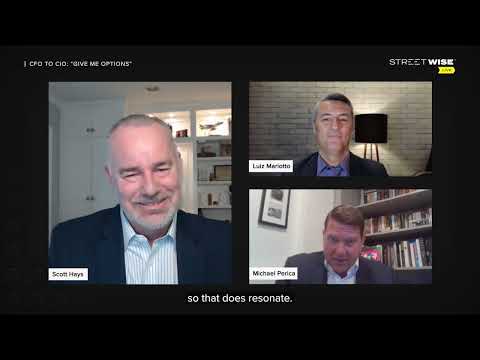
Michael Perica, CFO at Rimini Street, explains how the CFO role has changed; namely with the rise of digital transformation.
After years of running complex ERP systems, Michael’s expertise positioned him expertly for the CFO role at the business solutions company, currently specialising in Agentic AI ERP innovation.
His 12 years of experience in capital markets also provides unique expertise which he shares exclusively with Finance Chief in this Q&A.
Could you tell us a little about your experience?
I’ve experienced firsthand the disruption to my operations teams, my IT teams, and capital when we were forced into these full-stack upgrades that are par for the course for software vendors.” he notes.
Each time, we were told these upgrades would make everything run better and that we’d have access to a range of features – and each time, I saw limited value relative to the cost and disruption. When I discovered third-party support, my first thought was: “Why did no one tell me about this?”
I’ve been on the other side; I know the impact that vendor-mandated timelines have on businesses and enterprises, and just how much budget they consume. I discovered another way, one that gives optionality to businesses, and I’m passionate about sharing it in my role as CFO.
AI creates value when it is applied to the right data, in the right workflows, with the right economics behind it."
As CFOs adapt to utilise AI in daily operations, how can they best maximise their opportunities using AI software, both in the financial suite and administrative duties?
CFOs need to approach AI with both urgency and discipline. I see two extremes in the market: those who have gone all in, largely driven by boards, shareholders, or competitive pressure, and those who are waiting too long because they are unsure of where to start.
The best path sits between those two – pragmatic, prepared and business-led.
AI is usage-based, and for companies spending billions of dollars training their models, they have to recoup those costs. Businesses face huge bills for this usage, with token usage costing more than employees as enterprises adopt frontier AI models. For CFOs, the starting point has to be data.
Before adopting AI at scale, businesses need to understand where their data lives, how clean it is, who controls it and how it can be used responsibly.
AI creates value when it is applied to the right data, in the right workflows, with the right economics behind it.
That is why I believe CFOs should focus first on optimising the systems and data they already have. Rather than spending capital on unnecessary upgrades or locking into a single vendor’s AI roadmap, companies can prepare their existing environments so AI can be layered on top and around them.
At Rimini Street, we call this the orchestration layer, and it ensures that our clients can have their AI separate, a layer on top, rather than deeply embedded.
This gives businesses more flexibility to choose the right model for the right use case, manage consumption costs and adapt as technology evolves.
The CFOs who get the most from AI are not necessarily those who move first. They are the ones who move with control, clarity and a strong understanding of where AI can deliver measurable business value.
Is there a particular trend you're seeing at the moment with the way businesses are transforming?
One trend I’m seeing is that many businesses are starting with a transformation in finance and administrative functions.
That makes sense: these areas are data-rich, process-heavy and often have clear use cases for automation, gen AI and agentic AI.
The right digital transformation strategy allows you to think enterprise-wide and access data across all those systems, customising on top of your own processes and workflows.
Finance, procurement, HR and customer operations all have workflows where AI can reduce manual effort, improve analysis and accelerate decision-making.
Once businesses prove the value in one function, the opportunity naturally expands across the enterprise.
The companies moving fastest are not always the ones replacing everything. They are often the ones finding smarter ways to unlock more value from the systems, workflows and data they already have.
That is where transformation becomes more practical, more cost-effective and easier to scale.
How can businesses navigate growth in a volatile market?
Volatility is not new. Savvy CFOs understand that growth in volatile markets depends on having optionality – to protect cash, challenge spending that doesn’t create clear business value and redirecting capital toward initiatives that improve resilience, efficiency and competitive advantage.
We learn to adapt, and those learnings help inform the next market fluctuation. Globally, we get better and better at adapting, whether it's tariffs, commodity supercycles or managing our supply chains.
The first time it comes on the scene, it’s difficult, but once you’ve adjusted to that volatility, you’re able to mitigate the impact of a fresh shock to the system.
Navigating growth in a volatile market means learning from what’s come before and preparing your capital to survive it, just like you have before.
- Rimini Street was founded by CEO Seth Ravin in 2005
- Michael Perica has been a CFO since 2008
- Rimini Street has 31 worldwide offices
- Michael has 12 years of experience in capital markets
- At the end of Q2 2026, Rimini Street brought in revenue of US$111.1m
What trends have you seen CFOs adopt in the last few years?
CFOs have traditionally been seen as a rigid group and set in their ways – the Chief ‘No’ Officer. And I’ve seen a trend in how this role has changed over the last few years. CFOs have become more adaptable, flexible and dynamic.
Never has it been more of a requirement for a successful CFO to have this forward-looking analysis of multiple scenarios, which has been outside of the traditional required skill set, than right now.
We’re going to keep seeing the role evolve this way, and adopting this flexible way of thinking is inherent for the success of today’s CFO.
They are not just protecting the balance sheet; they are helping shape where the business goes next.
How are businesses optimising working capital efficiency?
Businesses are optimising working capital efficiency by taking a harder look at what’s really consuming their budgets.
One trend gaining traction is the movement away from the IT vendor-mandated support model and toward alternative, smarter pathways. Third-party alternatives are having a pivotal moment, particularly in these turbulent markets, because they allow businesses to stay on their systems that work, avoid the mandatory upgrade spend, and redeploy capital where it matters.
It’s the data that sits within a business's existing systems – years of transactional data, for example – that offers another way to optimise working capital. Businesses locked into a vendor relationship can’t efficiently free that data. By moving off the vendor roadmap, they can automate workflows that typically tie up cash, such as reconciliations and invoice matching.
Most importantly, they can do that with the right model for them, matched to the task’s complexity, rather than with the option dictated to them. Then there’s a compounding effect that takes place.
Working capital efficiency shows up in lower support costs, faster cash cycles, reduced overheads and capital is freed up from upgrades that previously delivered little business value.
Should CFOs be wary of AI?
Yes, but that wariness should be focused on economics, governance and overreliance, not fear.
AI will fundamentally transform what businesses can do, shifting work away from manual data gathering and towards faster review, analysis and decision support. This transition has been discussed within the CFO community for years, including the risk of overreliance.
If you believe AI will solve every problem, then there’s a risk of overinvestment and misplaced expectations.
It’s an area where CFOs have to push back, and instead ask, "What is AI actually best at, and how do we augment what we’re doing with it?”
We know that AI tools and agents can outperform humans on repeatable, admin-heavy tasks.
But where does it fall short, and where do we need to keep people central to the decisions that count? Having an ostrich mentality towards AI won’t protect CFOs, but an honest overview of where human judgment matters and when AI is right for a task will enable them to use that wariness to build an adoption strategy that works.
CFOs have become more adaptable, flexible and dynamic.
Could you share some advice you think all CFOs should adopt as there's a rapid uptake in businesses adopting digital transformation?
The single biggest opportunity is for CFOs to partner closely with their CIO counterparts, because everything in an organisation has a dollar value, irrespective of currency. Getting to unit economics across the enterprise requires the right systems and the right data.
Historically, organisations operated in silos, with a big ERP system, human capital management, CRM, product line management, each built and managed separately, and digital transformation changes that.
The right digital transformation strategy allows you to think enterprise-wide and access data across all those systems, customising on top of your own processes and workflows.
That's the holy grail, and the CFO and CIO together have a real opportunity to deploy capital and tools across the entire enterprise to optimise their digital strategy, not in silos, not one size fits all, but with the finance lens and the technology capability working together to design the organisation's future state with customisation that was simply not possible before.
That partnership, done well, can make a meaningful difference across the whole organisation.
About Rimini Street: Founded in 2005, Rimini Street is a global business software company that has paired with many businesses on the Forbes Global 100 and the Fortune 500. Its CEO Seth Ravin has been at the helm since he founded the company in the early 2000s. Rimini Street is based in Las Vegas, Nevada, in the US.
Rimini Street Partners:
ServiceNow: Headquartered in California, US, ServiceNow was founded in 2004 by Fred Luddy. Led by Chairman and CEO Bill McDermott, the company operates globally as a cloud computing giant, delivering digital workflow solutions that optimise enterprise productivity. ServiceNow aims to redefine modern business operations through continuous innovation, expanding its platform capabilities to integrate enterprise-grade AI and automated service management.
RedShield Security: Based in Wellington, New Zealand, RedShield Security was co-founded in 2008 by Andy Prow. RedShield is led by its new CEO Dovid Clarke, appointed in 2026, who was previously CISO to the government in Victoria, Australia. As a pioneer in web application shielding, the cybersecurity firm protects mission-critical digital assets for global enterprises. RedShield specialises in cloud-based web application firewalls and managed cybersecurity services.
Bain and Company: Founded in 1973 by William ‘Bill’ Bain Jr. and his associates, Bain & Company is a prominent global management consulting firm headquartered in Massachusetts, US. Under the leadership of Global Managing Partner Christophe de Vusser, the firm operates out of numerous international offices. Bain collaborates with forward-thinking business leaders to enable sustainable performance improvement, strategic innovation, private equity advisory and corporate restructuring, driving transformative growth across a wide array of sectors.
Salesforce: Headquartered in California, US, Salesforce was co-founded in 1999 by Marc Benioff, who continues to lead as Chairman and CEO. A pioneer in cloud-based software, Salesforce revolutionised enterprise technology as the global leader in Customer Relationship Management (CRM). The company empowers organisations of all sizes to connect seamlessly with their customers through its unified ecosystem of AI-driven analytics, sales, marketing and service automation solutions.
Workday: Established in 2005 by David Duffield and Aneel Bhusri, Workday maintains its headquarters in California, US. Under the leadership of Co-Founder, Chair and CEO Aneel Bhusri, the global enterprise cloud provider serves leading organisations across the globe. Specialising in solutions for human capital and financial management, Workday delivers automated workflows, real-time operational insights and data-driven capabilities that enable international businesses to streamline workforce management and adapt successfully to changing market conditions.
Company portals

Executives

Michael L. Perica
Chief Financial Officer