
Q&A with Sandeep Dama, COO and CFO of Redsand

Sandeep Dama is Chief Operating Officer and CFO at Redsand, founded by Nicole Anderson in 2013. He has been a Co-Founder of the company since 2022.
Redsand deploys and operates edge AI infrastructure so organisations can build intelligence that was not possible before, at the asset level.
Sandeep brings over 18 years of financial experience to the company, and in an exclusive Q&A with Finance Chief, explains how his unique perspective positions him to speak at our CXO Summit about how AI is the engine room for transformation at the CFO office.
You can catch Sandeep’s keynote at the CXO Summit on 7 October at Convene, 155, Bishopsgate in London. He will be speaking about The CFO office as the engine of AI transformation.
Tickets for the event are available here.

Have you received any advice at the start of your career that has stayed with you?
My career started as an M&A banker at Rothschild. One of the best pieces of advice I was given at the very start was to be diligent and show perfection even if it is only a small detail. It was an important lesson in investment banking where details really matter, but it is something I have carried with me to this day.
As you move through your career, you obviously start looking at much bigger decisions and the larger picture. But I still believe the small things matter. I think getting the detail right also gives you the confidence to step back and look at the bigger picture properly.
At the CXO Summit, are you excited to speak about the impact of AI for CFOs?
I am looking forward to sharing my thoughts on why the CFO office is becoming one of the most important parts of AI transformation in any organisation.
In my role at Redsand, I look after both finance and operations, which gives me a perspective across both the economics of AI and its practical implementation. We are moving beyond AI projects that are interesting experiments internally and for our clients. They increasingly need an outcome, whether that is efficiency, revenue, productivity or reduced risk, and most of these outcomes eventually have a financial impact.
That naturally brings the CFO into the discussion, not just to approve the budget but to determine whether the investment is actually delivering an outcome and whether it should scale.
Being in the backroom is not always bad. The view can actually be quite nice.
Is there a particular bit of advice you wish all CFOs knew ahead of the summit?
I would probably say, “Sometimes, forget Excel”. Excel can give you almost any answer you want depending on what you put into it. The more important thing is understanding what the number actually means and the context around it.
Take valuation as an example. Ask a CFO who is being completely honest what a company is worth and quite often the answer starts with “it depends”. Change the assumptions or circumstances and the number changes. Judgement matters as much as the calculation.
I probably have a slightly unconventional view of the CFO role. The CFO today needs to understand the business, operations and what is happening outside the spreadsheet, not just the numbers inside it.
What aspect of leadership do you find most rewarding?
Some of the most important recognition does not come when you are expecting it. In fact, it can go completely unacknowledged at the time. But a true leader will eventually see the impact of their decisions and strategy in what their teams and organisations go on to achieve.
That is something I find very rewarding. I do not think you always have to be at the forefront or be the person getting the recognition. Sometimes you make a decision, help someone or change something and only much later realise the impact it had.
Being in the backroom is not always bad. The view can actually be quite nice.
Sometimes, forget Excel"
Do you think AI is on its way to revolutionising financial operations?
I think the impact of AI on financial operations will be much more positive than negative. At the moment, most of the attention is naturally on tools such as ChatGPT and Claude, but I think the real impact will go much further than that.
It becomes really interesting when AI can look at historical data together with what is happening today and start helping us understand possible future states. For a CFO, that can almost become a superpower if used well.
And I do not think this should stop with financial data. If you can understand what is happening across the organisation, you can start understanding the financial impact much earlier.
What panel are you most excited to attend at the CFO Summit?
I am particularly interested in The Future of People & Skills and the different perspectives from the public and private sectors on the workforce.
There is a lot of discussion about AI and what it means for jobs, especially what it means for the jobs that remain and how those roles change. If technology allows somebody to do in minutes what previously took hours or days, what do they do with that time and what new skills become important?
For a CFO, people, productivity, technology investment and cost are all connected. Productivity does not necessarily mean job losses. It could also mean new roles that we have not imagined before. Hopefully, we will hear some of those perspectives at the event.
- Redsand was founded in 2013 by Nicole Anderson, and Sandeep has been a Co-Founder since 2022.
- Sandeep has 18 years of experience in finance
- The CXO summit is the first of its kind from BizClik
- 7-8 October are the dates for the CXO summit
- The Future of People and Skills panel takes place on the second day of the summit, 8 October
Join us at the CXO Summit to hear Sandeep speak in depth about AI in the office of the CFO.
Company portals

Executives
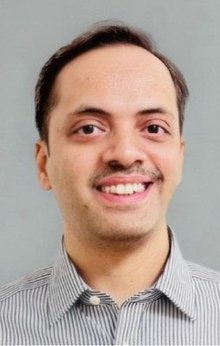
Sandeep Dama
Co-Founder, CFO and COO