
Shutterstock's CEO Quit, Now the CFO Has Both Jobs

Rik Powell walked into the week as Shutterstock's finance chief and walked out running the whole company – without losing the finance job either.
Paul Hennessy resigned as CEO and board director on 12 July, effective immediately, and the board named Rik interim CEO, a role he takes on while keeping his CFO title. It comes barely a month after Shutterstock's US$3.7bn merger with rival Getty Images fell apart.
The board's first move was reassurance. It "has full confidence in the Shutterstock leadership team", it said in a company statement, and believes Rik "is well equipped to serve as Interim CEO/CFO" while it searches for a permanent chief.
Paul's departure, the company noted in an SEC filing, "was not related to any disagreements with the company over its operations, policies or practices."

When the top job opens, call the CFO
When a CEO leaves without warning, roughly one in five of those vacancies goes to the company's own CFO, and CFO-to-CEO promotions hit a decade high last year, according to Crist Kolder Associates’ 2025 Volatility report released 28 Jan.
The logic is that few people know the numbers, the risks and the investors better than the executive who has spent years reporting them. In a reset, boards prize a safe pair of hands over a splashy outsider, and nobody soothes a jittery market like the person who already speaks its language.
Rik fits the pattern to the letter. He has been Shutterstock's CFO since November 2024 and now carries both jobs at once. He is also in strikingly current company. In the past year alone, the role of the finance chief has stepped up at:
- Toyota, where Kenta Kon moved from CFO to CEO
- Warner Bros. Discovery, where Gunnar Wiedenfels is set to run Global Networks
- The Washington Post, where Jeff D'Onofrio took the interim reins
- Diageo, where Nik Jhangiani stepped in as interim CEO
The double hat has a catch. The executive now setting strategy is the same one paid to scrutinise it, and a CFO running the company is a CFO half-watching the books. A fine bridge, rarely a final destination.
The Getty ghost in the room
Before Shutterstock, Rik spent three years as CFO of Getty Images, the very rival his new employer had just tried and failed to buy.
The US$3.7bn deal to merge the two stock-media giants collapsed in June after Britain's competition regulator demanded Shutterstock sell its editorial business to win approval. Getty walked.
So the man now running Shutterstock knows its would-be partner from the inside, and inherits a company that must write a fresh strategy without the merger it had been banking on. The board is engaging a strategic adviser to help chart the way forward.
What HR should take from it
Paul leaves after four years, and a spell running the used-car retailer Vroom before that. His exit, disagreement or not, is exactly the kind of sudden vacancy that tests a company's bench overnight.
Shutterstock's answer is the increasingly familiar one: promote from within the C-suite, protect continuity, buy time to choose properly.
For most boards, succession planning is a box they tick and forget, until the morning a chief walks out and the answer has to be sitting in the room.
Rik may keep the chair or merely warm it for an outsider, and the search is already on. But a sudden exit usually costs a company its footing, and Shutterstock barely lost a step.
Company portals




Executives
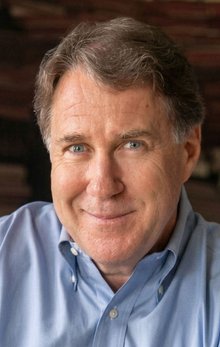
Paul Hennessy
CEO

Rik Powell
CFO