
Managing global payment complexity doesn't require a complete legacy overhaul.
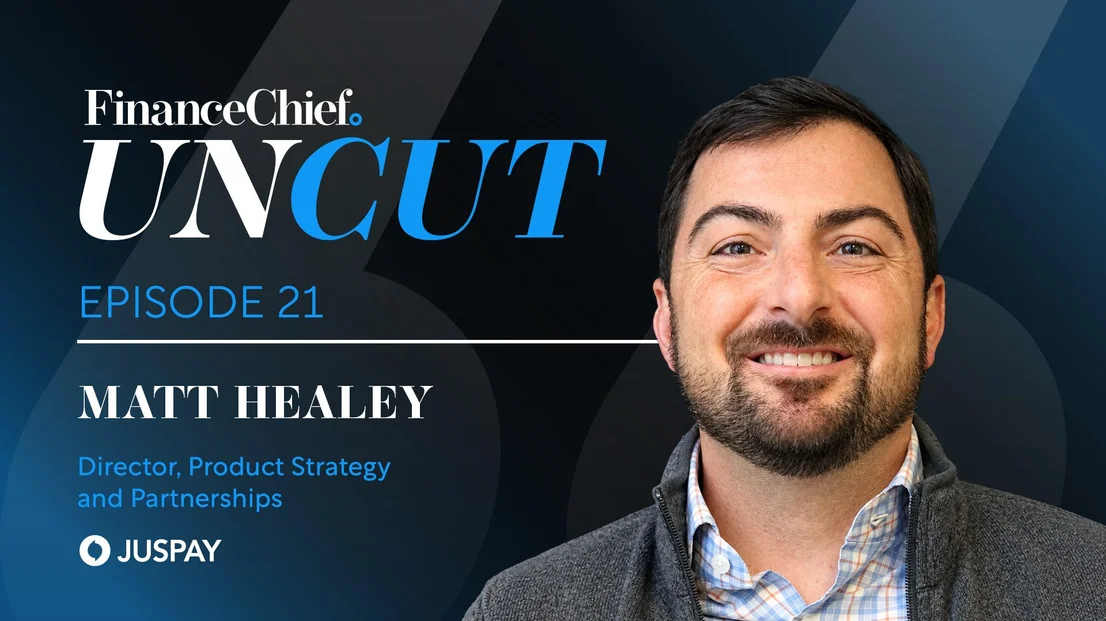
In Episode 21 of Finance Chief Uncut, Matt Healey, Director, Product Strategy and Partnerships at Juspay, joins Charlie King to discuss payment orchestration, intelligent routing and evolving regulations like PSD3.
Drawing on his experience at MasterCard and Amazon, Matt explains how Juspay’s open-source platform, Hyperswitch, offers enterprise control. This approach optimises authorization rates, lowers interchange costs, and builds resiliency without requiring a total system replacement.
🎧 To listen on Spotify click here
▶️ To listen and watch on YouTube click here
🍎 To listen on Apple click here
In this episode we explore:
- Why payments orchestration is becoming a strategic priority for finance leaders
- How checkout optimisation directly impacts revenue and conversion
- Why a single payments provider is increasingly a commercial risk
- How Juspay helps enterprises route payments intelligently across providers
- Why the CFO needs a seat at the payments technology conversation
- What the next generation of payments infrastructure looks like
Start with modular adoption, not replacement
For Matt, modernising a payment stack should start by identifying gaps rather than throwing away existing systems. Large enterprise merchants have invested heavily in building internal connections and infrastructure; trying to rip and replace everything introduces unnecessary risk and disruption.
By taking a modular approach, finance and technology leaders can adopt specific orchestration components such as routing, revenue recovery, or observability, at their own pace while preserving their core acquirer relationships.
Open-source as the "Linux for Payments"
Juspay positions its Hyperswitch orchestration layer as the open-source operating system for payments. Traditional SaaS orchestration layers can function as black boxes where merchants lose visibility over transaction flows and fees.
An open-source framework allows organisations to audit the code directly, deploy it on their own infrastructure, and avoid restrictive vendor lock-in. This shift transforms SaaS "rental" into true technological ownership and control for financial leadership.
Drive commercial impact with intelligent routing
Intelligent routing turns payment orchestration into a direct driver of commercial value. By taking signals across the entire transaction lifecycle – such as latency, time of day, MCC codes, and regional issuer patterns – decision engines can automatically direct transactions through the optimal path.
This approach delivers authorisation rate lifts of 2% to 9% while allowing finance leaders to balance high approval rates against least-cost routing options for debit and interchange fees.
Build resiliency and reduce maintenance drag
System downtime is inevitable in global payments, making infrastructure resiliency essential. An orchestration layer ensures failover protection by dynamically re-routing transactions if a gateway or payment provider experiences an outage, avoiding single points of failure.
Crucially, delegating provider maintenance and compliance updates to an orchestration layer frees internal engineering teams from constant backlog pressure, enabling them to focus resources on core product innovation.
Prepare for regulatory change with proven infrastructure
Upcoming European regulatory and infrastructure shifts – including PSD3, SEPA Instant, and the Digital Euro – will place fresh demands on merchant tech stacks. Navigating these changes requires an infrastructure partner with experience in handling complex, large-scale regulatory rollouts (such as Juspay’s involvement with the UPI/BHIM protocol in India).
Finance leaders should ensure their underlying payment stack is inherently adaptable, allowing them to remain compliant without constantly rebuilding their technical architecture.
Explore more from Finance Chief Uncut
Catch up on Episode 20, featuring Rishi Kapoor, Global Head of Partner Sales Engineering at Alteryx, exploring how finance leaders can solve business problems, measure AI ROI and maintain human oversight as adoption scales.
Company portals

Executives

Matthew Healey
Director, Product Strategy and Partnerships