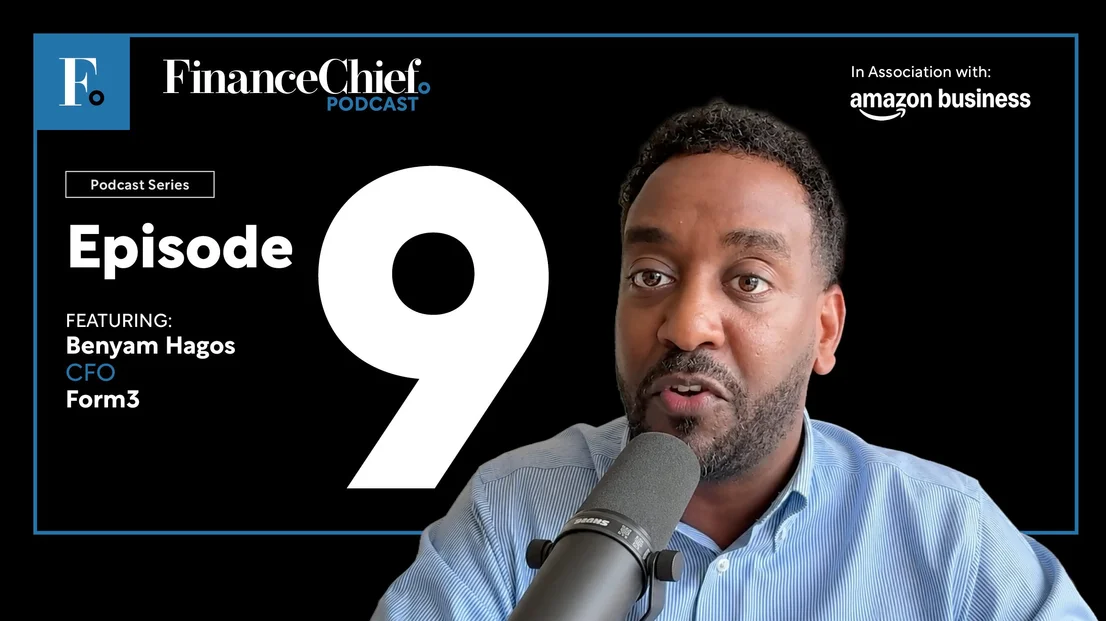
Episode 9 | Benyam Hagos on Modern Payments Infrastructure
Related Podcasts
Modern payments infrastructure isn't the most visible part of financial services. But for the banks and fintechs that get it wrong, it's the thing that holds everything else back.
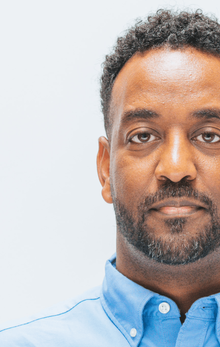
In this episode of the Finance Chief Podcast, host Matt High sits down with Benyam Hagos, CFO at Form3 and Chairman and NED at Trust Payments, to discuss what building modern payments infrastructure actually looks like, and what it means for the finance leaders overseeing it.
Benyam brings nearly two decades of experience across corporate finance, legacy banking and high-growth fintech, and talks about all of it with the clarity that comes from having lived through each stage of the industry's evolution.
🎧 To listen on Spotify click here
▶️ To listen and watch on YouTube click here
In this episode we explore:
- Why legacy payments infrastructure is reaching breaking point and what replacing it involves
- How Form3's multi-cloud architecture delivers resilience most providers can't match
- Why the UK, Europe and US each require a fundamentally different approach to real-time payments
- How Benyam thinks about capital allocation and the CFO's role as a commercial partner
- Why AI in financial services deserves more scrutiny than it currently gets
Why legacy infrastructure is hitting a wall
The banks Benyam works with aren't failing, they're constrained. Systems built decades ago have been updated incrementally ever since, and those updates carry a cost: engineering time, capital and organisational bandwidth.
Form3's proposition is to take the payments infrastructure problem off their plate entirely, freeing those resources for the things that actually differentiate them in the market.
What makes Form3 different?
Two things stand out. The single API model means every client sits on the same platform, receives the same updates and operates within the same controls - no customisation, which sounds restrictive but delivers consistency, simpler auditing and a guarantee that every client stays current.
The second is multi-cloud resilience: Form3 runs live across three providers simultaneously, not one primary and two backups. When a major cloud goes down, their processing hasn't missed a beat.
Scaling across different markets
The UK was the right place to start the business, says Benyam. Europe brought a different challenge, with SEPA operating cross-border but functioning domestically.
The US is the biggest opportunity: real-time payments aren't mandated there, so adoption has to come from the banks themselves. Benyam lived in the US for three years and still remembers paying rent by cheque. However, he believes the tipping point is coming.
The CFO as commercial partner
The controllership basics are table stakes. What moves a business forward, in Benyam's view, is knowing where to place bets, how much risk the business can absorb and when to shift capital away from initiatives that aren't working.
It's also, it turns out, something of a family calling. Benyam's father was a CFO, and watching that shaped his own path into finance.
A measured take on AI
Benyam's question after Money 20/20 was simple: how much are firms actually using AI versus just saying they are? His approach is to go beneath the marketing and talk to peers, attend the right conversations and understand whether the change is real.
In payments, the case for AI is strongest where it drives genuine efficiency and frees resources for higher-value work. The noise, he says, is worth cutting through carefully.
Subscribe and listen
Episode 9 is brought to you by Amazon Business, the one-stop destination for everything your organisation needs.
Explore more from the finance chief podcast
Catch up on Episode 8, featuring Amit Agrawal, Group CFO at Al Faris Group, discussing strategic finance, capital allocation and what it means to be a value-creating CFO.
Company portals

Executives
Benyam Hagos
Chief Financial Officer