
Finance Podcast: Mercer's Cara Williams on ESG Investment
Related Podcasts
Sustainable finance takes centre stage in Episode 3
The latest episode of the Finance Podcast from Finance Chief explores one of the defining challenges facing global markets today: how organisations can align sustainable finance with resilient long-term returns.
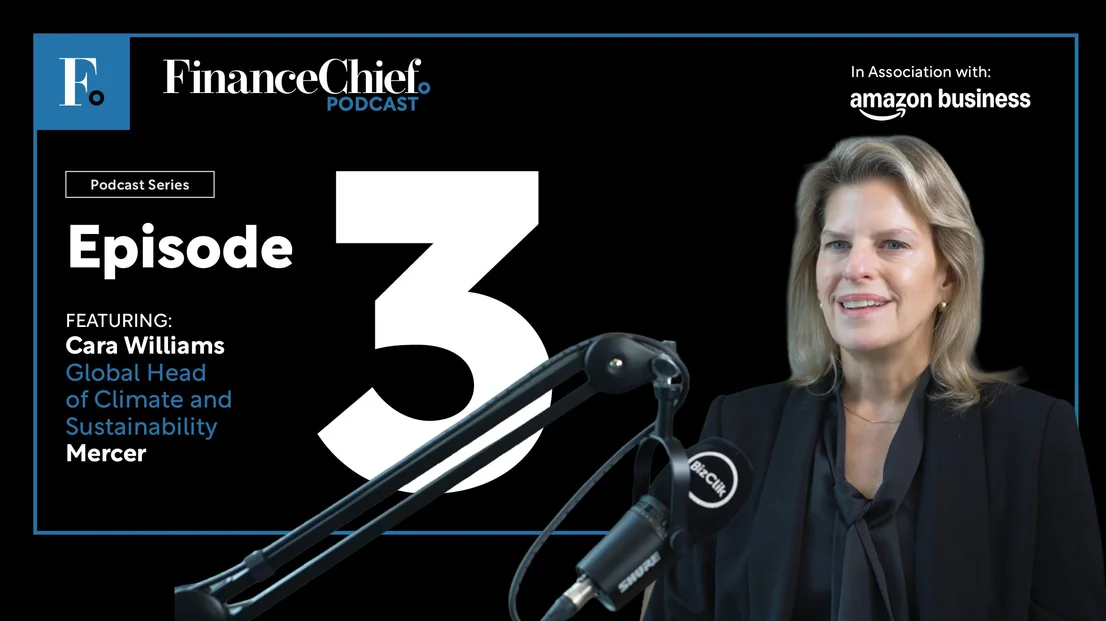
Hosted by Charlie King, Episode 3 welcomes Cara Williams, Global Head of Climate and Sustainability at Mercer. Drawing on more than two decades of experience in investment consulting and sustainability strategy, Williams shares insights into how climate risk, ESG evolution and data-driven investment models are reshaping modern finance.
The discussion highlights how investors, asset managers and corporations are moving beyond sustainability as a compliance exercise and embedding it into core business strategy.
From ESG buzzwords to measurable investment value
Williams explains how the rapid rise of ESG investing created both opportunity and confusion across the financial sector. As sustainability became a mainstream talking point, many firms adopted ESG terminology without clearly defining outcomes or measurable impact.
According to Williams, the recent market backlash against ESG has also produced positive change by forcing organisations to clarify what sustainable finance products are designed to achieve. Investors are now demanding greater transparency, clearer transition plans and measurable accountability from businesses and asset managers alike.
The episode explores how sustainability is increasingly viewed through the lens of investment risk and long-term resilience rather than reputation management alone. This shift is encouraging companies to define authentic sustainability priorities that align directly with business performance, workforce strategy and client expectations.
Climate risk becomes a core financial concern
One of the strongest themes throughout the conversation is the growing recognition that climate risk is investment risk. Williams discusses how investors are assessing exposure to flooding, water scarcity, wildfires and infrastructure disruption across underlying portfolios.
She highlights the increasing importance of insurability within investment portfolios, particularly as extreme weather events place pressure on assets and operations worldwide. Asset managers are now examining whether factories, infrastructure and supply chains can remain operational in changing climate conditions.
The conversation also explores the concept of double materiality, where organisations must consider both how climate affects business performance and how business operations impact the environment. Williams argues that companies ignoring these realities may face significant financial and operational consequences in the years ahead.
AI and data are reshaping sustainable investing
Technology and innovation also feature heavily in the episode, particularly the role of AI in improving sustainable investment analysis.
Williams discusses Mercer’s ACT framework, which helps investors move beyond historical carbon footprint data and evaluate whether organisations have credible transition strategies in place. Rather than focusing solely on past emissions, the framework assesses how companies plan to meet future climate commitments and whether those plans are realistic.
The conversation also examines the growing relationship between AI, infrastructure investment and natural resource management. Williams points to rising demand for data centres and the associated pressure on water resources, highlighting how investors must consider both operational requirements and wider community impact.
At the same time, she believes AI has the potential to make impact investing more transparent, scalable and commercially viable. Improved data analysis and visibility could unlock greater capital flows into sustainability-focused projects worldwide.
Leadership and sustainable finance skills are evolving
Throughout the episode, Williams emphasises the importance of leadership, adaptability and cross-functional thinking in sustainable finance roles.
She notes that sustainability can no longer sit in isolated departments or operate as a standalone initiative. Instead, organisations are increasingly integrating sustainability considerations into investment allocation, operational strategy and workforce planning.
The discussion also addresses the changing language around sustainability. Williams argues that moving away from overly emotive terminology allows organisations to focus on measurable business outcomes and practical investment decisions.
For finance leaders, this means developing stronger capabilities in climate risk assessment, regulatory understanding, data interpretation and long-term strategic planning.
The future of sustainable finance and carbon markets
Looking ahead, Williams predicts that regulated carbon markets could become one of the most significant drivers of future sustainable investment growth.
She explains that greater standardisation and consistency across carbon credits and sustainability taxonomies would create stronger investor confidence and accelerate funding into climate and nature-based projects globally.
The episode closes on an optimistic note, with Williams highlighting the growing integration of sustainability into mainstream investment processes. While challenges remain, she believes the financial industry is moving steadily toward a future where climate considerations are embedded into every investment decision rather than treated as a separate discipline.
Subscribe and Listen
Episode 3 is brought to you by Amazon Business, the one-stop destination for everything your organisation needs.
Explore More from the Finance Podcast Series
Catch up on Episode 2, which features Jody Bhagat discussing banking modernisation, AI, customer experience and digital transformation.
Company portals


Executives
Cara Williams
Senior Partner, Global Head of Climate and Sustainability