


Rafael Sueiro, CFO at Radisson Hotels: Know the Business
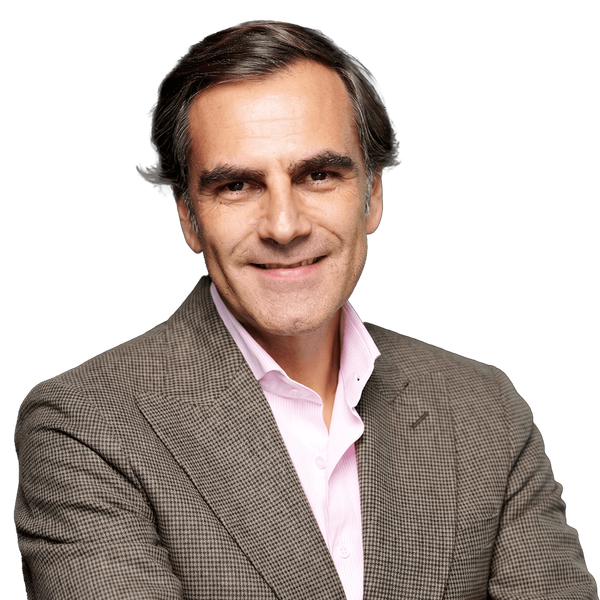
Rafael Sueiro, CFO at Radisson Hotels: Know the Business
What could a luxury hospitality brand know about AI?
Evolving with the business means adapting to new, sometimes fascinating, technology. Seamlessly combining a career from working in auditing and corporate finance at some of the big four consulting firms – mainly at Arthur Andersen and Deloitte – to working in major hospitality companies in telecom and hospitality, Rafael Sueiro has built the perfect resume for his current role as Group CFO at the Radisson Hotel Group.
A notable achievement, underpinned by 25 years of understanding back-office, investments and accounting. The rule of three simply does not do him justice, as Rafael’s years of knowledge condense into all the major financial operations: planning and controlling, mergers and acquisitions, risk management and, of course, business intelligence (BI).
A key rung in his ladder was the three years he spent at CWT, now owned by American Express Global Business Travel, as Global CFO of CWT Meetings & Events.
His move to the Radisson in 2021 as SVP of Financial Planning and Business Intelligence allowed him to view real-time business information from the chain that operates in over 100 countries. Understanding finance informs his mantra: to “help colleagues in the company make faster and better decisions,” which he says has guided his career.
The culmination of that knowledge results in having the truly expert insight to spot what’s a trend and what’s here to stay; in this case, he explains that “finance has been transforming, and I think we have just started. It's a duality, because many companies have been doing many things in recent years, but what's coming right now is a game-changer. It is going to reshape and completely change what we have been doing in the past.”
Radisson Hotels are absolutely the pinnacle of luxury. A multinational hotel chain with 1,640 hotels, it operates as one of the two largest hotel groups in the world, after the finalised acquisition by Jin Jiang International in 2018.
“Know the business ”
His move to the Radisson in 2021 as SVP of Financial Planning and Business Intelligence allowed him to view real-time business information from the chain that operates in over 100 countries. Understanding finance informs his mantra: to “help colleagues in the company make faster and better decisions,” which he says has guided his career.
The culmination of that knowledge results in having the truly expert insight to spot what’s a trend and what’s here to stay; in this case, he explains that “finance has been transforming, and I think we have just started. It's a duality, because many companies have been doing many things in recent years, but what's coming right now is a game-changer. It is going to reshape and completely change what we have been doing in the past.”
Radisson Hotels are absolutely the pinnacle of luxury. A multinational hotel chain with 1,640 hotels, it operates as one of the two largest hotel groups in the world, after the finalised acquisition by Jin Jiang International in 2018.
His move to the Radisson in 2021 as SVP of Financial Planning and Business Intelligence allowed him to view real-time business information from the chain that operates in over 100 countries. Understanding finance informs his mantra: to “help colleagues in the company make faster and better decisions,” which he says has guided his career.
The culmination of that knowledge results in having the truly expert insight to spot what’s a trend and what’s here to stay; in this case, he explains that “finance has been transforming, and I think we have just started. It's a duality, because many companies have been doing many things in recent years, but what's coming right now is a game-changer. It is going to reshape and completely change what we have been doing in the past.”
Radisson Hotels are absolutely the pinnacle of luxury. A multinational hotel chain with 1,640 hotels, it operates as one of the two largest hotel groups in the world, after the finalised acquisition by Jin Jiang International in 2018.
“If no one is asking for your input, that's when you need to worry ”
The fourth element
Finance is adapting at a rapid pace. Previously, workflows were simple, almost meditative, repetitive tasks. Why spend valuable human time on that when a machine could do it for you? And thus automation was introduced. Rafael acknowledges this with the caveat that AI will change things.
“Now with AI, things are going to change dramatically – because we need to find the right balance. It is no longer about pure automation; it is about changing the way we work. And for that, we definitely need to adapt,” he says.
What exactly is meant by that, Rafael clarifies, is the “legacy programmes and projects that have always been based on people, systems, and processes – the typical consulting project. Right now, I think there is a fourth element: people, processes, systems and data.”
Data is absolutely everything. Collected from a granular level to influence controlling decisions, leaders must be able to realise what the right kind of data is to include on transformational projects. Without that, Rafael says, the “reality is that the outcome will not be the one we want.”

He continues: “Digital transformation in the past was more about automation and doing things faster, but we are pivoting right now to do things differently and to leverage new technologies that will give us capabilities we don't have right now.”
Data is capital for any business; central to any decision, and no leader or individual can move without it. CFOs must “know the business,” Rafael explains, “if you don’t know the business, you cannot help.”
Every CFO should be, according to Rafael, “making sure that [we] know about the business and participate in the strategic decisions the company takes.” He asks: “How can we participate? By guaranteeing the viability, profitability and value created through those systems and controls, but at the same time, understanding the consequences of the decisions we take.”
Ultimately, this is because business decisions made at the top filter down to be felt at every single level on their way to the bottom. Rafael notes that: “One of the issues that many big companies have is that management sometimes doesn’t really understand the full impact of their decisions, because they are focused specifically on one function or a very specific activity.
“They may miss the downstream effects of what they have decided because they didn't take into account other elements that were not properly perceived or identified, but will ultimately have an impact.”
What do we talk about when we talk about AI
Making up the majority of business headlines, AI has made a home in every company strategy, acting as a starting point for some and a booster for others. AI in its use has evolved from automation to what is termed “transformational” by Rafael.
Explaining that using AI is part of an ongoing evolution of the CFO, he says that “CFOs need to look forward. I am already thinking about how the finance function is going to be transformed in five years.”
AI can be used for short-term or longer-term tasks. Rafael says the Radisson has already identified more than 50 specific initiatives for AI to transform activities that are transactional, actively analysing technology to see what will help in those areas. Long-term uses require more thought, prompting questions around value and long-term efficiency in the business. Is it what’s needed right now?
“…we need to allow young people to be brave. A 25-year-old is going to have a much faster, better grasp of new technologies than I do. ”
“Right now, what we need to ensure is that the AI's output is accurate and free of hallucinations,” he declares. “The role shifts more toward controlling, testing value and managing internal alerts. These will be the new activities for people in finance, shifting away from pure transaction processing.”
This perspective comes at a time when he says: “Hotels are developing their own intelligence. We are creating tools to make sure that General Managers and hotel staff can manage almost everything very easily. Before, this data wasn't as aggregated, immediate, or automated. Now, knowing almost everything on the spot and online is a game-changer.”
Predictive intelligence is another tool in the AI belt. Rafael clarifies that predictive analytics are disrupting the legacy strategy of focusing on the past so that finance leaders can instead look to the future.
“We can now add massive layers of external data to complement our internal data, checking competitors and regional surroundings to bring extra value all in one place. It becomes much more interactive.”
Advancing the mindset, not just the automation
While it’s true that AI can only be as good as the data provided, there must be a conversation about how to ensure humans are not left out. Some strategies ensure there is a human–in-the-loop step, while some make sure that the final decision always rests with the human. Rafael’s human philosophy takes a practical approach. To avoid leaving us behind, the key, he says, is training.
Similarly, companies must be growing talent at home. Businesses must “incentivise internal entrepreneurship,” Rafael advises.
“Out of the 50+ initiatives we identified, we are launching a contest to reward the ideas that are the most attractive, implementable and scalable. This shows the team that they will be rewarded for innovation and that we aren't afraid of change.
“I will showcase them during our quarterly all-hands meetings so everyone sees the real-world effects of that training.”
Change comes with time, and as the latest generation embarks on their own journeys to become the newest and most in-touch wave of leaders for future innovation.
Rafael is candid about what the future we need to invest in looks like: “At the same time, we need to allow young people to be brave. A 25-year-old is going to have a much faster, better grasp of new technologies than I do.”
There’s a reason for ‘Chief’ in any major title. Leadership is not only about showcasing excellent business decisions, but also about investing in your people.
“We must give them the time and platform to show what they can do, without middle management putting stoppers on that creativity. Our job as leadership is to create the right governance in terms of access and compliance, while fuelling that entrepreneurship,” Rafael explains.
“We need to make sure our people know we count on them to make things better and faster.”
Being a CFO, therefore, marries knowing the business, empowering the people and utilising the technology. Rafael relays: “There are many people who are incredibly good at the technical side of what they do. What will differentiate finance professionals and future CFOs is going beyond.”
But what steps can you take in order to come close to the Group CFO for the Radisson Hotels? Rafael suggests that it all goes back to knowing the pulse of the business in addition to the impacts of one’s actions, global and granular.
“Ultimately, always help,” he concludes.
“We are a support function; if we don't help the organisation, why are we here? When someone from another department comes to you and asks, ‘What's your view on this? Can you help me analyse that?’—that is the best sign.
“It means you are influencing decisions and that they respect and count on your perspective. If no one is asking for your input, that's when you need to worry.”
Company portals

Executives

Rafael Sueiro
Group CFO