Top 10: Sustainable Banks
As multinational conglomerates face mounting regulatory demands and investor pressures regarding environmental, social and governance (ESG) standards, corporate treasury teams are actively restructuring their banking relationships.
The world’s largest corporate entities rely heavily on institutional banking partners to deliver syndicated green loans, underwrite sustainability-linked debt and facilitate transitional capital deployment.
As 2030 inches closer, top businesses are eyeing their emissions goals and silently worrying how to best improve their ESG rating.
Read our list to find the Top 10 Sustainable Banks that make the balance sheet read a little easier - on recycled paper, of course.
10. Triodos Bank
CEO: Marcel Zudiam
Headquarters: Driebergen-Rijsenburg, Netherlands
Founded: 1980

Operating as a pioneer in values-based banking, Triodos Bank maintains a strict impact-first mandate that excludes fossil fuel financing, weapons manufacturing and unsustainable agriculture.
Its innovative platform focuses on financing renewable energy projects, circular economy ventures and organic agriculture.
Companies engaging in specialised European sustainability initiatives partner with Triodos for its unparalleled transparency, complete portfolio impact reporting and deep structural expertise in circular transition finance.
9. Standard Chartered
CEO: Bill Winters
Headquarters: London, UK
Founded: 1969

Standard Chartered occupies a vital operational niche by structuring sustainable finance facilities specifically tailored to emerging markets across Asia, Africa and the Middle East.
The bank’s principles focus on sustainability, allowing it to offer milestones such as Bangladesh’s first corporate green bond loan.
Additionally it offers transition-linked loans, green foreign exchange flow, ESG structured investment deposits and blended capital solutions that allow multinational corporations to decarbonise complex cross-border supply chains effectively.
Having already channelled €82bn (US$95.33bn) into sustainable businesses in H2 2026, BBVA has established itself as a premier arranger of green bonds and sustainability-linked loan structures, accelerating corporate decarbonisation across Europe and Latin America.
The institution’s proprietary ESG advisory frameworks enable corporate clients and partners such as COP31 in Turkiye to optimise capital costs while fulfilling public net-zero commitments.
BBVA is committed to a sustainable business model, aiming to channel €700bn (US$813.9bn) into sustainable businesses from 2025 to 2029.
7. ING Group
CEO: Steven van Rijswijk
Headquarters: Amsterdam, Netherlands
Founded: 1991
ING pioneered the world’s first sustainability-linked loan in 2017 and continues to drive structural innovation across global debt markets.
The bank lends itself as a leader in sustainability outcomes and knowledge through its various reports on sustainable debt and understanding of social impact on sustainable capital markets.
It also uses its Terra approach, which focuses on value chain in order to meet decarbonisation goals. ING works with clients in industries that account for 75% of CO2 emissions, according to a 2024 International Energy Agency report.
6. Societe Generale
CEO: Slawomir Krupa
Headquarters: Paris, France
Founded: 1864

Societe Generale maintains itself as a leader in global renewable energy project finance and sustainable infrastructure advisory.
The bank consistently supports large-scale projects, including the financing of the largest renewable energy development in Kazakhstan.
It aims to spend approximately €500bn (US$577.19bn) on sustainable finance between 2024 and 2030, in addition to €1bn (US$1.15bn) specifically to support new players in the cleantech sector as part of its efforts to support the transition to clean energy.
5. Crédit Agricole
CEO: Olivier Gavalda
Headquarters: Montrouge, France
Founded: 1894

Crédit Agricole leverages its immense mutual banking structure to lead European green debt underwriting and climate advisory.
Through its investment banking division, the group regularly structures large-scale green bond frameworks for corporate issuers, all the while enforcing sector-specific exit strategies.
These range from thermal coal to unabated fossil fuel expansion, positioning the bank as a central financing partner for industrial decarbonisation.
The group rests the foundations for its decision on its CSR strategy, which is pivotal to the business model.
4. BNP Paribas
CEO: Jean-Laurent Bonnafé
Headquarters: Paris, France
Founded: 1802
BNP Paribas acts as an institutional heavyweight in Europe’s transition economy, executing massive allocations toward low-carbon energy capital deployment.
The bank integrates strict environmental screening throughout its corporate and institutional banking division, assisting global corporate entities in restructuring supply chains, funding biodiversity initiatives and executing large-scale green bond issuances across multiple international markets.
3. HSBC
CEO: Georges Elhedery
Headquarters: London, UK
Founded: 1865

HSBC maintains a unique vantage point connecting Western capital markets with Asian industrial supply chains.
The bank’s sustainable finance operation delivers cross-border green trade facilities, transition debt and climate tech venture capital.
HSBC’s commitment to providing up to US$1tn in sustainable financing and investment by 2030 allows major multinational corporations to fund supply chain decarbonisation, renewable energy infrastructure and transition projects in rapidly developing markets.
Through its dedicated climate solutions initiatives, the bank bridges the gap between commercial corporate lending and sustainable growth objectives on a global scale.
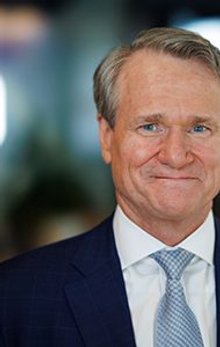
2. Bank of America
CEO: Brian Moynihan
Headquarters: North Carolina, USA
Founded: 1998

Bank of America operates as a major force in sustainable debt markets, mobilising immense commercial capital toward green technology, clean energy development and sustainable infrastructure.
The bank has committed US$1.5tn in sustainable finance capital by 2030, with over US$1tn dedicated explicitly to the environmental transition through its Environmental Business Initiative.
It has issued US$13.85bn in ESG bonds as the number one corporate issuer of ESG bonds in the US.
The bank also offers a “first of its kind” Equality Progress Sustainable Bond, which it describes as being aimed at fixed-income investors. The bond is aimed at advancing equality in race, gender, environmental sustainability and economic opportunity. This is under the bank’s broader goals to help reach UN SDGs.
The Bank of America has been carbon neutral since 2019.
1. JPMorgan Chase
CEO: Jamie Dimon
Headquarters: New York, US
Founded: 1799
As the world's largest commercial bank by balance sheet scale, JPMorgan Chase utilises its unmatched capital deployment capabilities to finance global energy infrastructure and corporate transition initiatives.
Under its target to finance and facilitate US$2.5tn in sustainable development over 10 years, announced in 2021, the bank provides global enterprises with structured green financing, carbon market advice and syndication for multi-billion-dollar clean energy projects.
JP Morgan Asset Management engaged with 1,300 companies in 2025 alone for its sustainable investment approach, using internally developed methodology which matches its clients financial goals to objectives for sustainable outcomes.
In 2024, the bank committed US$68bn toward the Green objective, financing or facilitating a total of US$900bn towards its sustainable development target since 2021, as announced in its 2024 Sustainability Report.
Company portals










Executives
Bill Winters
Group Chief Executive
Brian Moynihan
CEO and Chair of the Board

Georges Elhedery
Group CEO
Jamie Dimon
Chairman of the Board

Jean-Laurent Bonnafé
Chief Executive Officer

Marcel Zuidam
CEO
Olivier Gavalda
Chairman of the Board of Directors

Onur Genç
CEO

Slawomir Krupa
CEO
Steven van Rijswijk
Chief Executive Officer