Top 10 Sustainable Investment Firms
You would be forgiven for thinking sustainable investing had all but died.
It spent 2025 getting shouted at from every direction, dropped from politicians' talking points, stripped out of fund names and written off as a fad that put virtue ahead of returns.
And yet the firms below are still here, running the money, banking the fees and, in several cases, growing.
Some are global giants with a deep green streak; others were built for this from day one. Here are the ten putting sustainability at the heart of investing.
10. Australian Ethical
CEO: John McMurdo
Revenue: AU$118.8m (US$83.7m)
HQ: Sydney, Australia

Proof that "ethical" can be a business model rather than a marketing badge. Australia's original values-led manager screens out fossil fuels, weapons, tobacco and gambling, then tilts what is left towards healthcare, renewables and companies it judges to do more good than harm.
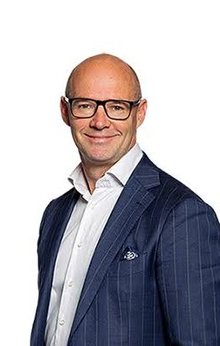
It runs both superannuation and managed funds, and has grown by wagering that plenty of Australians, many of them younger, want their pension to match their principles. Listed on the ASX, it turned that conviction into AU$118.8m (US$78m) of revenue last year.
9. Impax
CEO: Ian Simm
Revenue: £141.9m (US$191.9m)
HQ: London, UK

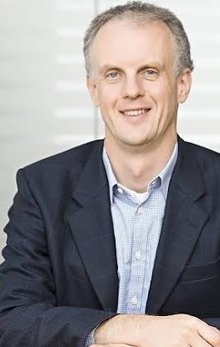
A pure-play before pure-play was fashionable. Founder Ian Simm has spent the best part of three decades building Impax into the purest bet in the business, investing only in the shift to a cleaner economy, from water and renewable power to resource efficiency and sustainable food.
Its funds are a bellwether for the whole theme, which cuts both ways. Lately that has meant a harder run, revenue slipping to £141.9m (US$191.9m) as the green-growth trade fell out of favour, yet few names are as tied to the space, and its US funds still trade under the long-established Pax brand.
8. Foresight Group
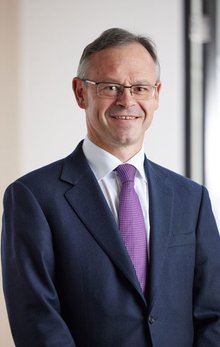
CEO: Gary Fraser
Revenue: £154m (US$207.4m)
HQ: London, UK
Sustainability you can stand on. Foresight builds and runs the unglamorous backbone of the energy transition, the solar farms, wind projects and grid infrastructure that turn net zero into hardware, alongside a regional private equity arm backing smaller businesses across the UK.
Founded in 1984 and now a FTSE 250 constituent with £13.2bn (US$17.78bn) under management, it has made real assets into a real business.
Revenue rose 9% to £154m (US$207.4m) in its last financial year as its clean-energy and infrastructure funds kept drawing capital, proof that the transition pays the managers who build it, not only those who bankroll it.
7. Liontrust
CEO: John Ions
Revenue: £169.8m (US$228.7m)
HQ: London, UK
Home to one of Europe's biggest sustainable fund ranges, even through a bruising stretch.
Liontrust's Sustainable Investment team, one of the longest-running in the UK, manages some £8bn (US$10.8bn) across its Sustainable Future funds, and it remains the group's clearest calling card.
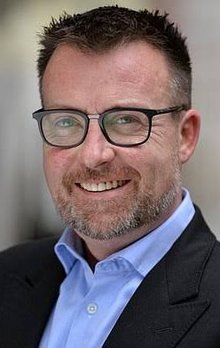
The wider business has had a harder time, shedding close to £5bn (US$6.74bn) in net outflows in its last year as active managers everywhere lost ground to passives. Yet under John Ions, CEO since 2010, that sustainable franchise still anchors the firm and a large slice of its £169.8m (US$228.7m) in revenue.
6. Generation Investment Management
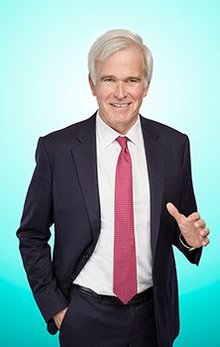
CEO: Al Gore (Chair) and David Blood (Senior Partner)
Revenue: US$300m
HQ: London, UK

The most famous name in sustainable investing does not report its revenue, so it sits here on estimate rather than disclosure.
Co-founded in 2004 by Al Gore and former Goldman Sachs Asset Management Chief David Blood, Generation set out to prove that patient, sustainability-led investing simply makes better returns, and its flagship global equity strategy spent years doing exactly that.
It stays resolutely private, running around US$31bn and answering to no stock exchange.
5. Robeco
CEO: Karin van Baardwijk
Revenue: €483.3m (US$557m)
HQ: Rotterdam, Netherlands

Sustainability is not a product line at Robeco, it is the founding story.
The Rotterdam house, in business since 1929, has run responsible strategies since the 1990s and now threads ESG through everything it does, with more than three-quarters of its €228bn (US$263bn) in assets sustainability-linked.
Owned by Japan's ORIX, it posted €483m (US$557m) in operating income, and it is as much a research shop as a fund manager, its work on biodiversity, climate and a just transition setting a good deal of the industry's agenda. Where rivals bolted sustainability on, Robeco built around it, and that head start still shows.
4. Ninety One
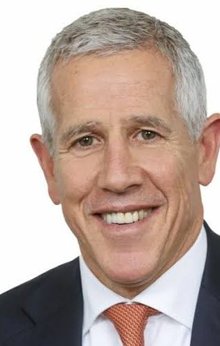
CEO: Hendrik du Toit
Revenue: £594.6m (US$801m)
HQ: London, UK and Cape Town, South Africa
Sustainability with an emerging-markets accent. Spun out of Investec in 2020, Ninety One has built its pitch around financing the transition where it is hardest and most needed, across Africa, Asia and beyond, rather than simply divesting from the awkward parts.
Under founder Hendrik du Toit it has pushed close to US$200bn in assets, arguing that a bank in Lagos or a utility in Mumbai matters more to the planet than another clean-tech ETF in London. Revenue reached £594.6m (US$801m) in its last year.
3. Federated Hermes
CEO: J. Christopher Donahue
Revenue: US$1.8bn
HQ: Pittsburgh, US
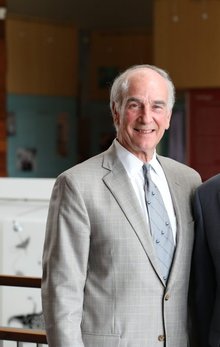
If stewardship has a home, it is here. Through a unit called EOS, born at the UK's Hermes and brought together with Pittsburgh's Federated Investors in a 2018 merger, Federated Hermes acts as a hired conscience for other investors, voting their shares and pressing company boards across more than a trillion dollars of assets. That makes it one of the most powerful forces in corporate governance most people have never heard of.
There is a neat contradiction at its heart. This is also one of the world's largest managers of money-market funds, the low-drama business of looking after corporate cash, yet it built its name on patient, activist ownership.
Hermes helped shape the original Principles for Responsible Investment, and the firm's whole philosophy rests on the idea that responsible investing is how you build wealth over decades, not a nice-to-have bolted on top.
Revenue climbed 10% to US$1.8bn in 2025, evidence that engagement-led investing still pays the bills. Christopher Donahue has run the firm since 1998.
2. Amundi
CEO: Valérie Baudson
Revenue: €3.4bn (US$3.9bn)
HQ: Paris, France

Europe's biggest asset manager did not so much join the sustainability wave as try to own it.
Built from a 2010 merger of Crédit Agricole and Société Générale's fund arms, and still controlled by Crédit Agricole, Amundi has poured its scale into net-zero commitments, low-cost ESG index funds and a promise to weave sustainability across its whole €2.4tn (US$2.77tn) book, betting that responsible investing becomes the default rather than a niche.
The reach that lets Amundi nudge whole markets also draws the accusation that giant managers water down their green pledges once real money and awkward clients are involved.
The counter is the balance sheet. Adjusted net revenue reached €3.42bn (US$3.95bn) in 2025, up 6%, on the back of record inflows of close to €90bn (US$103.88bn), and its ESG range keeps swelling.
Under Valérie Baudson, CEO since 2021, sustainability at Amundi is less a fund range than a corporate strategy, and its size means where it goes, a large part of European investing tends to follow.
1. Schroders
CEO: Richard Oldfield
Revenue: £3.25bn (US$4.38bn)
HQ: London, UK
Top of the list is a firm more than two centuries old that has reinvented itself as a sustainability heavyweight.
Founded in London in 1804 and still steered by the Schroder family, it has built one of the industry's deepest benches in active ownership and impact. It bought its way into renewables through Schroders Greencoat and into development finance through the impact investor BlueOrchard, then folded sustainability into how it presents the whole group.
New CEO Richard Oldfield inherited a bruising year and a £150m (US$202m) cost-cutting brief, yet the top line held firm at £3.25bn (US$4.38bn) in 2025, the largest of any firm here, and assets have since climbed back to record levels.
What keeps Schroders at number one is not a single green fund but the way it has hitched a 220-year-old brand to the argument that sustainability and returns pull in the same direction. In a field where plenty of rivals fell silent, it kept talking, and kept selling.
Company portals







Executives
David Blood
Senior Partner
Gary Fraser
CEO
Hendrik du Toit
CEO
Ian Simm
CEO & Founder
J. Christopher Donahue
President & CEO
John Ions
CEO
John McMurdo
CEO
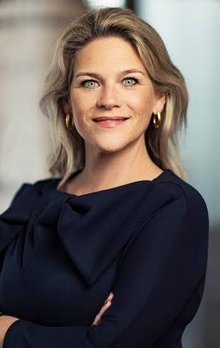
Karin van Baardwijk
CEO
Richard Oldfield
Group Chief Executive
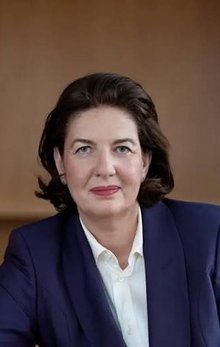
Valérie Baudson