Top 10: Treasury Risk Solutions

Treasury has moved from the back office to the front line of corporate risk.
Currency swings, restless interest rates and brittle supply chains have turned cash visibility into a board-level concern.
The platforms below give finance leaders a single nerve centre. They surface cash across every bank in real time, harden payments against fraud and flag exposure before it bites.
This Top 10 ranks the solutions trading spreadsheets for AI-driven forecasting and live banking, built to defend the balance sheet when the next shock lands.
Find out which is ranked number one by Finance Chief.
10. Trovata
Company founded: 2016
Based in: San Diego, California
CEO: Brett Turner
Trovata made its name pulling live bank data through APIs rather than overnight files, giving treasurers a near-instant picture of their cash.
The San Diego company applies machine learning to that feed to automate cash reporting and sharpen forecasting, flagging unusual flows that may signal fraud or error. Increasingly pitched as an AI assistant for treasury, it lets finance teams query balances and model scenarios in plain language, shrinking the gap between a cash question and a credible answer.
9. HighRadius
Company founded: 2006
Based in: Houston, Texas
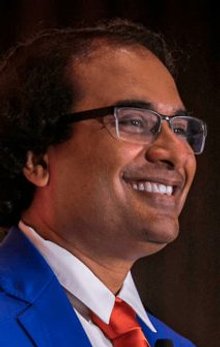
CEO: Sashi Narahari

The order-to-cash cycle made HighRadius's name, and the same AI now reaches into the treasury itself. The Houston company's autonomous finance tools forecast cash with machine learning, reconcile accounts and manage liquidity with little human input.
Pulling receivables, collections and treasury into a single model hands finance leaders a complete view of incoming cash and the risks riding alongside it.
For large enterprises chasing efficiency, the pitch is blunt enough. Treasury risk is a problem for software to solve, not headcount.
8. Bottomline Technologies
Company founded: 1989
Based in: Portsmouth, New Hampshire
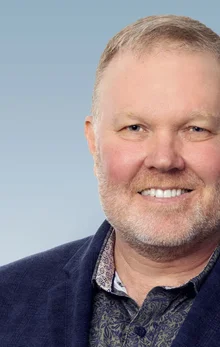
CEO: Craig Saks
Bottomline anchors its treasury proposition in payments and financial crime, two of the costliest risks a finance team faces.
The New Hampshire company combines business payments, cash management and real-time fraud monitoring, watching transactions for the patterns that precede losses. Its tools help treasurers move money securely across borders while keeping a tight grip on who can authorise what.
For organisations where a single rogue payment can mean millions, Bottomline sells control as much as convenience.
7. Bloomberg
Company founded: 1981
Based in: New York, US
CEO: Vlad Kliatchko
Few products are as embedded in finance as the Bloomberg Terminal, and treasury risk now lives on the same screen.
Bloomberg's Treasury and Risk Management tools sit alongside the terminal's market data, pricing and analytics, letting treasurers value positions, model FX and interest-rate risk and run hedges against live prices.
Founded by Michael Bloomberg in 1981 and based in New York, the company pairs market data few rivals can match with treasury workflow. For desks that live by real-time pricing, that proximity to the market is the whole pitch.
6. GTreasury (now Ripple Treasury)
Company founded: 1986
Based in: Chicago, Illinois, US
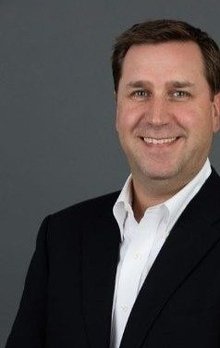
CEO: Renaat Ver Eecke

Few acquisitions capture the moment quite like this one. When crypto group Ripple paid around US$1bn for GTreasury in October 2025, it bought nearly four decades of treasury pedigree in a single stroke. The Chicago platform spans cash visibility, forecasting, payments and a deep risk suite covering FX and interest-rate exposure, hedge accounting and bank connectivity.
Now rebranded Ripple Treasury, the platform is being rebuilt to run fiat and digital assets side by side, letting finance teams hold and move money across banks and crypto custody from one interface.
5. FIS
Company founded: 1968
Based in: Jacksonville, Florida
CEO: Stephanie Ferris
FIS is a financial-technology institution whose treasury tools run inside some of the world's largest companies and banks.
Its cloud platforms handle cash and liquidity management, payments and the FX, interest-rate and commodity exposures that move the balance sheet. The appeal is breadth and resilience, the sense that a system this entrenched will still be standing through the next crisis.
For treasurers who prize stability and scale over novelty, FIS remains a default choice.
4. Oracle
Company founded: 1977
Based in: Austin, Texas
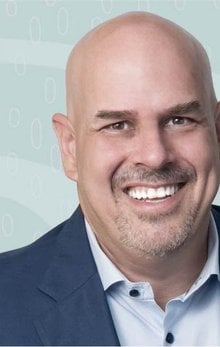
CEO: Clay Magouyrk and Mike Sicilia (co-CEOs)
Oracle folds treasury and risk into its cloud ERP, letting finance teams manage cash, payments and market exposure alongside the rest of their financials.
The pitch mirrors SAP's, namely one data model, fewer reconciliations and AI layered across forecasting and controls. Founded in 1977 and now based in Austin, Texas, Oracle is run by co-chief executives Clay Magouyrk and Mike Sicilia, with founder Larry Ellison as chairman.
For companies already on Oracle Cloud, its treasury tools are the path of least resistance.
3. SAP
Company founded: 1972
Based in: Walldorf, Germany
CEO: Christian Klein

For most large companies, treasury does not run on a standalone tool but inside the system that already moves the entire business. That system is often SAP, and its Treasury and Risk Management module pulls cash, debt, investments and market exposure into the same core that handles accounting and operations.
Because treasury shares one data spine with finance and the supply chain, treasurers can model FX, interest-rate and commodity risk against live positions rather than exported snapshots, then push approved hedges straight through to the ledger with no re-keying.
Founded in 1972 and still rooted in Walldorf, SAP is among the most entrenched software companies on earth, its treasury tooling buried deep inside thousands of multinationals. Under chief executive Christian Klein, it is rebuilding that suite around AI, promising sharper forecasting and tighter control without ever leaving the system of record.
2. ION Group
Company founded: 1999
Based in: London, UK
CEO: Andrea Pignataro
ION Treasury is less a single product and more an arsenal. Part of Andrea Pignataro's secretive, acquisition-hungry ION Group, it brings together a stable of established treasury systems. These include Wallstreet Suite, Reval, IT2 and Treasura, each aimed at different sizes and types of organisations.
That range lets ION serve corporates, banks and even central banks from one stable. It offers deep capability in risk management, hedge accounting, and modelling FX and commodity exposure.
The trade-off is consolidation. Critics say ION has absorbed much of the market and narrowed buyers' choices. Admirers point to the investment and continuity that scale brings. Either way, few vendors match its reach. For the largest and most complex treasuries, ION's suite is often the only one covering every requirement under a single roof.
1. Kyriba
Company founded: 2000
Based in: San Diego, California
CEO: Melissa Di Donato
Kyriba sits at the top because it has turned treasury risk management into a category of its own. The San Diego company runs a cloud platform used by thousands of organisations worldwide to see, move and protect their cash, uniting liquidity management, payments, FX and exposure management, hedge accounting and bank connectivity in one place.
Its strength is real-time control at scale. Treasurers can track cash across every account and currency, automate payments through a fortified gateway and model market risk before it reaches the balance sheet, all from a single dashboard.
Under chief executive Melissa Di Donato, who joined from enterprise-software group SUSE, Kyriba has leaned hard into AI, using it to forecast liquidity and surface threats earlier. For finance leaders who want one system to carry the full weight of treasury risk, Kyriba is the benchmark the rest of this list is measured against.








Executives

Andrea Pignataro
CEO
Brett Turner
CEO
Christian Klein
CEO & Member of the Executive Board

Clay Magouyrk
CEO
Craig Saks
CEO

Melissa Di Donato
Founder and CEO
Mike Sicilia
Chief Executive Officer
Renaat Ver Eecke
Senior Vice President, Ripple Treasury
Sashi Narahari
CEO and Founder
Stephanie Ferris
CEO and President

Vlad Kliatchko
CEO