Sarah Kuijlaars: How Tate & Lyle Wrote Britain's Best Report

Trick-or-treating runs on polite disbelief. The vampire on the doorstep is eight years old, everybody knows it, and the KitKats change hands anyway. An annual report asks for the same indulgence over 200 pages, from readers who are paid to notice what was left out.
Those readers, the shareholders, pension funds, analysts and lenders who decide what a business is worth, even hand out prizes for the reports that tell it straightest.
Last November the Investor Relations (IR) Society, the trade body for the people who broker that conversation, named Britain’s best: SSE, the FTSE 100 energy group, in the large caps; Norcros, the specialist behind Triton showers, in the smalls; and in the mids Tate & Lyle, the 165-year-old sugar name remade as a food-science business.
The mid-cap winner gives the cleanest answer to what the judges were rewarding, because the person who signs Tate & Lyle’s numbers had, at the time, been in the building for barely a year.
Sarah Kuijlaars, Chief Financial Officer of Tate & Lyle, arrived in September 2024 out of De Beers by way of Arcadis and Rolls-Royce, with a quarter-century at Shell behind her, and spent her first months living out of a suitcase instead of a spreadsheet.
“I visited every market, I visited plants and spoke to numerous people to understand what value proposition we can bring to our customers,” she told AccountingWEB last September.
“As a finance function we can’t challenge the business if we don’t understand the business. That is the starting point for me.”
The sugar giant that stopped sugar-coating
What she inherited was a company that had spent seven years tearing itself down to the studs and rebuilding as if the plan had been obvious from the start.
For most of its long life Tate & Lyle sold sweetness in bulk; five years ago corn syrup and its industrial cousins still made up about 85% of revenue, a figure now down to roughly half, by the company’s own account.
The rest comes from a pantry of citrus fibre, seaweed extract and stevia, the discreet molecules that pull sugar, salt or fat out of dinner without anyone tasting the difference.
- 222: company reports reviewed by the FRC in the 2024/25 cycle
- 3 years: impairment has been the FRC's most-queried issue three years running, with zero restatements for it in 2024/25
- 85% to ~50%: corn-based ingredients as a share of Tate & Lyle revenue, five years ago versus today
- 165 years: Tate & Lyle's history, now ending in public markets as Ingredion moves to acquire it
“With the acquisition of CP Kelco, this transformation is complete,” CEO Nick Hampton says in the results the judges honoured. “We are exactly where we want to be, right at the centre of the future of food.”
The US$1.8bn purchase of CP Kelco closed in November 2024, two months after Sarah did, and integrating a finance function is less glamorous than announcing a deal.
“We had to cut off the umbilical cord from its parent and operate it independently, which takes a lot of work,” she says.
The work shows in the numbers she reported this May, US$24m of cost synergies in the year and the US$50m annual run-rate target met a full year ahead of plan.
That is what the judges rewarded, a decade of upheaval told as one clear plan. Companies mid-pivot tend to produce prose as tangled as their org charts.
The word most CEOs spend a career avoiding
The sterner test came this spring, after the trophies were handed out. Tate & Lyle’s results for the year to March 2026 were soft, revenue down 3% in a muted market, so Nick opened with the word most CEOs spend whole careers avoiding.
“Overall, our financial performance has been disappointing,” his statement reads, in its first lines rather than buried in the risk disclosures. “We are acting with urgency to return the business to top-line growth.”
The word reads gloomy, but that is rather the point. A report earns trust by owning the bad year in daylight, up top, where a sceptical reader would go hunting for it anyway, and the numbers beneath it were the CFO’s case for patience: free cash flow of £164m (US$220m) at 70% cash conversion, net debt down £22m (US$29.7m) to £939m (US$1.26bn), and a dividend held at 19.8p.
The savings programmes, which Tate & Lyle counts in dollars, delivered US$53m of productivity gains in the year, taking the three-year total to US$144m against a US$200m target for March 2028.
Tariffs made the year harder to forecast than to report. “Sometimes we can pass that surcharge on to the customer, and sometimes we can’t,” Sarah says. “It’s a very fluid environment that impacts working capital.”
As a finance function we can’t challenge the business if we don’t understand the business
A report can only be as honest as the finance team’s grip on what the company actually does, and Sarah’s is built on a global service centre in Łódź, Poland, where 200 finance staff have run the group’s transactions since 2011, now reporting through three regional finance directors.
“The challenge is ensuring they are driving efficiencies within the broader portfolio through greater standardisation,” she says.
The next phase is the one every CFO is being asked about. “It will involve using tools to optimise reconciliations, payment of invoices, and then moving to predictive AI and agentic AI,” Sarah says, “but that’s still in the early stages.”
The prize is time. “It will allow our finance people to add value, in addition to some of the more transactional activities they deliver.”

The travelling was not for show either. The world, she notes, is “40% overweight or obese”, while roughly a third of greenhouse gases come off the end of a fork, and a company claiming to rebuild the food supply has to prove it line by line, in the one document where the numbers sit under an auditor’s eye.
Sustainability has migrated out of the appendix and into the strategy, and Rowan Adams, Tate & Lyle’s Chief Corporate Affairs and Sustainability Officer, has spent 25 years watching the subject climb from the back pages to the front.
“The thing I’m most proud of is that sustainability is now a core part of our strategy and everything we do,” she tells Sustainability Magazine earlier this year, with a word for the sceptics in the boardroom.
“Board buy-in is about having credible, economically beneficial projects that are clearly part of your strategy. Strategies come and go, but purpose should stay the same.”
From shower trays to the national grid
The other two winners show how far good habits stretch, which matters because the wider field is patchier than prize night suggests.
The Financial Reporting Council, which polices company accounts, reviewed 222 of them in its latest cycle; the share requiring follow-up letters fell from 47% to 37% and restatements hit a multi-year low, though companies outside the FTSE 350 still lag.
The FRC’s argument for closing the gap is plain enough, good reporting wins “investor confidence and access to the capital they need to scale and grow”.
SSE carries the heaviest brief, a £17.5bn (US$23.6bn) clean-power programme that must persuade income funds, regulators and campaigners alike, so it runs full accounts in lockstep with a dedicated sustainability report.
Norcros, a bathrooms group spanning Britain and South Africa, is precisely the scale of company where the FRC finds most of its errors, yet it won by compressing a jumble of brands into one legible investment story. Good reporting is a habit, not a market cap.
The Investor Relations (IR) Society's Best Annual Report criteria look for a report that plays “an integral part in the communication of the strategy and investment proposition" and conveys “the purpose, culture and identity” of the organisation.
The tiers, large-, mid- and small-cap, track the FTSE 100, 250 and SmallCap, so a shower-and-tile group is judged against its own weight class, not against a mega-cap.
The last report
The mid-cap trophy comes with a coda. On 8 June Tate & Lyle’s board recommended a £2.7bn (US$3.6bn) cash offer from Ingredion, the American ingredients group, at 595p a share, a 59% premium to the undisturbed price and a number that says the story landed; nobody pays billions for a business they cannot understand.
Completion is pencilled in for the second half of 2027, which means the CFO who spent her first year learning the company will spend her next 18 months handing it over, and its finest year as a storyteller may prove its last as a public company.
Sarah, whose whole method was to get out of the building, gets the last word on where the building is headed.
“To navigate through this, to provide healthy, tasty food,” she says, “the industry will have to work together.”
Company portals

Executives
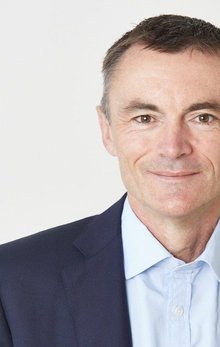
Nick Hampton
Chief Executive Officer
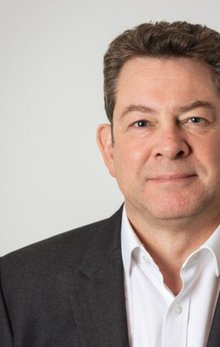
Rowan Adams
Chief Corporate Affairs and Sustainability Officer
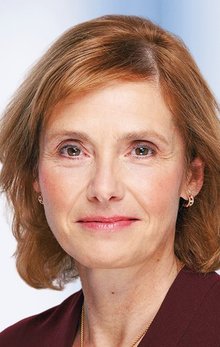
Sarah Kuijlaars
Chief Financial Officer