HSBC: Businesses Face Higher Cost Pressure for Energy

HSBC conducted its Global Trade Pulse Survey with over 10,000 senior business leaders in 26 markets between September and October 2026.
The survey investigated trade, tariffs, supply chains and technology from business leaders. Of those surveyed, 14% had a global turnover of over US$2bn in the past 12 months, with the rest having turnover over between US$50m and US$2bn.
In the last six months, 44% listed that energy impacted business cost base the most, with tariffs ranking 43% and freight shortly behind at 41%.
As macroeconomic conditions persist, it seems that business leaders are not feeling overly optimistic about the pressures easing up any time soon, with 72% saying they expect costs to rise in the next two years.

Over half (68%) of business leaders say they have experienced higher costs overall, with 59% reporting higher working capital requirements since 2025.
In addition, 92% of respondents admit uncertainty also plays a part, as they expect delays or disruptions to supply chains to impact revenue in the next couple of years.
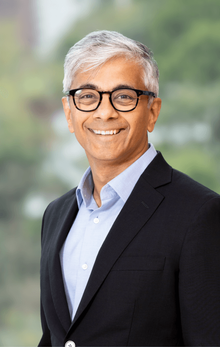
Vivek Ramachandran, Head of Global Trade Solutions, HSBC, says: “Energy costs have become a defining consideration for businesses managing international supply chains.
“Companies are responding by securing energy supply, improving efficiency and building greater flexibility into their operating models.”
Proactive in the face of pressure
Protecting revenue comes through measures such as improving efficiency and productivity, which 53% of business leaders surveyed admit to.
Other practical measures include renegotiating supplier arrangements for 43% of respondents, absorbing costs into profit margins for 38% and passing costs on to customers for 36%.
Confident leaders remain proactive, as 85% of respondents state remaining confident in their ability to grow international trade in the next 24 months.
Plans to reinforce this include broadening supplier bases across regions (88%), securing energy supplies (86%) and optimising trade routes (86%).
Businesses that prepare early, adapt their business models and build flexibility to respond to uncertainty will be better placed to succeed.”
The shift to digital
Leaders are looked towards a more digital future for businesses, as a majority (81%) say they’ve shifted towards services or digital models.
Just under half (44%) think that the most efficient response to trade and tariff uncertainty is a moe towards digital business models.
AI continues to creep its way in to strategy as 50% of respondents admit using AI for strategy and scenario planning, while just over half (55%) have deployed it in customer service and sales support.
Speaking to Finance Chief exclusively, Vivek comments on the business resilience: “[Businesses] are also harnessing AI to improve efficiency. That resilience is reflected in the wider trade outlook.
“In October 2026, UN Trade and Development (UNCTAD) raised its forecast for trade growth to 4% for the year, reflecting stronger demand for AI related goods and the ability for global supply chains to adjust to disruption.
“Businesses that prepare early, adapt their business models and build flexibility to respond to uncertainty will be better placed to succeed.”
- 85% of respondents state remaining confident in their ability to grow international trade in the next 24 months
- 50% of respondents use AI for scenario planning and strategy
- Only 30% appointed a Chief AI Officer or equivalent
- 72% saying they expect costs to rise in the next two years
- 92% of respondents admit they expect delays or disruptions to supply chains to impact revenue in the next couple of years.
Businesses surveyed with over US$2bn of turnover say they are focusing on AI use in strategic applications.
Governance conversations have risen lately from leaders such as IBM as AI use increases.
HSBC’s survey reveals that while 85% of respondents say they have deployed AI in at least one trade-related function, 76% have not implemented more than half of 10 AI safeguards defined in the survey.
Only 30% appointed a Chief AI Officer or equivalent at their business, while 36% routinely test AI outputs.
HSBC partners:
Google Cloud: A multi-year partnership signed in June 2026 brings Google Cloud and Google DeepMind engineers into HSBC to build more than 200 AI use cases on Gemini, starting with wealth, financial crime and frontline teams.
Mistral AI: A multi-year agreement from December 2025 gives HSBC access to Mistral's commercial models, self-hosted on its own infrastructure, to strengthen its internal AI productivity platform.
Visa: HSBC UK completed an end-to-end AI-initiated card purchase on a live merchant website with Visa in July 2026, as part of a pilot of agentic shopping.
Ant Digital Technologies: In October 2026 Ant Digital and HSBC completed a technical test of AI agent micropayments using HSBC's Tokenised Deposit Service and real-time settlement.
Model ML: HSBC Asset Management invested in the London AI start-up for financial services through its venture capital strategy, reported in August 2026.
Company portals






Executives
Vivek Ramachandran
Head of Global Trade Solutions