The CFO Summit: The Chief Value Officer

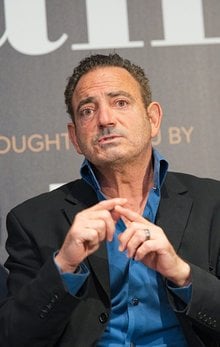
“It’s about saying no,” says Louis Gargour, CIO and CFO of Market Securities Wealth.
The panel discussed how the role of the CFO is changing with a refined stress on identifying value, including investment strategy and pinning down where capital has the most effect.
The CFO Summit panel took place on the second day of BizClik’s inaugural CXO Summit, which welcomed over 500 professionals across finance, HR, business and marketing.
Taking place over two days, the CXO Summit brought together over 50 speakers to focus on four core topics: expertise in finance, business, HR and marketing leadership.
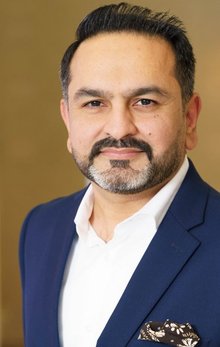
Joining Matt High, moderator, on stage at the CFO Summit panel was Louis Gargour, CIO and CFO of Market Securities Wealth, Nauman Mian, CFO of Bayt.com, Sandeep Dama, CFO and COO at Redsand and Abel Martins Alexandre, Founder and Managing Partner at Melody Investments and Advisory.

The pressure points behind change
The discussion kicks off as the executives begin with the current role of the CFO, and how it is adapting.
Nauman Mian, CFO of Bayt.com notes: “While the CEO directs strategy, the CFO coordinates departments, aligns them and ensures the entire organisation moves toward the strategic vision in sync.”
Previously only thought of as an accountancy role, the CFO is now responsible as a c-suite leader for the strategy, and not just providing the data.
Across the board, there was a broad agreement that the CFO role has fundamentally changed.
“It's also not just about risk management. CFOs shouldn't just minimise risk; you have to be able to understand where the organisation is moving.” says Sandeep Dama, COO and CFO at RedSand.
Knowing the business and driving strategy can also mean that while the CFO role changes, the CFO themselves must also change.
“You have to instigate a business partnership mindset in the team, because you partner with businesses,” explains Abel. “You have to instigate a financial mindset, an efficiency mindset, and show how to change together to become more efficient and drive value forward.”
Previously a CFO, Abel touches on some key advice passed down from his CEO at the time; the importance of not just being a CFO, but of being the Chief Value Officer.
“Everyone has to be a Chief Value Officer – helping the C-suite, the CEO and the board to actually drive value.”
Everyone has to be a Chief Value Officer – helping the C-suite, the CEO and the board to actually drive value.”
The value of technology
With the rise of AI adoption across sectors and especially in workflows, the question of investing in new technologies comes to mind.
Balancing the potential of a new technology must be weighed up with properly-assessed risks. How can CFOs know when to invest and when to exercise caution?
Louis asks: “Who uses AI, and who uses a spreadsheet? I get this massive spreadsheet with a bunch of inputs that shows the output – developed by a rocket scientist, a human being, not AI – that says if I spend money on sales and achieve this much in sales without having... it kind of optimises the mix. You've got to say no sometimes.”
Nauman responds with: “I think as a CFO or in finance, you're sitting in a very unique place because you see the business like nobody else does.
“The biggest challenge that comes with a "no" is that people then switch off, or they aren't in the same boat as you and want to go off on their own tangent, whereas you want the company to move forward.
“This then becomes the duty of a Chief Finance Officer: to bring everybody together and at least align them in a way that they can move forward together. That's where the real value is.”
Sandeep provides more perspective on AI and the direction that not only apply at RedSand, but also its clients.
“Most clients face the same issue, even we face it when looking at new AI projects: Where do you invest? Where do you scale?
“The real value lies in identifying which experiments to stop and which to scale up. Those are fundamentally capital allocation decisions.
“The CFO has to step into the mix and ask: ‘Is it working? Did it achieve the required objective?’”
- The CXO Summit is the first of its kind for BizClik
- Over 50 Speakers shared insights at the event
- Over 500+ business professionals attended
- Four finance leaders joined Matt on stage at the CFO Summit
- Three are founders
Leadership is sometimes about saying no
Ensuring all leaders are aligned on the direction of the business sometimes means answering difficult questions – not just with no, but with the why.
Nauman speaks on how this additional explanation is yet another duty for the CFO. To ensure unity, leaders must “figure out the best way for people to understand why you're saying no – and where you are investing to keep everybody on board.”
Sandeep notes a zoom-in and zoom-out technique, which highlights how the view numbers can shift according to priority.
“You zoom in to look at the numbers and details, but then you also need the ability to zoom out and look at the broader perspective, where the business is going,” he says.
“Something that may not look feasible on paper when zoomed in may actually be required when you zoom out. Conversely, something that looks great from the outside may not look good when you zoom in. This constant zoom-in, zoom-out technique is something everybody should have, not just CFOs – I would say the entire leadership team.”
Thank you to CXO Summit sponsors Alexander Group, HiBob and Malt
Company portals







Executives

Abel Martins Alexandre
Managing Partner
Louis Gargour
Global CIO Market Securities Wealth
Nauman Asif Mian
CFO

Sandeep Dama
Co-Founder, CFO and COO