Nasdaq's CFO Turns a Record Quarter into a US$530m Payout

Nasdaq turned in a record second quarter, and its finance chief marked it by handing money back. The exchange operator posted net revenue of US$1.5bn for the three months to June, up 15% on a year earlier, and returned US$530m to shareholders through dividends and share buybacks.
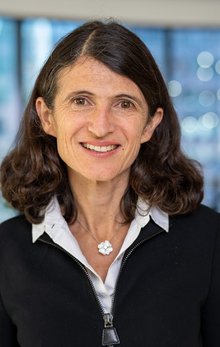
"Nasdaq's durable business model and consistent execution support our disciplined capital allocation strategy," explains Sarah Youngwood, Nasdaq's Executive Vice President and CFO, framing the payout as method rather than generosity
The strategy, she adds, "returns meaningful capital to shareholders through both dividends and share repurchases while investing in innovations that will sustain our long-term growth."
A quarter of records
The numbers gave her plenty to work with. Non-GAAP earnings rose 25% to US$1.07 a share, cash from operations reached US$711m and Index exchange-traded product assets crossed US$1tn for the first time.

Nasdaq also listed SpaceX, the largest IPO in exchange history at a US$86bn raise, and won seven of the 10 biggest listings in the quarter.
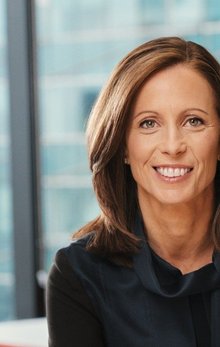
"Nasdaq delivered an outstanding second quarter, defined by new records and milestones," says Adena Friedman, Chair and CEO.
The company, she notes, "delivered double-digit growth across all three divisions, surpassed $1 trillion in Index ETP AUM, and listed SpaceX, the largest IPO in exchange history."
Of the US$530m returned in the quarter, US$174m went out as dividends and US$356m as buybacks. Nasdaq also repaid US$162m of debt and still holds US$2.5bn of unused repurchase authority, a cushion that lets it keep returning capital while peers turn cautious.
Discipline beyond the balance sheet
That same discipline shapes how Nasdaq approaches AI, the spending every finance team is now racing to justify. Sarah, who joined Nasdaq in 2023 after more than two decades at JPMorgan Chase and a spell as CFO of UBS Group, is no AI sceptic.
She wants Nasdaq to run what she calls an AI-first finance function, with the technology woven into everything from forecasting to invoice processing, and she sees her own department as the place it should start, because finance sits on the raw material the tools feed on.
"Finance is in charge of a great deal of corporate data," she says. "And AI is all about the data."
Rather than carve out a separate AI budget, she treats the spending as a lens across the whole portfolio, ranking projects from foundational needs to longer-term bets and measuring each on engagement, speed and only then, financial impact.
It is a sober stance in a quarter defined by exuberance. As money floods into AI and Nasdaq lists the largest IPO on record, its CFO is insisting that every dollar, whether returned to shareholders or spent on a model, earn its place.
Company portals

Executives
Adena Friedman
Chair and Chief Executive Officer
Sarah Youngwood
CFO