
OpenAI CFO Sarah Friar's Plan to Kill the Month-End Close

Every month, in every finance department on earth, the same grim ritual unfolds: the books must be closed.
Actuals sit in one system, purchase orders in another, an accrual buried in a spreadsheet. Someone stays late. Someone always stays late. Sarah Friar wants to abolish the whole thing.
As OpenAI's CFO, Sarah is finance's most scrutinised practitioner right now.
She runs the money at one of the most valuable private companies on earth and the most closely watched name in tech, so what she builds, others will copy. And what she is building is a finance function with no month-end at all.
Sarah calls the goal a "zero-day close". The books reconcile themselves in real time, giving leaders a live, traceable view of where the company stands, with no scramble to reconstruct the quarter after it has already ended.
Killing the month-end close

The close, she is careful to say, does not vanish. "What begins to disappear is the scramble to reconstruct the business after the period ends," Sarah wrote in an essay this week.
In her model, AI threads the spending plans, the ledger, the purchase orders and the accruals into one continuously reconciled view, drafts a first explanation for every variance, and flags the exceptions.
Finance then validates the numbers, applies judgement and owns the sign-off.
AI accelerates the work. People own the result.
The more radical shift is that everyone on her team now builds their own dashboards and tools.
One colleague supporting the advertising business had never written a line of code; using OpenAI's own software, he built something that breaks the monthly ad forecast into weekly and daily plans, every figure tied back to the approved model.
OpenAI's research finds that 40% of finance professionals' specialised AI use now spills beyond traditional finance, and 22% touches engineering-style work. Finance people, Sarah argues, are becoming builders.
The grunt work is AI's, the judgement stays human
This is the line she repeats like a mantra, and the one every finance chief may start to hear. AI, she insists, "won't replace judgement." It speeds the flow of information to decision-makers; it does not outsource the decision.
Her investor-relations team uses a custom bot, grounded only in approved materials, that turns hours of diligence drafting into seconds, yet a human still reads every answer, adds context and signs it.
"AI accelerates the work," as she puts it. "People own the result."
This is not just balm for anxious teams. Associate Professor at Wharton Henning Piezunka makes the case that AI can raise the value of human judgement, not lower it, by stripping out the busywork that has always buried it.
"It helps keep me healthy by monitoring my sleep and then watching as I train and giving feedback," he says.
Take away the drudgery and what is left is the thinking, which was the valuable part all along.
What it means for every finance chief
Underneath the philosophy sits something concrete. A company is putting its house in order ahead of a likely IPO, in public, essay by essay, while the rest of the field takes notes.
Sarah's advice to peers is unfussy:
- Give everyone access, then a reason to use it
- Redesign work around the decision, not the task
- Trust nothing that cannot trace back to a source
- Measure value by what got done, not by seats bought or tokens burned
Strip out the reconciling and finance is freed for the part no machine can do, reading the business, weighing the choices, arguing with the plan.
"You can't be what you can't see," she likes to say. Her bet is that once a CFO has watched the books close themselves, there is no going back.


Executives
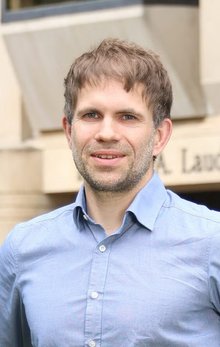
Henning Piezunka
Associate Professor
Sarah Friar
Chief Financial Officer