
Fed Rate Hike to 4%: How the Bond Market Forced Warsh's Hand
Setting the price of money is the Federal Reserve's defining power, and for the past month the bond market has been exercising it instead.
With inflation in its fifth year and war-driven oil above US$100 a barrel, investors pushed Treasury yields to a 19-year high and waited for the central bank to catch up.
On Wednesday Chair Kevin Warsh did. The quarter-point rise, the Fed's first since July 2023, lifts the benchmark to a range of 3.75% to 4% on a unanimous vote.
"The Fed raised rates today, but the bond market got there first," Karen Manna, a fixed income strategist at Federated Hermes, told CNN.
- The Fed raised rates a quarter point to a range of 3.75% to 4%, its first increase since July 2023, by 12 votes to none.
- The benchmark 10-year Treasury yield hit a 19-year high the day before the meeting.
- After the decision, the two-year yield jumped 0.6 percentage points while the 30-year eased to 5.35%.
- Markets now price three further quarter-point rises through 2027.
- Oil above US$100 a barrel, driven by the Iran war, is doing most of the inflating.
The market that intimidates everybody
For weeks the sequence ran one way. Yields rose, Treasury Secretary Scott Bessent intervened with buybacks that failed to hold, and the gap between market rates and the Fed's target widened into a dare.
James Carville's old line about wanting to be reincarnated as the bond market, because "you can intimidate everybody", has rarely fitted a week better. Warsh rejects the reading entirely.
"We made this decision today based on our assessment of the situation," he told reporters on Wednesday, adding that "sometimes the market tries to prejudge our outcomes" but that this was the Fed's call.
Whichever version you believe, the destination was the same, and the bond market had published it in advance.

A hike aimed at an oil war
Inflation has run above target for five years, but the current burst comes mostly from oil above US$100 as the Iran war chokes supply, and Goldman Sachs economists argued before the meeting that the case for hiking was weak because supply shocks fade when wars end.
Michael Pearce, Chief US Economist at Oxford Economics, put the dilemma in one line for CNN: The Fed cannot control energy prices.
Warsh insists no such sacrifice is needed and that stable prices lengthen expansions rather than end them.
The plain fact is that inflation is too high and has been for too long
What the long end just told CFOs
Read the curve rather than the headlines and Wednesday carried a message finance chiefs should welcome. The two-year yield, which tracks policy, jumped.
The 30-year, which tracks trust, actually eased to 5.35%, a sign that follow-through cooled fears of inflation becoming embedded.
Dearer short-term money bought cheaper long-term credibility, which is the trade every borrower ultimately depends on. The practical work is unglamorous.
Three more rises are priced through 2027, so refinancing calendars, floating-rate exposure and hurdle rates all need restating at the new base, and any plan that only worked at 2025's rates was a hope wearing a spreadsheet.
President Donald Trump demanded 1% rates within hours, and markets ignored him. The bond market spent a month teaching the Fed who moves first. CFOs should assume it will happily teach the same lesson to them.
Who are the Federal Reserve's key partners?
US Treasury: The Fed's fiscal counterpart, whose bond-market interventions preceded Wednesday's hike. Led by Treasury Secretary Scott Bessent; headquartered in Washington DC.
Bank of Japan: The central bank tightening alongside the Fed as global yields climb. Led by Governor Kazuo Ueda; headquartered in Tokyo, Japan.
Bank of England: The UK counterpart facing the same oil-driven inflation with the same blunt-force tools. Led by Governor Andrew Bailey; headquartered in London.



Executives
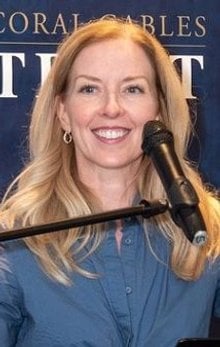
Karen Manna
Fixed Income Investment Strategist
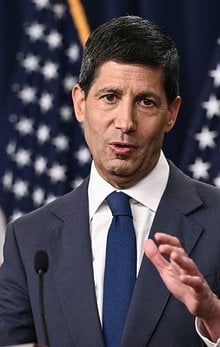
Kevin Warsh
Chairman