
Ep. 11 | Is Real-Time Settlement Finance's Next Challenge?
Related Podcasts
The next major shift in financial markets isn't another AI tool or regulatory update. It's the move towards real-time settlement, and Stephen Roche believes organisations that fail to prepare risk higher costs, operational disruption and losing competitive advantage.
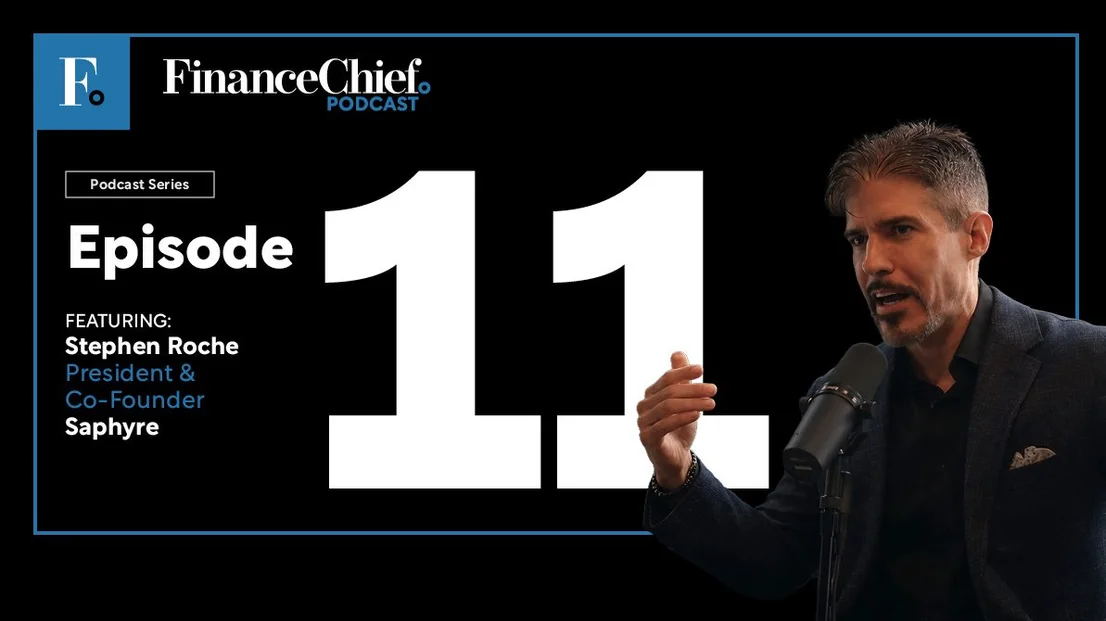
In this episode of the Finance Chief Podcast, host Matt High sits down with Stephen Roche, President and Co-Founder of Saphyre, to discuss the US Treasury clearing mandate, automation, AI and the future of post-trade operations. With more than 20 years' experience helping financial institutions modernise trading infrastructure, Stephen explains why manual processes are reaching their limits and how finance leaders can prepare for a market that is moving faster than ever.
🎧 To listen on Spotify click here
▶️ To listen and watch on YouTube click here
In this episode we explore:
• What the US Treasury clearing mandate means for financial institutions
• Why manual repapering and legacy processes are becoming unsustainable
• How AI and structured data reduce operational risk
• Why pre-trade certainty is replacing post-trade problem solving
• How real-time settlement will reshape competition across financial markets
• What CFOs should be doing now to prepare for the next wave of market change
The countdown to the Treasury clearing mandate
With the first phase of the US Treasury clearing mandate approaching, Stephen argues many organisations still underestimate the operational work required to comply.
While many investment managers assume their clearing brokers have everything under control, the reality is more complex. Institutions must review and update decades of documentation, prepare for both the 2026 cash clearing deadline and the 2027 repo clearing mandate, and ensure systems can handle entirely new regulatory requirements.
For many firms, relying on additional headcount and manual reviews is becoming an increasingly expensive strategy.
Why fixing problems after the trade is no longer enough
Stephen believes financial services has spent decades investing in fixing settlement failures rather than preventing them altogether.
His argument is simple: instead of building larger post-trade operations to resolve errors, organisations should structure data correctly before trades are executed.
By creating pre-trade certainty, firms can reduce operational risk, improve efficiency and avoid the costly delays that continue to affect settlement processes across the industry.
AI is only as valuable as the data behind it
As AI becomes embedded across financial services, Stephen warns that technology alone won't solve operational challenges.
AI needs structured, trusted data to produce reliable outcomes, particularly in highly regulated environments where documentation, client records and compliance obligations span decades.
Rather than replacing existing expertise, AI should enhance established workflows, automate repetitive processes and help firms scale without simply adding more people.
Preparing for a real-time future
The move towards real-time settlement represents a fundamental shift for financial markets.
Stephen argues that firms embracing automation, better data management and modern infrastructure will gain a competitive advantage through faster settlement, lower operational costs and improved client service.
Those that delay risk falling behind as customer expectations increasingly mirror the instant experiences already common across digital assets and payments.
The CFO's role in market transformation
For finance leaders, Stephen's advice is clear: preparation cannot wait.
Beyond regulatory compliance, the transition presents an opportunity to modernise operations, improve resilience and rethink how organisations manage data, risk and technology investment.
The firms that succeed will be those that treat operational transformation as a strategic priority rather than simply another compliance exercise.
Explore More from the Finance Chief Podcast
Catch up on Episode 10, featuring Philippe Daoust, Vice President of Innovation and Managing Director of NAventures, discussing AI adoption, agentic AI, finance transformation and measuring ROI from enterprise AI investments.
Company portals

Executives

Stephen Roche
President