
How AI is Changing Financial Fraud and Digital Trust
Related Podcasts
As AI transforms financial services, how can organisations stay ahead of increasingly sophisticated fraud while maintaining customer trust?
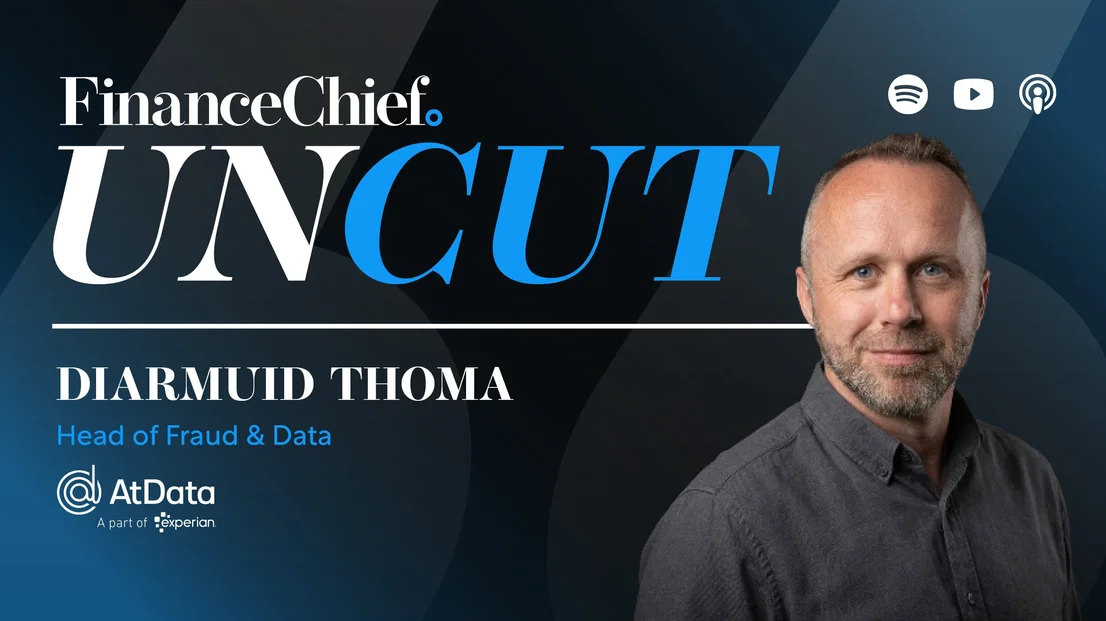
In this episode of Finance Uncut, Diarmuid Thoma, Head of Fraud and Data Strategy at AtData, joins Matt High to explore the evolving landscape of fraud prevention, digital identity and the growing impact of AI on financial services.
Drawing on more than two decades of experience, Diarmuid discusses how fraud has evolved from a secondary business concern into a critical part of financial operations, and why traditional identity verification methods are struggling to keep pace with emerging threats.
From AI-generated identities and behavioural biometrics to email intelligence and account takeover prevention, he explains why understanding customer behaviour and building a complete picture of digital identity are essential to reducing risk.
The conversation also examines the rise of agentic AI, exploring how autonomous digital agents could fundamentally change online transactions, identity verification and the way financial institutions establish trust.
As the industry prepares for a new era of digital interaction, Diarmuid shares practical insights into how organisations can strengthen fraud prevention, future-proof their systems and balance security with a seamless customer experience.
🎧 To listen and subscribe on Spotify click here
▶️ To listen and watch on YouTube click here
🍎 To listen on Apple Podcasts click here
In this episode, Diarmuid explores:
- How AI-generated identities are making financial fraud increasingly sophisticated and difficult to detect
- Why traditional identity verification and static customer profiles are no longer enough
- How behavioural biometrics, email intelligence and historical data can strengthen fraud prevention
- The importance of balancing fraud prevention with customer experience and digital trust
- How agentic AI could transform financial transactions, identity verification and accountability
- Why financial institutions must future-proof their fraud prevention strategies as technology evolves
Too perfect to be true
Fraud teams used to catch bad applications on sloppy details, such as a misspelt name, but AI-generated profiles have no such flaws. If anything, they are too clean, which is now a warning sign in itself.
The bigger problem is volume, Diarmuid says, explaining that he sees tens of thousands created in a day, spread across many institutions so no single one spots the pattern.
Same details, different story
Diarmuid describes two identical applications with the same name, social security number and date of birth.
On one, behavioural data showed the date of birth took 80 seconds to enter and was pasted from a spreadsheet. A customer’s history adds the same kind of context. Someone who has logged in from Yorkshire on the same iPhone for a year, then asks to change their email from Nairobi, is telling you something. Genuine customers are remarkably consistent, and that should earn them less friction, he explains.
Fraud flows like water
Block fraud at account opening and it moves to account takeover, like a river finding its way around a dam. Changing the email address is often a fraudster’s first move, so alerts stop reaching the real account holder.
Without email intelligence, a long-standing customer switching from Gmail to Hotmail looks harmless but with it, the new address may turn out to be a disposable domain created that morning. AtData sees up to 100,000 of those a day.
When the customer is a bot
Diarmuid expects agentic AI to change the internet more in the next five years than anything since its creation. If you ask an agent to find a loan of up to £100,000 and it takes £300,000 because the rate was better, who is liable?
Nobody has settled that, and he expects the rules to follow a bad incident rather than prevent one. In the meantime, he advises logging every customer interaction and relying on data that will last. Phone numbers and email, now effectively a record of our accounts and deliveries, will hold up. Device and IP data probably won’t.
Trust will catch up
Diarmuid, like a lot of us, once swore he would never buy clothes online. Now he buys most things that way. He believes trust in agents will build the same way, and that they could bring in people the internet has always left behind, his parents among them, who could simply ask for something and have it delivered.
Listen and subscribe
Catch up on our previous episode featuring Coinbase's Océane Codjia on how stablecoins, regulation and blockchain infrastructure are transforming global payments and corporate finance.
Company portals

Executives
Diarmuid Thoma
Head of Fraud & Data