
How Coinbase is Bringing Stablecoins into Global Payments
Related Podcasts
Stablecoins are moving beyond cryptocurrency investment and becoming part of global financial infrastructure. As businesses seek faster, more efficient ways to move money, digital assets could transform international payments and treasury operations.
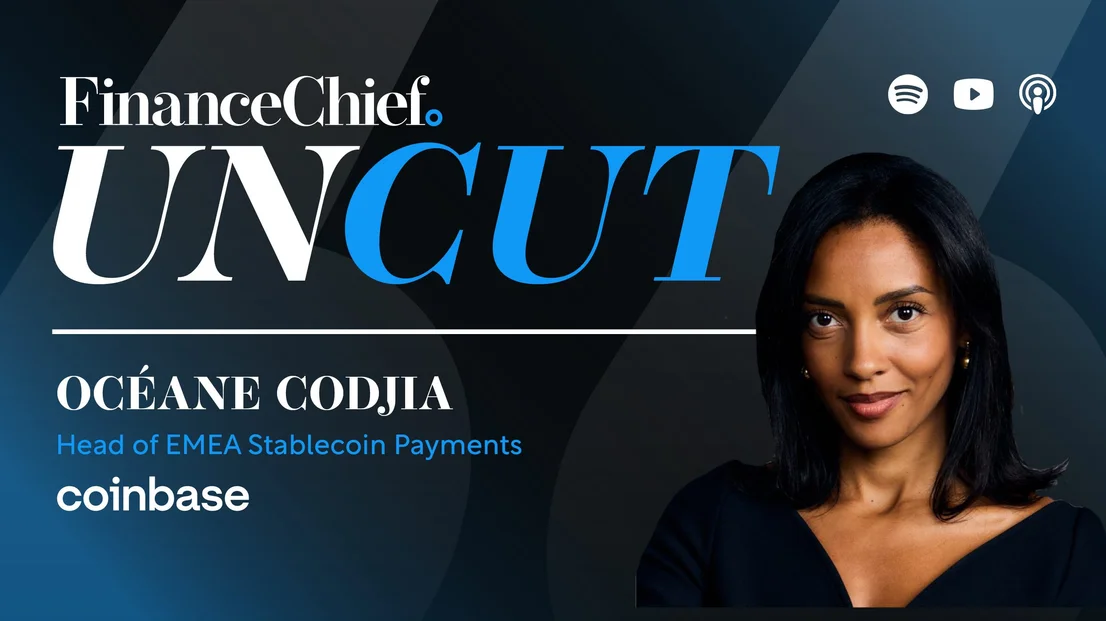
In this episode of Finance Chief Uncut, Océane Codjia of Coinbase explores how stablecoins are reshaping global finance, the relationship between traditional banking and blockchain technology, and what this means for CFOs.
From cross-border transactions to regulatory developments, Océane discusses how businesses can adopt stablecoins and why integrating digital assets into existing financial systems is critical.
🎧 To listen on Spotify click here
▶️ To listen and watch on YouTube click here
🍎 To listen on Apple Podcasts click here
In this episode we explore:
- How stablecoins could transform cross-border B2B payments
- Why traditional finance and blockchain need to work together
- How Europe's MiCA regulation is supporting adoption
- The opportunities for CFOs to improve settlement and cash flow
- Coinbase's collaboration with Checkout.com
- Why businesses should start with small-scale stablecoin pilots
- The future of on-chain treasury management
Why stablecoins are changing global payments
International payments often involve multiple intermediaries, high costs and settlement delays.
Océane explains how stablecoins could simplify cross-border transactions, enabling businesses to transfer money faster and more efficiently. She highlights B2B payments and global payouts as areas where the technology could deliver immediate benefits.
Bringing traditional finance and blockchain together
Rather than replacing traditional banking, Océane believes blockchain technology can complement existing financial infrastructure.
She explores how established financial institutions and digital asset providers can work together, while regulatory developments such as Europe's MiCA framework provide greater clarity for businesses considering adoption.
What stablecoins mean for CFOs
For finance leaders, stablecoins present opportunities to reduce transaction costs, accelerate settlement and improve cash flow management.
Océane encourages CFOs to focus on practical applications, starting with small pilots to understand the technology, assess regulatory requirements and identify measurable business benefits.
How Coinbase is making stablecoins more accessible
Coinbase's collaboration with Checkout.com aims to make stablecoin payments easier for merchants to adopt.
Océane discusses how integrating digital assets into existing payment platforms could help businesses access blockchain technology without developing entirely new financial infrastructure.
The future of on-chain treasury management
Looking ahead, Océane sees opportunities beyond payments, including holding stablecoins within corporate treasury operations and accessing eligible on-chain financial services.
She anticipates a future where stablecoins become part of everyday financial applications, allowing businesses to benefit from blockchain technology without needing to understand its underlying complexity.
Explore more from Finance Chief Uncut
Catch up on our previous episode featuring Jiang Mingyang, Chief Innovation Officer at Ant International, exploring agentic commerce, AI-powered payments and the future of global transactions.
Company portals

Executives
Océane Codjia
Head of EMEA Stablecoin Payments