
Why AI Agents Could Change the Future of Payments
Related Podcasts
AI is changing how people discover, compare and buy products. And, as AI agents become capable of acting on behalf of consumers and businesses, the way payments are made could change with it.
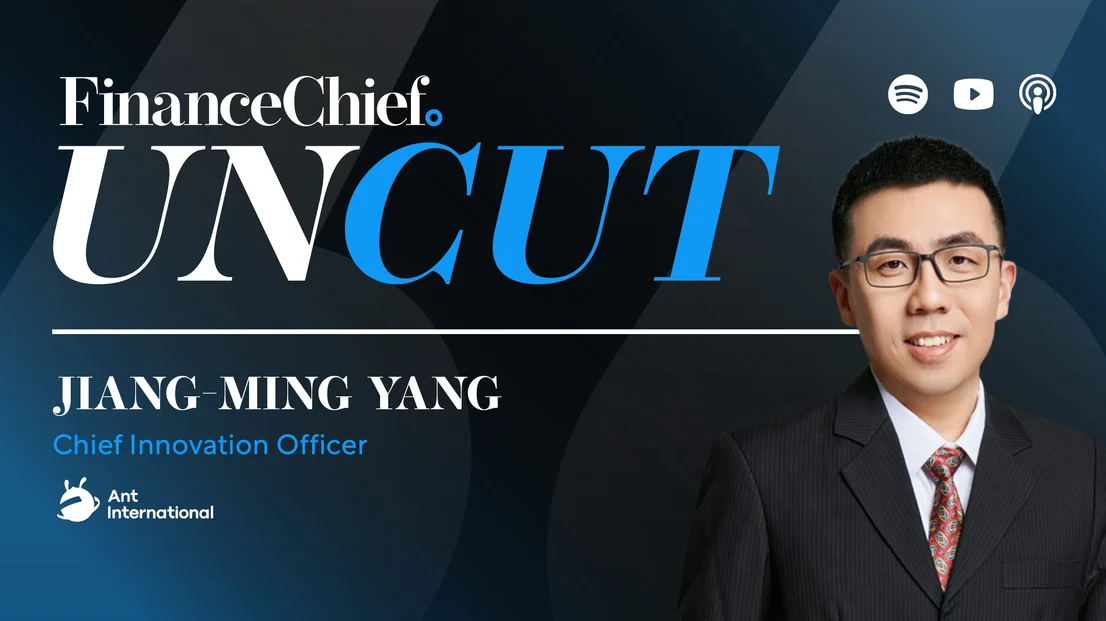
In this episode of Finance Chief Uncut, Jiang-Ming Yang, Chief Innovation Officer at Ant International, explores the rise of agentic commerce and what it means for the future of global payments.
From changing user behaviour to the challenge of allowing an AI agent to act on a person's behalf, Yang looks at the trust, security and interoperability needed to make agentic transactions work at scale. He also explains how Ant International's Agentic Mobile Protocol (AMP), alongside its collaboration with Mastercard and Visa on a Know-Your-Agent (KYA) interoperability framework, is helping address some of those challenges.
🎧 To listen on Spotify click here
▶️ To listen and watch on YouTube click here
🍎 To listen on Apple Podcasts click here
In this episode we explore:
- How changing user behaviour is driving the growth of agentic commerce
- Why B2B could lead the adoption of AI-powered transactions
- The challenge of trust, identity and liability when AI agents make payments
- How Ant International's AMP is helping address fragmentation across mobile payment ecosystems
- Why interoperability between payment networks will be critical to agentic commerce
- Ant International's collaboration with Mastercard and Visa on KYA standards
- How AI agents could change the way consumers and businesses transact
Why agentic commerce is gaining momentum
Yang believes the shift towards agentic commerce is being driven in part by changing user behaviour. As people increasingly use AI platforms to research and compare products, they may naturally want to complete the purchase without leaving that environment.
The scale of the opportunity is significant. McKinsey expects AI agents to handle US$3tn to US$5tn of global consumer commerce by 2030.
That creates a new opportunity for businesses, but also a new challenge for payments. If an AI agent is going to move from helping someone make a decision to actually making a transaction, the infrastructure around that transaction needs to evolve too.
Why B2B could lead agentic commerce
Businesses could adopt AI-powered transactions faster than consumers, says Yang. For companies, agents could take on clearly defined tasks such as finding suppliers, comparing options or optimising costs, with measurable outcomes making it easier to demonstrate their value.
The opportunity is not simply about automating an existing payment. It is about allowing an agent to carry out a wider task on behalf of a business, with payment becoming part of that process.
Building trust in agentic payments
Giving an AI agent the ability to act on someone's behalf introduces a fundamental question for payments: who is the agent, what is it authorised to do and who is responsible if something goes wrong?
Yang discusses the importance of trust and accountability as agents take on more responsibility, and why payment providers need safeguards that allow people and businesses to delegate tasks without giving up control.
Transforming payments with AMP
Ant International's Agentic Mobile Protocol (AMP) is designed to address the fragmentation of the mobile payments ecosystem as agentic commerce develops.
The protocol has already partnered with 17 institutions – 10 mainstream digital wallets and seven leading global acquirers, which will bring secure, trusted agentic payments to 1.5 billion users worldwide.
The open protocol is designed to work with digital wallets and other payment ecosystems, allowing AI agents to interact with existing payment infrastructure. Yang explains why making payment systems more AI-friendly will be increasingly important as consumers and businesses delegate more tasks to agents.
Why interoperability matters
Agentic commerce will not operate within a single payment ecosystem. Card networks, mobile wallets, banks, merchants and technology platforms will all need to work together.
Ant International is collaborating with Mastercard and Visa on a Know-Your-Agent interoperability framework, exploring how common approaches to identifying and establishing trust in agents can help different payment ecosystems work together.
For Yang, this is less about competition between individual networks and more about collaboration to solve the fragmentation that could otherwise limit the growth of agentic commerce.
From assisted to agentic transactions
The conversation looks at what happens when AI moves beyond helping people make decisions and begins acting on those decisions.
Whether it is finding the best price for a product, booking a hotel or managing another transaction, agents could increasingly handle tasks that currently require several steps from the user.
For payments, that means creating infrastructure that allows people to delegate those tasks while maintaining control and confidence over how their money is used.
Explore more from Finance Chief Uncut
Catch up on Episode 21, featuring Matt Healey, Director of Product Strategy and Partnerships at Juspay, exploring payment orchestration, intelligent routing and modernising global payment infrastructure.
Company portals

Executives

Jiangming Yang
SVP / Chief Innovation Officer (Product+Tech)