South Korea's AI Chip Boom Powers a Record 2027 Budget
South Korea is having the kind of year that makes central bankers sweat.
Its factories are shipping memory chips faster than the world can bolt them into data centres. Exports hit a record US$98.25bn in August.
The man buying much of that silicon sees no end to it.
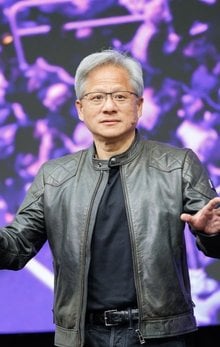
"The memory shortage could last for years," warns Jensen Huang, CEO of Nvidia, whose company has locked up supply from Korea's chipmakers.
- Total exports jumped 68.7% year on year to a record US$98.25bn in August.
- Semiconductor exports soared 209% to a record US$46.7bn, close to half of everything Korea sold abroad.
- The country booked a trade surplus of about US$34.8bn, its second-largest on record.
- The government has proposed a Won820.9tn (US$598bn) budget for 2027, up 12.8% and the first double-digit rise since 2009.
- Some Won21.3tn (US$15.5bn) goes to three megaprojects spanning chips, physical AI and AI data centres
Half of everything Korea sells
Chips are no longer part of Korea's export story. They are the story. Semiconductor shipments jumped 209% in August to US$46.7bn, 47.5% of everything the country sold abroad, which makes chips less an export category than the export itself.
The engine is global, the hyperscalers pouring money into data centres, with Google and Amazon among the buyers driving memory prices to levels the industry has never seen.
Nvidia alone has more than doubled its supply and capacity commitments to US$279bn, much of it aimed at locking down Korean memory before rivals can.
Seoul spends before the boom cools
President Lee Jae Myung wants to bank the boom while it lasts.

On Tuesday the government unveiled a Won820.9tn (US$598bn) budget for 2027, a 12.8% jump and the first double-digit rise since 2009, funded by a flood of corporate tax from the chipmakers.
Much of it doubles down on the industry minting the money. Some Won21.3tn (US$15.5bn) goes to semiconductors, physical AI and AI data centres.
A new Future Fund, seeded with Won162.3tn of the windfall, is meant to cushion the day the cycle turns. Lee, who presented the plan himself, casts it as insurance against falling behind.
Next year's budget should serve as a solid foundation for Korea to emerge as a global leader in cutting-edge technologies
The bet has a clock on it
Not everyone thinks the timing is wise. The Bank of Korea has lifted its benchmark rate to 3%, a second straight increase, to cool an economy some economists now call overheated, with inflation above target, Seoul property prices high and household debt climbing.
Local Seoul economists have questioned universities whether a fiscal expansion this large suits a boom that could end without warning.
Lee carries his own pressures, an approval rating at a record low of 38.9% and a top policy adviser gone this week, though his party's majority means the budget should pass regardless.
For finance leaders the lesson is in the concentration. Korea has hitched its exports, its markets and now its national budget to a single cycle of AI demand.
As long as the memory stays scarce and the hyperscalers keep building, the windfall pays for itself. The risk is the one no spreadsheet in Seoul controls, whether the boom outlasts the budget built on it.
Who are Nvidia's key partners?
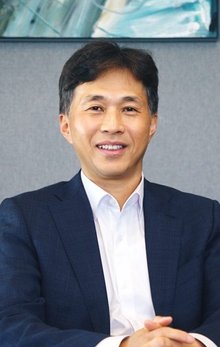
SK Hynix: Nvidia's lead supplier of high-bandwidth memory, tied into a multi-year AI supply deal. CEO Kwak Noh-jung, headquartered in Icheon, South Korea.
Samsung Electronics: Nvidia's largest supplier of graphics memory and a new source of its next-generation HBM4 chips. Headquartered in Suwon, South Korea.
Micron Technology: The US memory maker rounding out Nvidia's supply as prices climb across the board. Headquartered in Boise, Idaho.
Company portals



Executives
Jensen Huang
Founder and CEO
Noh-Jung Kwak
President & CEO