
TSMC's CFO Will Pay 5x to Build in America
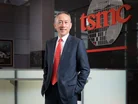
Building an advanced chip fab in the Arizona desert costs Taiwan Semiconductor Manufacturing Company four to five times what the same plant costs at home. It has just committed to doing it four more times.
The world's largest contract chipmaker added US$100bn to its American build-out last week, lifting its total US commitment to US$265bn, the largest foreign direct investment in the country's history.
Its finance chief knows precisely how expensive the decision is, and is signing the cheque anyway.
"We are doing everything we can, wherever we can, to expand to support the customers' growth," says Wendell Huang, TSMC's Senior Vice President and Chief Financial Officer. The company, he adds, wants to "demonstrate that we do not intend to leave any food on the table to anybody else".
The maths does not flatter Arizona

TSMC told analysts its overseas fabs will shave two to three percentage points off gross margin early and three to four later, and it has lifted 2026 capital spending to at least US$60bn.
Most finance chiefs would balk at a project that dents profitability for years. Wendell argues the reverse, that handing the demand to a rival would cost more than building for it.
TSMC now describes a "multi-year structural" run it expects to last through at least 2030, powered by the chips it makes for Nvidia, Apple and AMD.
North American customers alone supplied 78% of its revenue last quarter, and the company is still turning orders away. The US pledge has quadrupled from an original US$65bn in barely two years.
What the money buys is a self-contained American supply chain. Its first Arizona fab has produced four-nanometre chips since late 2024, now at yields it says match those in Taiwan, and a second, for three-nanometre, is finished and ramps in 2027. The fresh US$100bn pays for four more fabs and advanced packaging
Once complete, Arizona will hold roughly 30% of TSMC's capacity for its most advanced two-nanometre-and-beyond chips.
"We believe this investment will help to further foster the development of the U.S. semiconductor ecosystem, strengthen the supply chain, and support an increasing number of high-tech, high-paying jobs in the US," says Chairman and CEO C.C. Wei in a statement.
Not everyone is buying it
The market's verdict was cooler. TSMC's earnings helped trigger a global sell-off in technology stocks, as investors questioned whether the industry's enormous spending on AI hardware will ever earn its keep.
"TSMC's capex acceleration began in 2025, one and a half to two years after the AI cycle took off, implying share loss or demand overflow to competitors," says GF Securities analyst Jeff Pu, who downgraded TSMC, arguing its profitability has no room to grow while it holds back on aggressive pricing.
Meanwhile, the competition is thickening, with Intel's own 18A process improving, Micron pouring US$250bn into American memory capacity and Elon Musk launching a chip venture that openly cites TSMC's inability to keep up with demand.
TSMC will ramp its newest technology in Taiwan first, keeping research and manufacturing side by side, and has said it will hold off on ASML's most advanced extreme-ultraviolet machines, which run about €350m (US$400m) each, partly on cost.
The pitch to the board is that a record cheque and capital discipline are not opposites. Wendell is betting a finance chief can spend at the largest scale in the industry and still refuse to overpay, one fab at a time.
Company portals

Executives
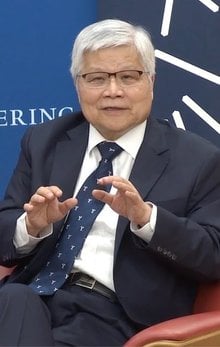
C. C. Wei
CEO
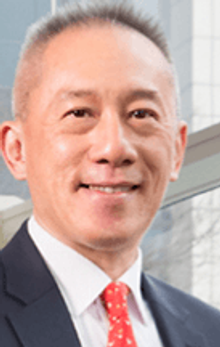
Wendell Huang
CFO