HSBC, Berkshire Hathaway & OpenAI: Top 5 Stories this Week

Model ML, an AI start-up based in London raises over US$100m as HSBC Asset Management join the pool of investors among PwC, Deloitte and EY.
Financial services continues its headwind toward AI as the investment in Model ML demonstrates.
The funding is aimed at enabling growth of Model ML, supporting its current services which include automation of complex workflows, due diligence, financial analysis and client-ready document creation.
Other investors include Financial Technology Partners and QED Investors. The company is advised by multiple former bank CEOs, including ex-HSBC CEO Sir Noel Quinn, ex-UBS Chairman Axel Weber, ex-Western Union CEO Hikmet Ersek and ex-CEO of Julius Baer Philipp Rickenbacher.
Why Greg Abel Is Spending the Cash Buffett Never Would
After 14 quarters of net selling, Greg Abel is deploying Berkshire's cash, from a US$10bn Alphabet stake to its biggest buyback since 2021.
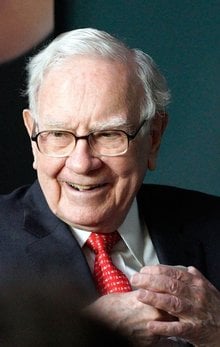
Warren Buffett likes to describe investing as baseball with one glorious rule change: no called strikes.
A batter can stand at the plate all day, bat on his shoulder, letting pitch after pitch sail by while he waits for the fattest, slowest lob of his career.
For the better part of four years, Berkshire Hathaway did precisely that, watching the market float past as its cash pile swelled towards US$400bn. Then Greg Abel swung.
Buffett, who ran Berkshire as its CEO for six decades, handed Greg the keys at the end of 2025 with a blessing, not a rulebook.
Workiva: AI Errors Reach Boardrooms as Data Flaws hit Trust
A sharp divide has emerged between executive faith in AI and the reality of enterprise deployments. Although 84% of surveyed business leaders report confidence in the accuracy of AI outputs without human oversight, internal audits have caught AI errors that reached external audiences or board members at 26% of organisations.
The findings from Workiva’s 2026 Midyear Executive Benchmark Survey highlight a growing operational risk for finance leaders.
Rapid digital adoption is threatening to outpace the governance frameworks designed to supervise automated tools, leaving financial reporting and market disclosures vulnerable to unverified information.
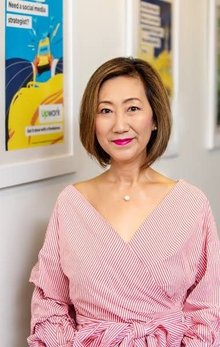
Speaking to Finance Chief exclusively, Junko Swain, CAO of Workiva notes: “Workiva's Midyear Executive Benchmark report surfaces a clear pattern: as leaders deepen their partnership with AI, their confidence grows, but so does their awareness of its risks. In fact, 26 % of executives said internal AI audits have detected errors that reached external audiences or the board.”
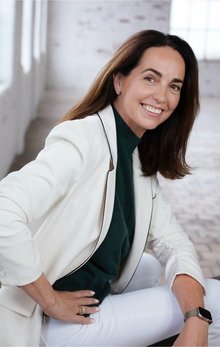
OpenAI CFO Sarah Friar's Plan to Kill the Month-End Close
OpenAI CFO Sarah Friar wants to end the month-end close for good, building a function that reconciles the books in real-time while keeping judgment human.
Every month, in every finance department on earth, the same grim ritual unfolds: the books must be closed.
Actuals sit in one system, purchase orders in another, an accrual buried in a spreadsheet. Someone stays late. Someone always stays late. Sarah Friar wants to abolish the whole thing.
As OpenAI's CFO, Sarah is finance's most scrutinised practitioner right now.
She runs the money at one of the most valuable private companies on earth and the most closely watched name in tech, so what she builds, others will copy. And what she is building is a finance function with no month-end at all.
Deloitte CFO Survey: Optimism is Declining

The consulting firm notes that macroeconomic pressures are reflected in the results of the survey which points to an increase in CFO pessimism.
Deloitte conducted its spring European CFO Survey. Since the 2025 autumn survey, its respondents have nearly doubled.
Over 1,100 CFOs took part in the survey, across 12 European countries - and the results show that European CFOs are more pessimistic in 2026 than throughout the 2022 energy crisis.
The survey asked CFOs about their views on external pressures which may be influencing their decisions - taking into account not only macroeconomic trends, geopolitical and operational weights.
It also found that the weight of pessimism and optimism differs according to sector.
Life sciences and healthcare sector leads the way, reporting 25% of CFOs as optimistic; whereas 35% indicated pessimism.
The consumer industry paints a different picture, reporting that only 20% of CFOs feel optimistic, versus 48% that feel pessimistic.
Company portals





Executives
Junko Swain
Chief Accounting Officer
Sarah Friar
Chief Financial Officer
Warren Buffet
Former CEO